






Atomic skis and equipment for your style of skiing
Atomic offers several ways to find the right ski equipment: through the ski and its use, through the ski boot and your foot shape, or through the helmet and goggles. At FREUDENHAUS Obertauern, you put these decisions into a common context. Choose the components according to your skill level, your preferred runs, and the equipment you already use.
02Discover
Categories.









03Skis and equipment
From Altenmarkt.
For the entire mountain.
Your destination determines your Atomic selection
The best way to answer the question of which Atomic ski is right for you is to describe your typical day on the slopes. Do you like making short turns on groomed runs, do you prefer wider arcs, or are you looking for versatility? How familiar are you with changing snow conditions, and what speed feels comfortable for you? This information narrows down the selection more effectively than searching for the "best" ski. A model should suit your actual usage, not just an idealized image of sporty skiing.
Separate your current experience from your goals. Those who want to develop technically need equipment that allows their movements to remain understandable. An impressive-sounding model name does not replace this fine-tuning. Likewise, an easier-to-access ski is not automatically just a temporary solution. The decisive factor is how much support, responsiveness, and versatility you are looking for in your skiing style. Also consider whether you want to replace an existing ski or consciously complement it with a different area of use. This leads to a different priority for selection.
Categorizing Atomic Ski Families
The Atomic brand world includes several clearly named ski families. Redster is closely associated with sporty piste and racing orientation; within the family, the specific models again differ in their character. Cloud provides an important entry into the women's ski world. Maverick and Maven are classified by Atomic in the all-mountain sector. These family names help you understand the direction of a search. They are not yet a complete description of the individual ski: length, design, and intended use remain essential for the decision.
For a day on the piste, it's worth comparing similarly oriented skis first. If you compare very different areas of use at the same time, the differences quickly become confusing. Use the overview of piste skis to narrow down the basic direction. If you also want to consider a wider range of terrain, you will find an independent selection direction under all-mountain skis. Such a comparison should sharpen your needs: you don't have to cover every possible type of skiing with the same pair if your actual focus is clearly defined.
Reading length, width, and radius together
Length is an important part of ski selection, but it's not an isolated size value like with an everyday object. Body type, skill, and the ski's construction all play a role. A model designed for a certain type of turn can feel different in various lengths. Therefore, compare the specifications for the specific length offered, not just the family heading. The radius describes one aspect of geometry; it doesn't mean you can only make a single turn with the ski.
It is helpful to connect the numbers with a comprehensible question: Do you want a ski whose described character is more oriented towards short direction changes or towards wider turns? Should it primarily serve groomed slopes or enable broader use? Define this direction before deciding between neighboring lengths. A general rule of thumb based on chin or forehead cannot replace the specific manufacturer's recommendation and your skiing style. Even two skis of the same length are not therefore identical alternatives.
Comparing women's and men's models meaningfully
The classification as women's or men's can help you find a suitable model group. For the actual decision, however, body type, skiing ability, and desired orientation belong together. Even within a target group, demands differ significantly: one person seeks sporty responsiveness on the slopes, another values versatile tuning for different descents more. Therefore, do not choose solely based on color or target group designation. First describe what the ski should do and connect this requirement with its specific construction. For a boot, the actual foot shape is central regardless. Ski and ski boot do not automatically have to follow the same visual line.
Atomic ski boots: foot shape takes precedence
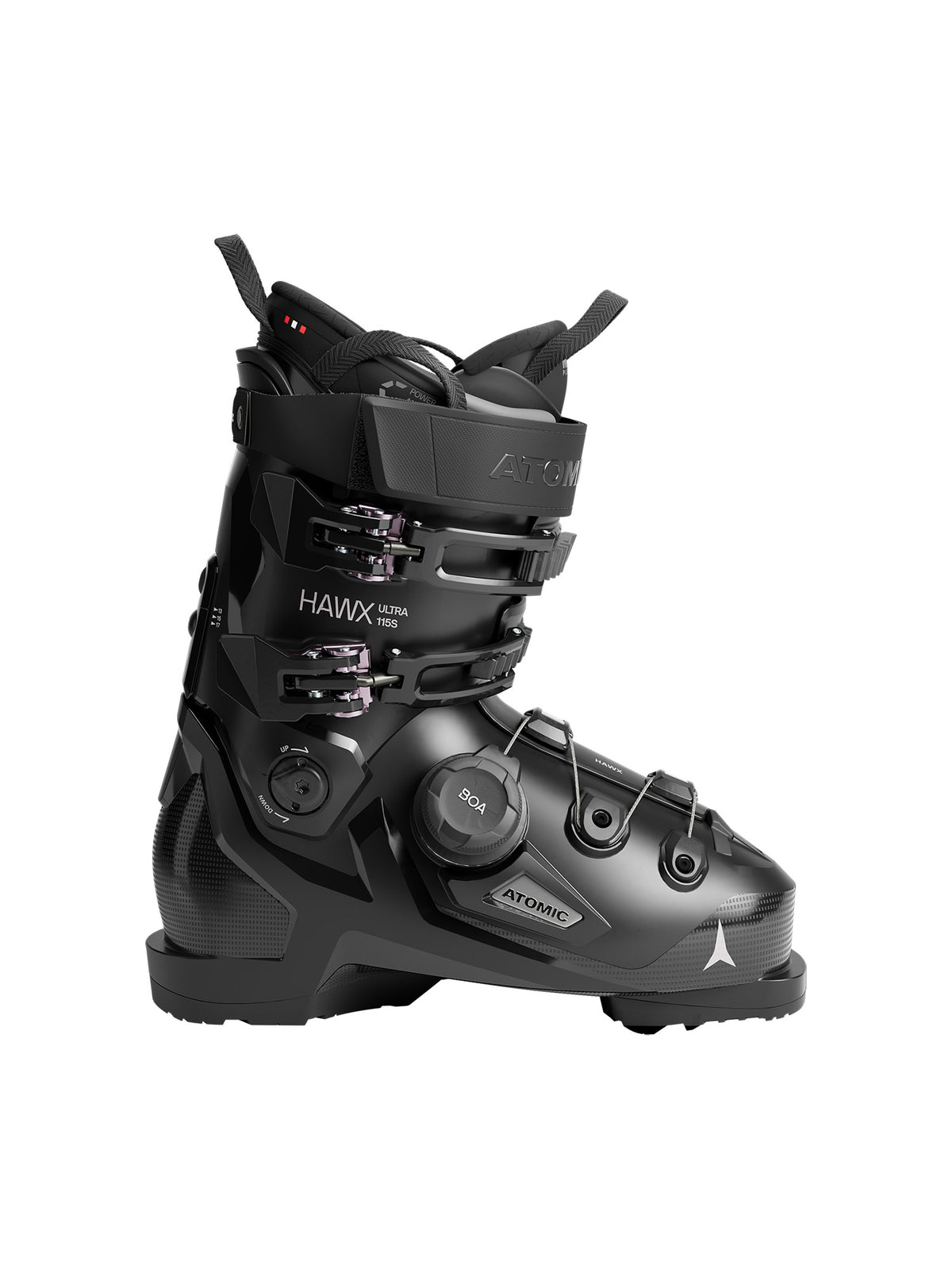
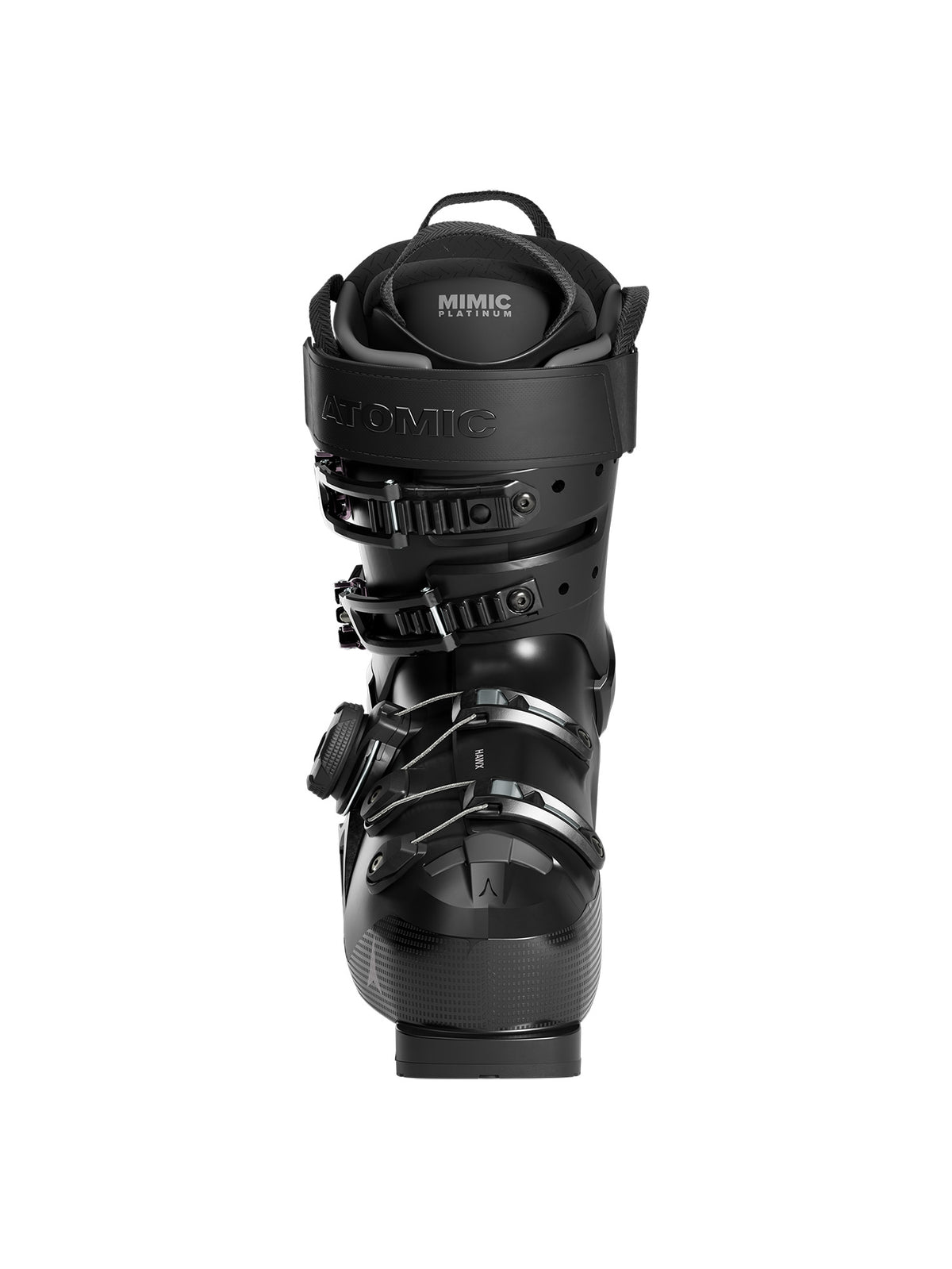
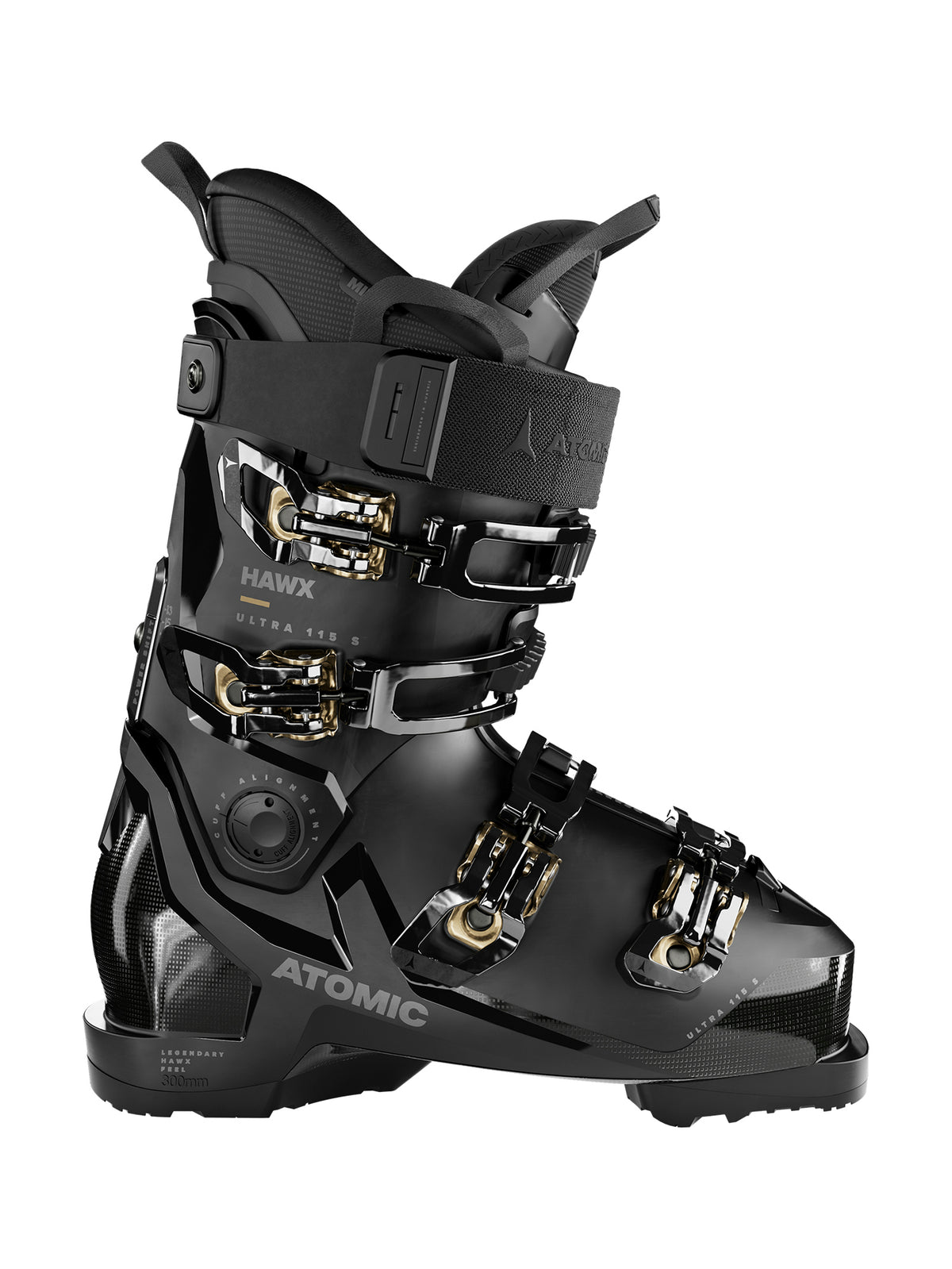
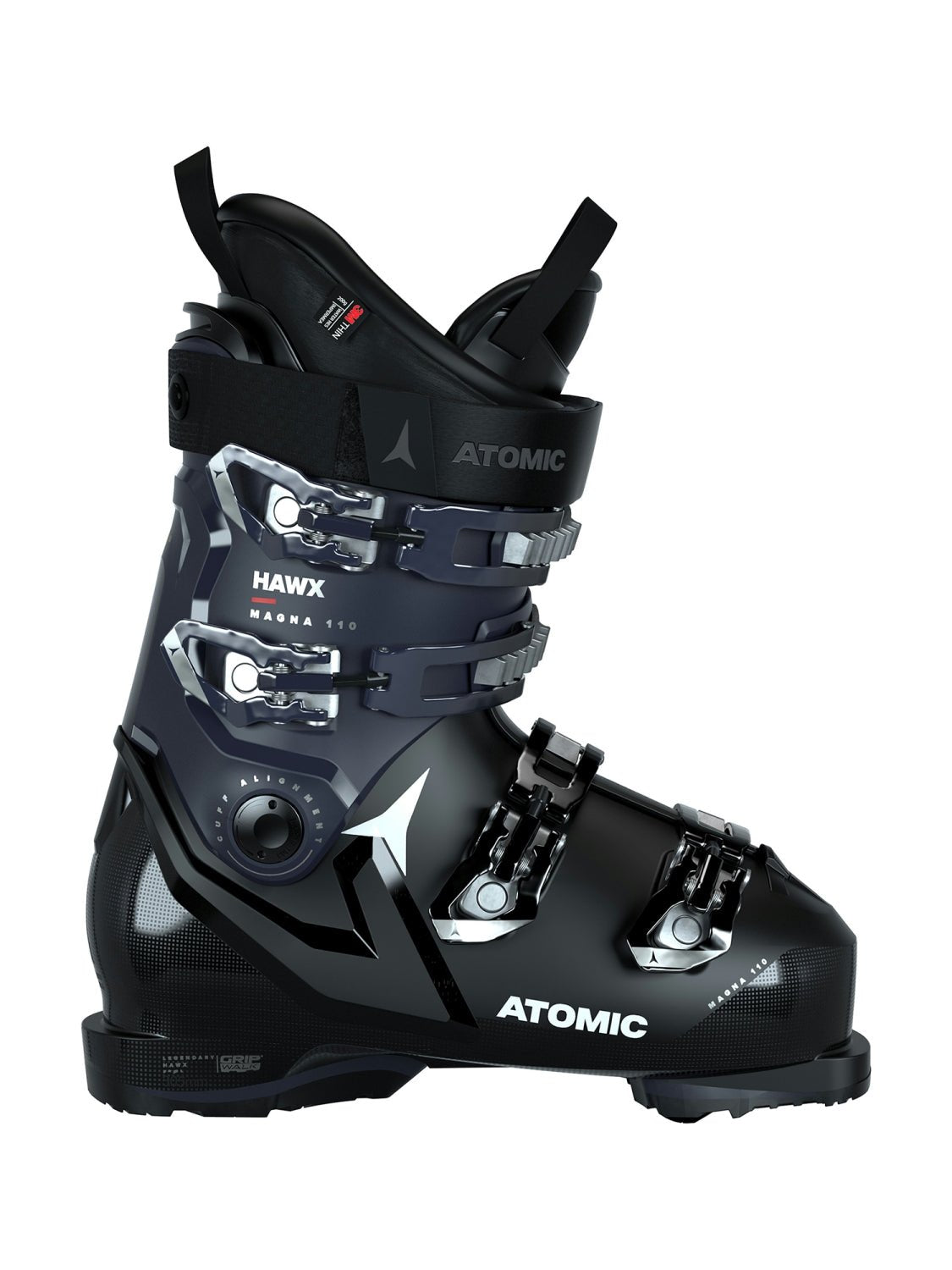
The ski boot forms the direct contact between your body and the ski. Within the Hawx family, Atomic distinguishes between Ultra, Prime, and Magna, among others, as different fit directions. This approach is helpful because foot length alone does not describe how much space you need at the instep, heel, and forefoot. A wider forefoot requires a different consideration than a high instep with an otherwise narrow foot. The right boot results from the combination of these features, not from a single width specification.
The size chart provides an introduction; the try-on connects it with your actual foot. Evaluate the boot with the intended ski socks and move into the typical skiing stance. Pay attention to whether the heel is guided and how the hold at the midfoot is distributed. A very tightly closed buckle is not proof that the basic shape fits. If you only achieve stability by extremely tightening the fasteners, the combination should be examined more closely. The overview of ski boots helps you consciously compare different shapes.
Flex and closure as independent decisions
Flex describes the stiffness or resistance when moving the shaft forward in the respective boot construction. It is not a general quality rating. Atomic considers body type and how aggressively one skis, among other factors, for the choice. A higher number is therefore not automatically the more suitable choice. The boot should match the forces and movements you actually apply. The fit remains a separate prerequisite: an unsuitable foot volume does not automatically become correct with a different flex value.
The closure system is also considered in conjunction with the foot. Buckles and similarly equipped BOA versions offer different operating methods. Compare how the hold can be adjusted and whether you can easily operate them with the intended handling. The name of the system alone does not determine the suitable last or your personal wearing comfort. A meaningful comparison involves first narrowing down the appropriate foot space and then choosing the details of the execution. This way, function and fit remain connected without being confused.
Ski, binding and boot must match
For a ski offer, the exact scope of delivery is part of the purchase decision. A product can be offered as a ski with a matching binding or bring other prerequisites for assembly. The complete model name and the described scope are therefore more important than an illustration alone. Also include existing equipment: the specific boot sole must match the binding's release. A common brand name does not automatically confirm this compatibility. GripWalk soles, for example, require a suitable binding; an older version is not approved solely because of a similar shape.
Keep the exact designations of ski, binding, and boot ready for alignment. A possible system plate or rail also belongs to the combination. Installation and adjustment are carried out professionally on the actually used components. Your own setting values from a general table are no substitute for this. If you choose a new pair of boots for an existing ski set, the check affects both sides of the connection. Conversely, a new binding should not only fit the ski, but also the specific boot sole used.
Helmet and goggles as a shared fit task
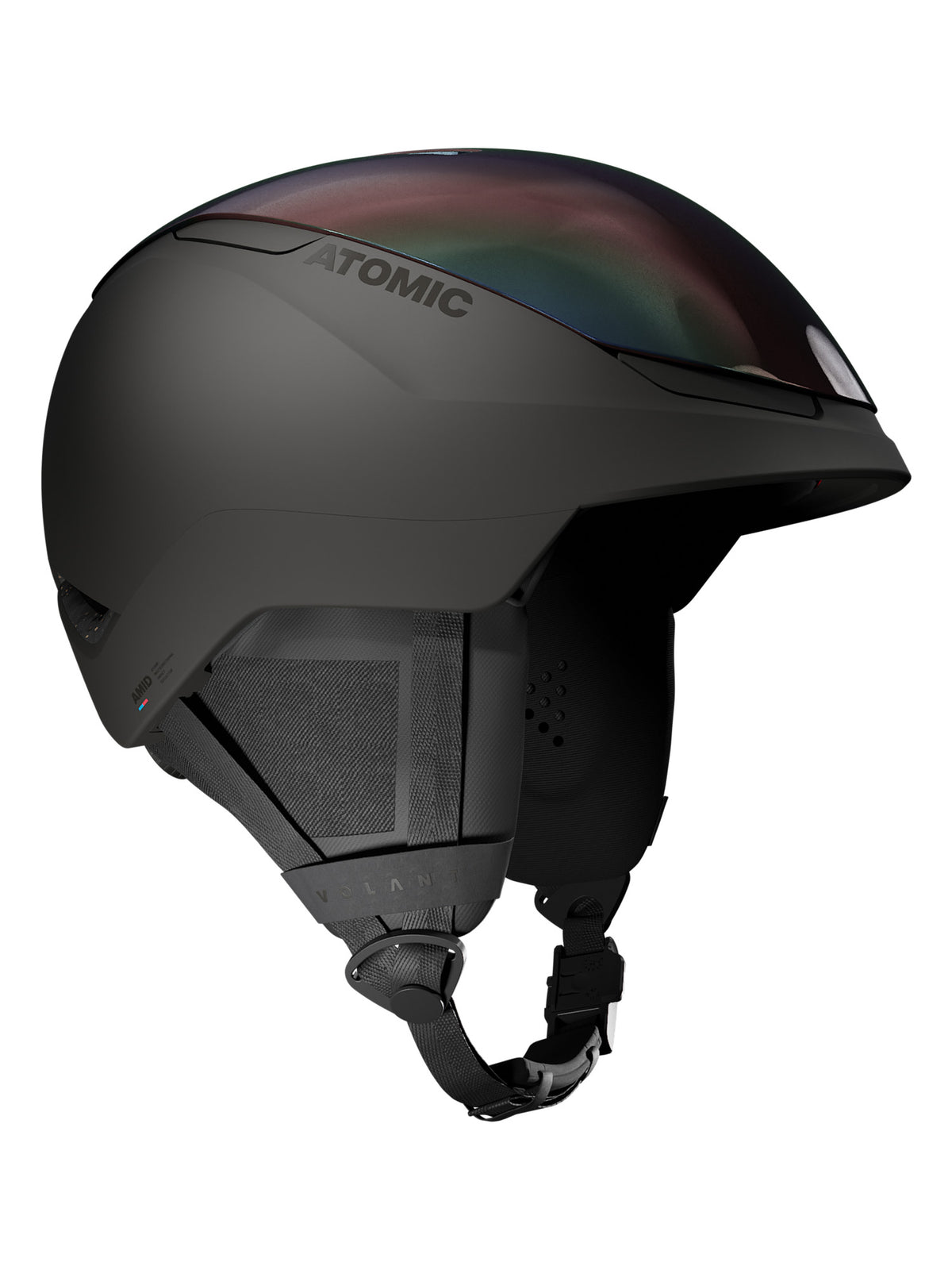
After skis and boots, helmet and goggles form two more contact surfaces. The helmet is selected according to head size and head shape, the goggle frame according to face and desired design. Try both together: the helmet edge should not press the frame onto your nose, and the goggles should maintain their intended position. Matching color or brand helps with a visual combination, but does not replace this shared fit. Under ski helmets, you can consider helmet shapes as a separate selection area.
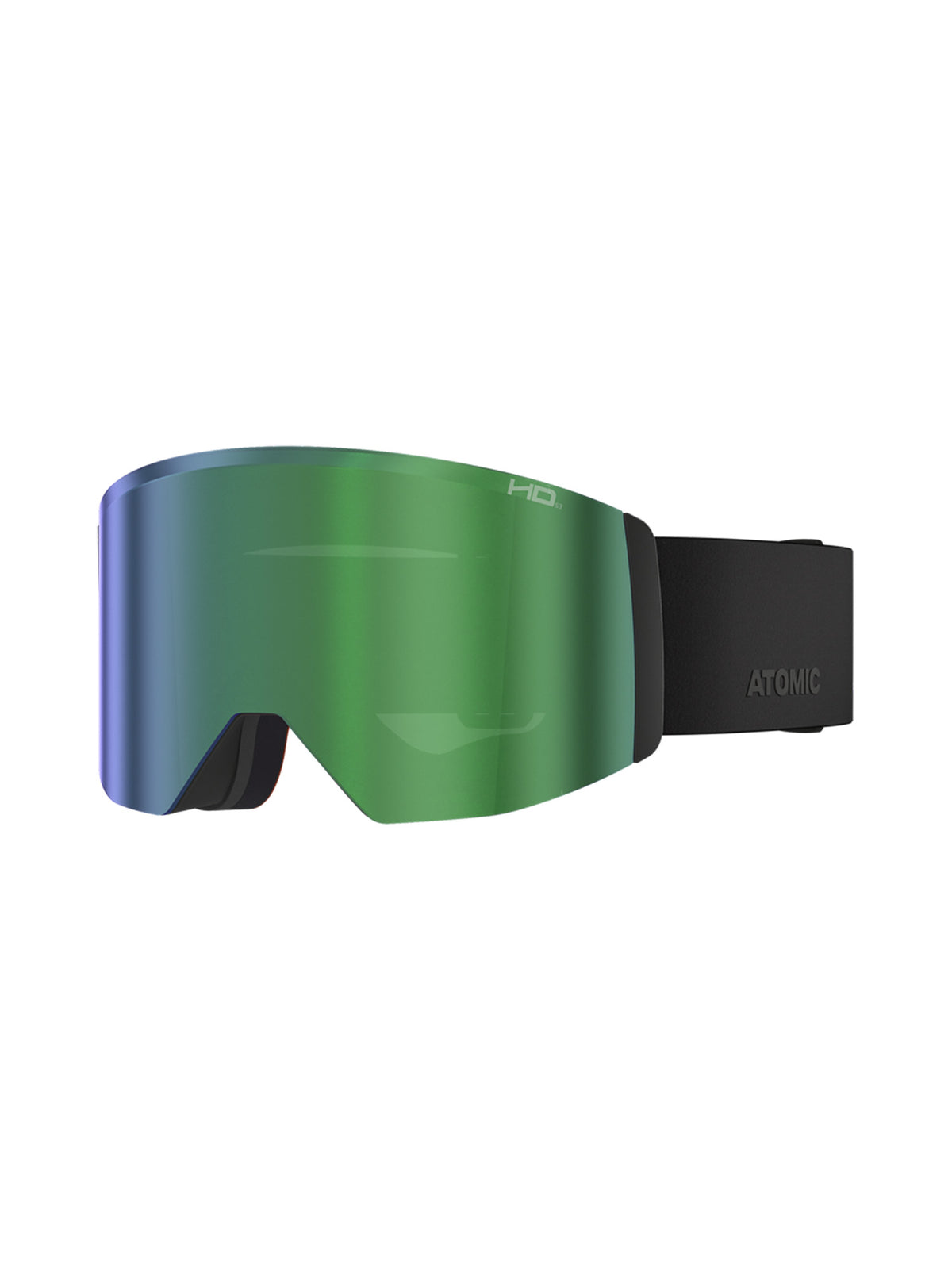
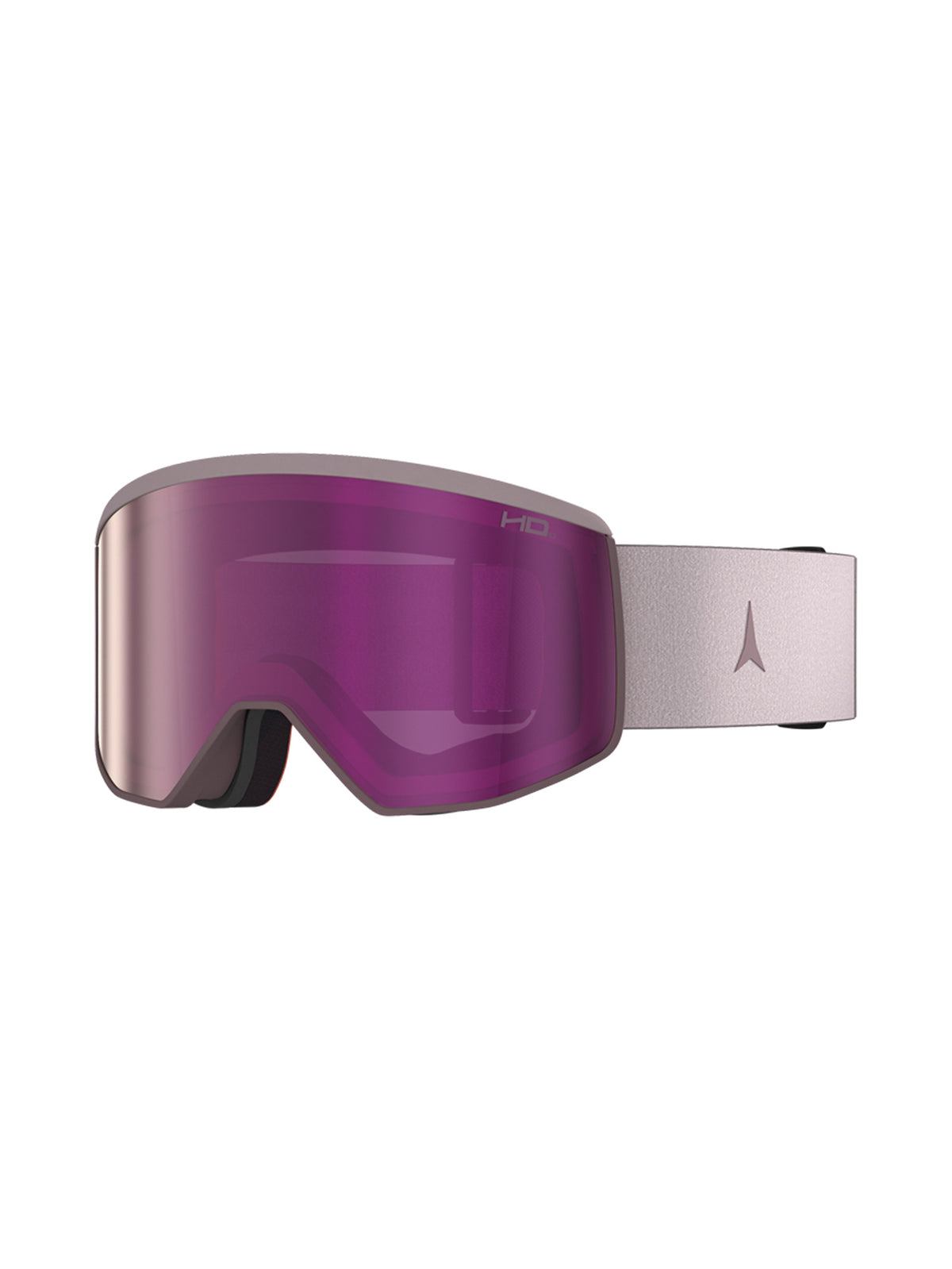
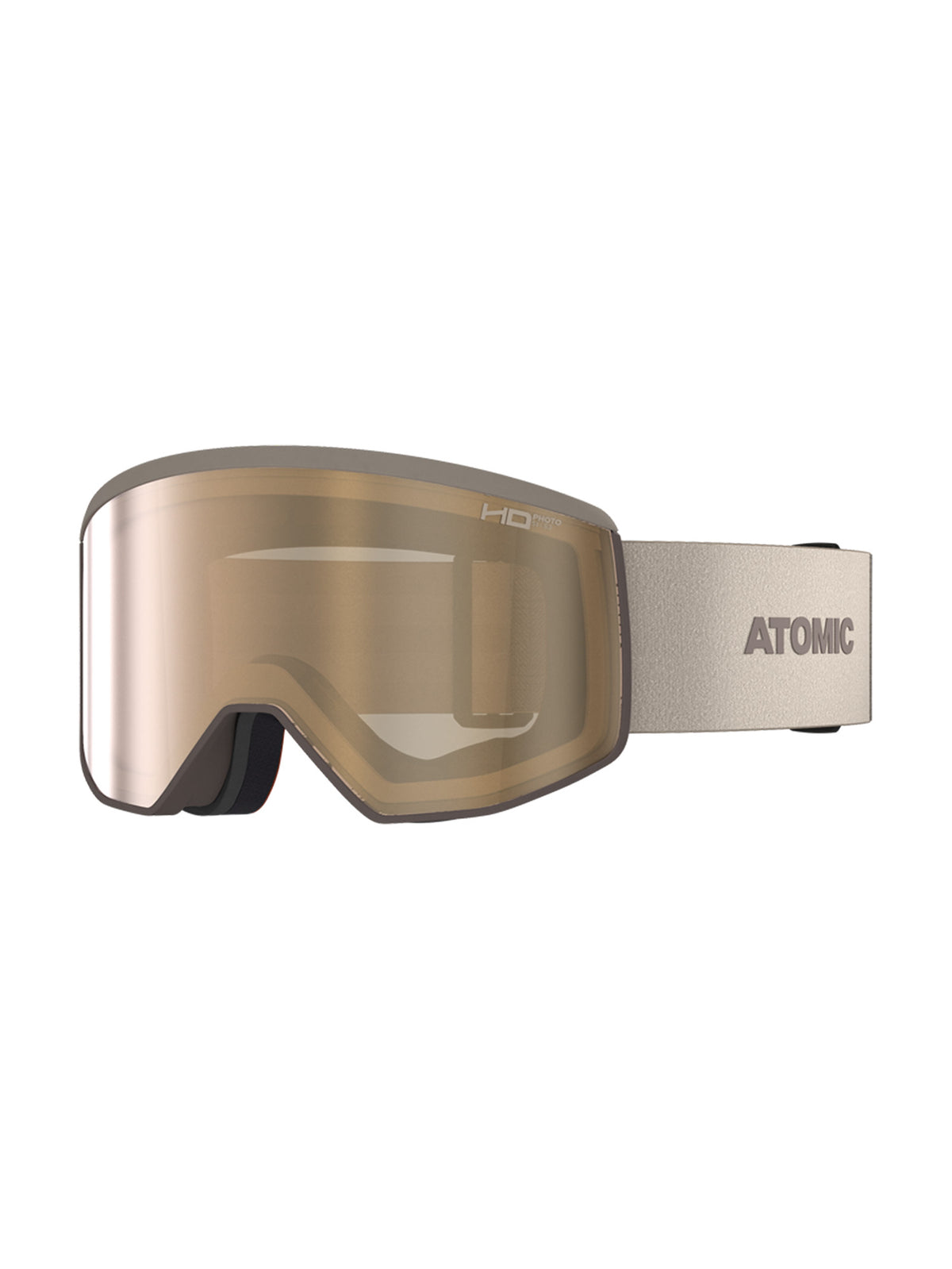
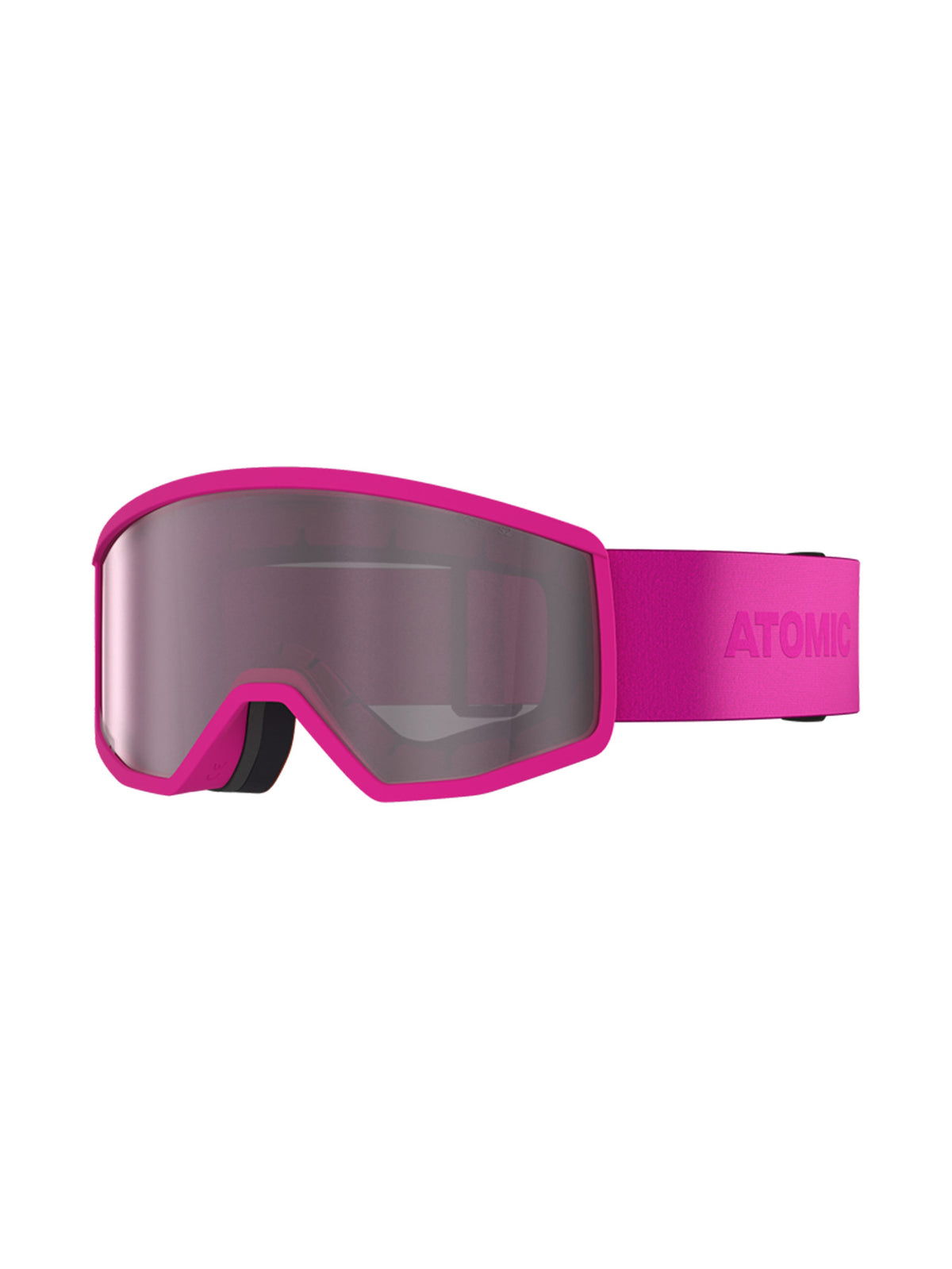
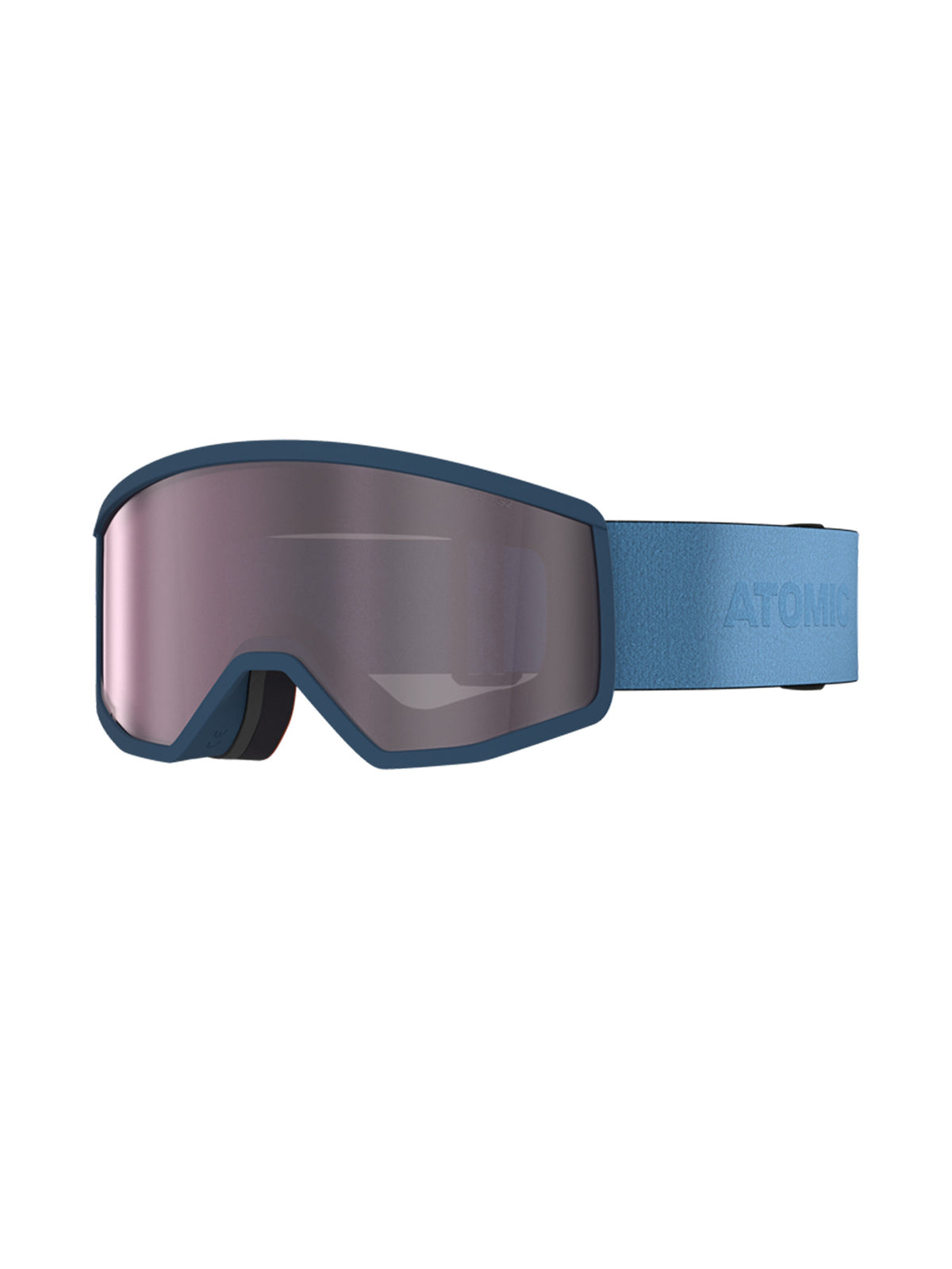
For ski goggles, the lens design is part of the decision. The visible mirror or lens color does not solely describe the intended light range. Compare the indicated tint and the properties of the specific design with the conditions for which you want to be equipped. If an interchangeable lens is provided, clarify its exact model assignment and scope of delivery. An interchangeable system does not automatically mean that several lenses are included. The ski goggles category makes it easier for you to compare frames and lenses regardless of the ski you have already chosen.
Completing the equipment as a traceable combination
Before finalizing your Atomic selection, review the different tasks. The ski follows your skiing goal; the boot follows your foot and the appropriate tuning; the binding follows the approved system combination. Helmet and goggles are assessed together on the head. You choose complementary poles and accessories according to their own purpose. You don't have to replace every part. Often, it's enough to specifically close a gap and integrate the existing components cleanly. This is precisely how equipment is created whose selection you can justify.
04This brand at FREUDENHAUS
05Questions about the brand