


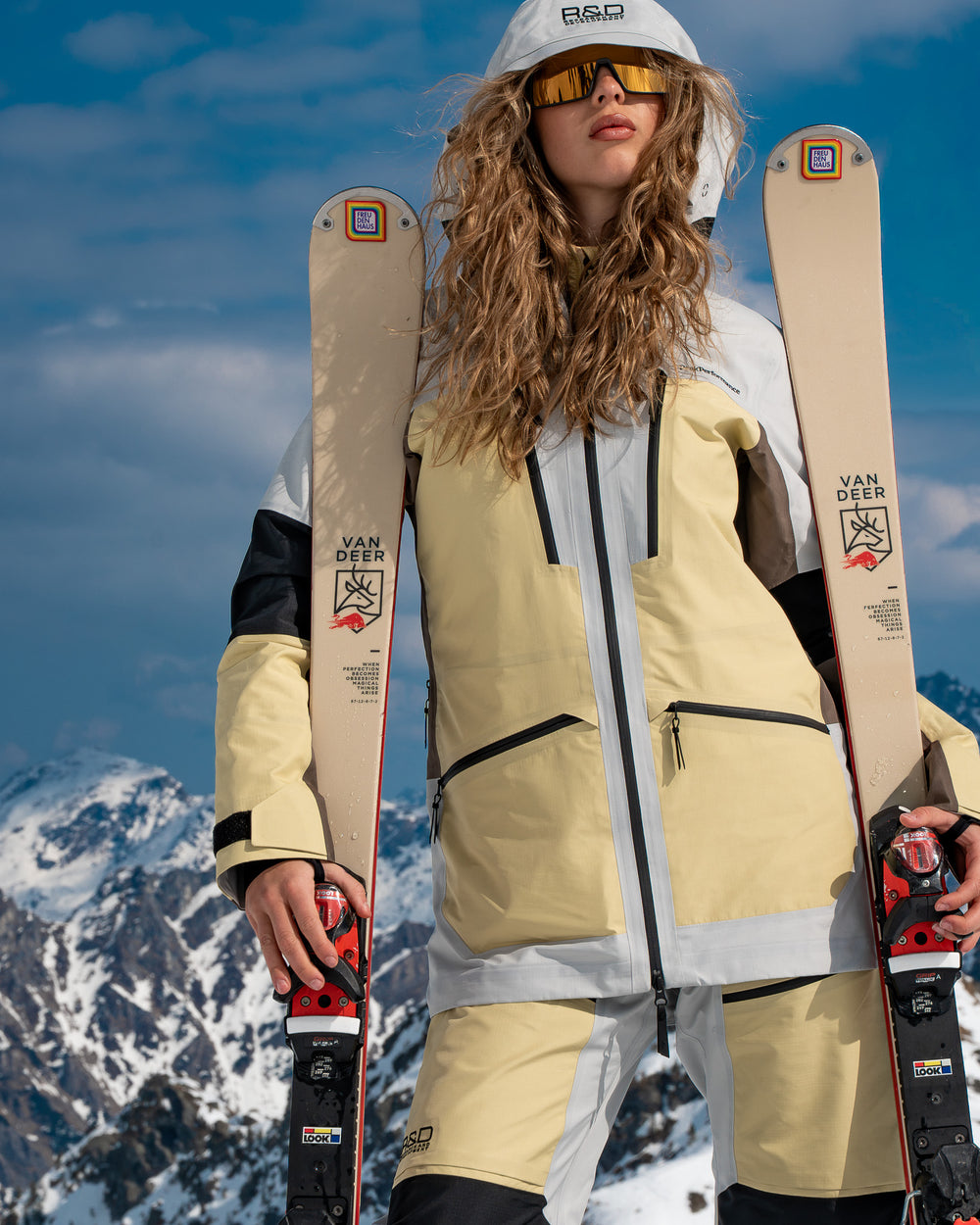



Ski suits and ski overalls: choosing the right one-piece
A ski suit combines a top and trousers into one continuous silhouette. For a comfortable fit, the torso length, waist, and leg line must all fit together. Compare ski overalls with your underwear and ski boots, and in addition to the features, also check how easy it is to put on, move, and take breaks in the complete outfit.


Ski Suit or Ski Onesie: Understanding the One-Piece Outfit
A ski suit combines a top and pants into a single garment. This gives your piste outfit a continuous silhouette, and the waist transition is designed differently than with a separate jacket-pant combination. Therefore, not only the clothing size is important for selection. Torso length, rise, shoulder area, and leg fit must all match simultaneously. A well-fitting one-piece allows you room for typical skiing movements without you constantly having to adjust multiple areas.
The terms ski suit and ski onesie are not always strictly separated. What matters is the actual construction and the manufacturer's described use. A one-piece designed for recreational piste use is not automatically a race suit or protective gear. Therefore, start by considering the model's role. Only then compare material construction, insulation, features, and the shape you prefer for your personal style.
Comparing One-Piece and Separate Ski Apparel
A continuous garment can appear particularly cohesive visually. Color, lines, and closures are designed together for the upper and lower body. You don't have to coordinate jacket and pant lengths. At the same time, you are more tied to this one model when combining sizes and warmth. If your upper body and legs have different fit requirements, trying it on deserves special attention.
A separate combination allows you to choose a jacket and pants independently. You can combine different sizes or shapes and easily exchange individual parts. In women's ski apparel, you will find a complementary overview of this construction. Decide between the two concepts based on fit, handling, and desired effect. A ski onesie is convincing if it fits you as a complete garment and not just well in one body part.
Torso Length is the Key Fit Criterion
In a one-piece, the shoulder and crotch are directly connected. If the available space in between is too tight, the garment can pull when bending or raising the arms. If it's significantly too large, the crotch may sit too low, and the fabric gathers at the waist. Therefore, assess this length with the suit closed. First, stand upright and then check how the fit changes with movement.
Assume a slightly bent posture, as if you were setting up on skis, and bring your arms forward. The suit should allow this position without uncomfortably pulling at the shoulders or crotch. Pay attention to whether the waistband area shifts significantly upwards. A larger size can create more torso room but also changes leg length, sleeves, and width. Often, a different cut is the more sensible comparison option.
The torso fit is also clearly visible when sitting. Sit upright and then lean forward slightly. The garment may change its shape but should not force you into a rigid posture. Consider whether you want to wear additional layers or a designated protector underneath. Their volume should be included in the fitting. A one-piece that fits comfortably without these additions may not offer the same mobility in your complete combination.
Align Waist and Hips Without Excessive Tension
The waist can be emphasized by the cut, elastic, or a belt. First, check how the suit fits without significant constriction. The basic shape should already fit the hips and torso. An adjustment is there to adapt the intended silhouette; it does not replace an unsuitable length or width distribution. If you have to pull a lot of fabric together, wrinkles can form, which can become uncomfortable when sitting or under other equipment.
Observe the front and back in motion. If the fabric pulls across the hips or buttocks, the crotch can be pulled upwards. If, on the other hand, the upper body is very loose while the pants are tight, the proportions may not be right for you. This question is more important for a one-piece than the isolated fit of a single top. If possible, compare the model's intended body measurements and not just the size you usually wear in a jacket.
Check Leg Fit and Hem with Ski Boots
The pant leg must connect meaningfully with your ski boots. A narrow fit places different demands on the opening and hem than a wider shape. Check if you can position the outer leg opening over the boot as intended. If there is an additional inner cuff, its handling must match the construction. Fabric should not unintentionally bunch up on buckles or other closures. The actual combination is crucial, not a general sizing rule.
You assess the leg length with ski boots on and in a slightly bent posture. A one-piece can give way in different places when bending than separate pants. Observe whether the hem maintains its desired overlap or moves significantly upwards. For complementary boot selection, you can find women's ski boots. Their fit remains a separate decision; the overall must then integrate with this existing equipment.
Planning Warmth and Underwear as a System
A ski suit can be lined or constructed differently depending on the model. Its one-piece form does not yet indicate how much insulation is present. Therefore, plan the first layer and, if necessary, an additional thermal layer based on the specific information and your perception of warmth. Do not automatically choose the thickest underwear. Too much bulk can change the fit at the waist, armpits, and knees and restrict the mobility of the entire outfit.
Women's functional underwear provides the basis for a close-fitting foundation. For both top and pants, pay attention to how their cuffs meet under the one-piece. A high waistband and an overlapping top should overlap comfortably. Check this combination while sitting. The connection should feel smooth without you having to permanently fold several layers in the same place.
If you also want to wear a mid-layer, pay attention to the collar and sleeve volume. A model that can be opened can facilitate temperature adjustment but requires space for its closure. A hood creates additional volume in the neck. Therefore, consciously decide what function the additional layer should fulfill. An outfit is not better coordinated by layering as many garments as possible, but by ensuring that warmth and freedom of movement fit together in the intended combination.
Compare Weather Specifications and Features Concretely
The term ski suit does not replace information about the outer fabric and construction. Check what weather properties are described for the specific model and how closures, seams, and cuffs are executed. A smooth or shiny surface is not proof of waterproofing. Similarly, a close-fitting cut does not imply specific stretchiness. Compare your favorites using the same criteria so that an eye-catching design does not obscure important questions about use.
Consider which details you actually want to use on the slopes. Pocket position, ski pass pocket, adjustable cuffs, or ventilation openings can vary depending on the model. Their usefulness depends on whether you can reach and operate them with your other equipment. Also, check how a filled pocket lies on your body. With a one-piece, additional pocket weight can affect the silhouette and fit over a larger area than expected.
Consider Collar, Hood, and Helmet Together
At the neck, the one-piece, underwear, and possibly a hood meet. Close the suit completely and move your head left, right, and down. The collar should lie comfortably and allow the desired movements. If you wear a higher base layer collar, it should be included in the fitting. Several close-fitting cuffs can shift each other. A slightly different collar shape can therefore be more comfortable than an additional size reserve on the entire suit.
A hood is not automatically suitable for use over every helmet. Orient yourself by the intended features and check the specific combination. Also pay attention to how the hood lies on your neck when you have not put it on. The helmet choice itself follows the appropriate size and intended use. Your one-piece should be combinable with this equipment without unnecessarily impairing your vision or natural head movement.
Consider Breaks and Dressing in Advance
A ski onesie remains a continuous garment when you open it. Therefore, it's worth looking at how far the closure can be opened and how you get in and out. Try handling it calmly so you know the difference from a separate combination. Sleeves, crotch, and leg openings should be positionable without excessive pulling. If the suit constantly gets stuck in individual places, check the cut and intended opening more closely.
Breaks are also part of a ski day. Consider how you want to handle the one-piece indoors and whether the existing openings suit your habits. Not every model offers the same possibilities. This question is not a minor detail but part of the purchase decision. If a separately removable jacket is particularly important to you, also compare women's ski jackets and women's ski pants as a separate solution.
Evaluate Color and Lines in the Complete Outfit
Because the design extends over the entire body, a one-piece looks different from two separate color blocks. Contrast lines can emphasize certain areas; a uniform color creates a calmer overall surface. Look at the suit with helmet, gloves, and ski boots. This equipment changes the proportions and remains visible on the slopes. Therefore, don't just decide based on a view without accessories if you want to judge the overall effect later.
A pronounced waist, a high collar, or a wide leg opening can define the character. Choose these details according to your style and then check if they remain comfortable in motion. A visually convincing one-piece does not need any additional claims about special performance or protection. Its value to you lies in the combination of a suitable construction, usable features, and a design that you genuinely enjoy wearing.
Finally Recognizing the Right One-Piece
Finally, perform the same movements with all intended layers: arms forward, bend knees, sit down, and stand up again. Check shoulders, crotch, and leg endings together. If you relieve one area and another becomes uncomfortable as a result, the shape may not be suitable. A ski suit should function as a whole. Don't decide solely for a good waist size if torso length or leg fit continue to bother you.
Also, read the care label, especially for fillings, trims, or decorated surfaces. The appropriate care depends on the specific model and should fit your possibilities. If the cut, handling, and features are convincing, you can use color and small details as the final selection criteria. This way, you will find a ski suit or ski onesie whose continuous form works with your body, your underwear, and your equipment.
04At FREUDENHAUS
05Questions about the category