







Men's Midlayers: the right warmth between base layer and jacket
A mid-layer adds the warmth and freedom of movement you need between your base layer and outer jacket. At FREUDENHAUS Obertauern, you can compare various men's models – from flatter tops to insulating jackets. Choose according to activity, available space, and the warmth requirements of your entire layering system.




What should your men's mid-layer do?
A mid-layer is the middle layer of clothing. It is typically worn over a base layer and under an outer jacket, but can also be worn alone in suitable conditions. Its main purpose is to provide additional warmth, which you adjust according to activity and weather. It does not have to be a specific fabric. Different constructions can fulfill this role. The decisive factor is how they fit into your existing clothing and what need they actually meet.
Therefore, don't start by asking about the warmest top. First, describe what is missing from your current outfit. Do you get cold during long lift breaks, do you get too warm quickly when moving, or is a suitable mid-layer still missing under a new shell? Such observations lead to a more precise need. A mid-layer that closes an existing gap is more sensible than an additional garment with the same purpose as several existing pieces. This makes the selection more targeted and easier to compare.
The base layer remains a separate decision
A mid-layer is not automatically functional underwear. The base layer lies directly against the body and must be designed for this contact. A more substantial top or an insulating jacket, on the other hand, plays a different role. If you are putting together your outfit completely new, start with a comfortable base layer and then add the necessary warmth. The selection of men's functional underwear offers a separate entry point for this. This way, you can compare both tasks separately and then check them as a combination.
Terms are not always used consistently in retail. A top named as a baselayer can be worn differently depending on its construction than a close-fitting functional shirt. Therefore, rely on the material, cut, and description of the specific item. The supplementary selection of men's baselayers and ski turtlenecks includes various underlayer types. Here, with the mid-layers, the additional intermediate layer is the main focus. This helps you to distinguish similarly named items by their actual use.
Comparing fleece, knitted tops, and filled models
Mid-layers can be flatter or significantly more voluminous. A fleece top differs constructively from a jacket filled with down or synthetic material. A suitable knitted top can also serve as an intermediate layer. However, the material designation alone does not explain the full effect. Thickness, density, cut, and other layers influence the feeling of warmth. Therefore, compare not only the fabric name, but the finished garment and its intended purpose in the outfit.
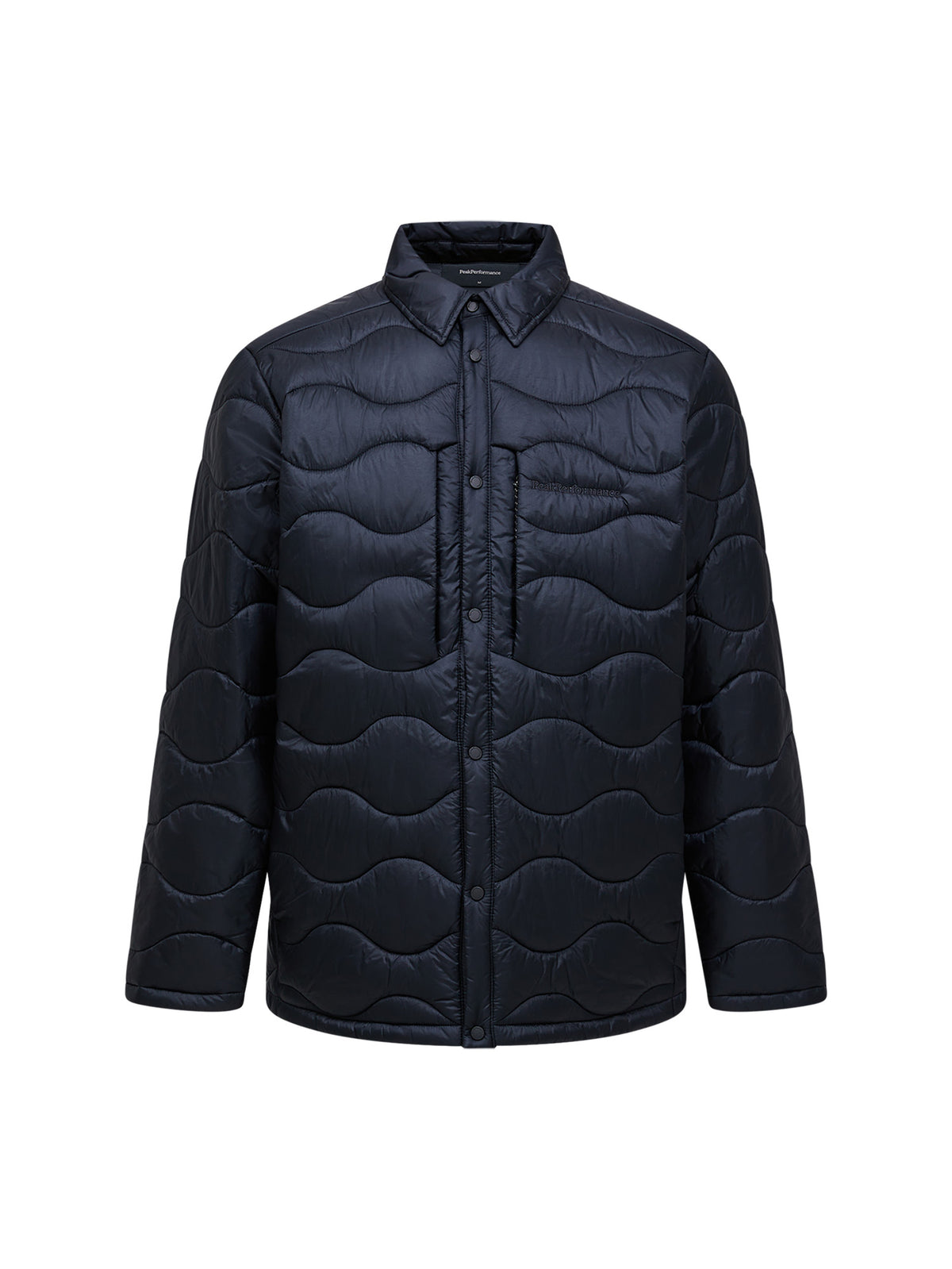
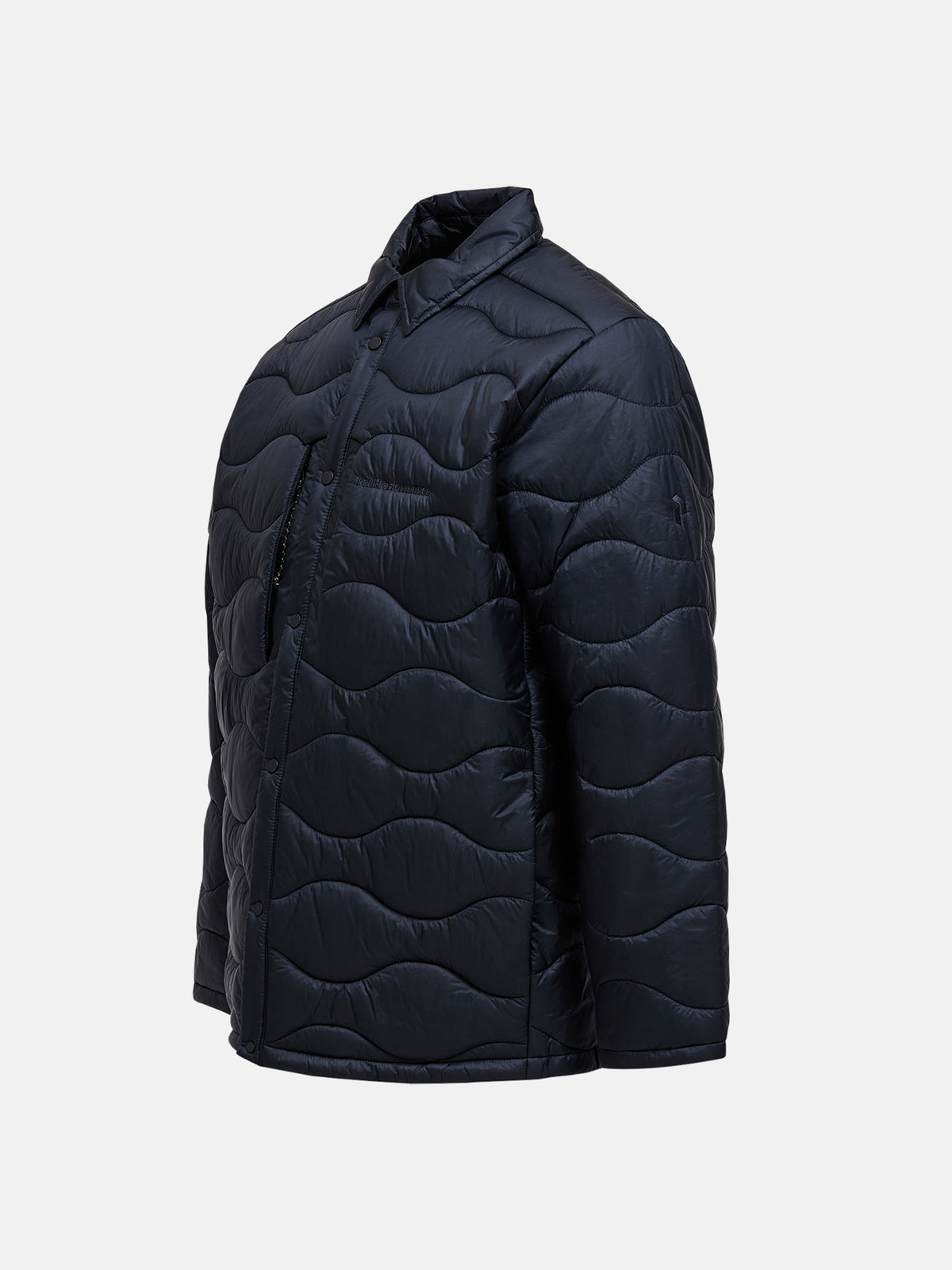
In the existing men's selection, the model names already show different approaches: Peak Performance Helium variants, a Helium Synthetic Overshirt, as well as light down models and other jackets from The Mountain Studio. They should not be treated as identical solutions. A hybrid designation can indicate a combination of different areas; the specific description must explain which materials are used where. An overshirt can also offer a different silhouette and handling than a sporty, close-fitting layer. Compare the actual designs instead of just the family name.
Matching insulation and intensity of movement
When you move more, your body generates more heat than when you sit still. Your mid-layer should therefore match the ratio of activity and breaks you expect. An intense section followed by a longer break can place different demands. Plan which layer you want to adjust on the go. There is no single fabric thickness that is optimal for every person and every ski day. Your personal feeling and the existing outer insulation should always be included in the decision.
If you get warm quickly, a flatter mid-layer under a suitable jacket can be useful. If you get cold during breaks, an additional insulation option can be more helpful. This consideration is not a fixed temperature rule, but a way to structure your selection. Observe when the problem arises with your current outfit. If you get too warm on the way to the lift, a different adjustment is needed than if you feel cold only after a longer rest. This allows you to justify your next purchase more precisely.
Mid-layer under a shell jacket
Under an unlined shell, the warmth can be varied using the layers underneath. The mid-layer plays a clearly recognizable role in the overall system. First, check how much space your shell offers. A very voluminous model can bunch up uncomfortably underneath, even if both parts individually fit correctly. Freedom of movement and smooth transitions are important. The selection of men's hardshell jackets helps to consider the outer product type separately from the insulation.
Try the combination with zippers closed and in different postures. Reach forward, raise your arms, and bend your torso. The mid-layer should not ride up so much that you have to adjust it with every movement. At the same time, the shell should not uncomfortably compress the underlying layer. If a hood is part of the mid-layer, check its placement under or behind the outer hood. A good combination is recognized by its shared handling and not just by the fact that both items are described as sporty.
Mid-layer under an insulated ski jacket
An already insulating ski jacket changes the requirements for the intermediate layer. Several warm pieces on top of each other are not automatically better if you overheat too much when moving. Therefore, check whether you need an additional thinner layer or actually more volume. The existing jacket is your starting point for this decision. What filling it has and how it is cut can be just as relevant as the properties of the new mid-layer. Both parts together should provide the desired coverage and warmth.
If you are also choosing your outer jacket, you can compare different constructions via men's ski jackets. Then consider whether you prefer to vary with separate layers or a more combined solution. Neither of these options is inherently superior for everyone. It is important that you understand the combination and can operate it on the go. An additional layer should fulfill a specific function, rather than simply coming along because it is assumed that as much clothing as possible is worn under the jacket in winter.
Full-zip, half-zip, and different collar styles
A full-length zipper makes it easy to open completely and take off. A shorter zipper, on the other hand, primarily changes the area around the neck and upper torso. Both can suit your use. Consider whether you often want to take off the mid-layer completely on the go or usually wear the same layer and only vary the closure. Also, pay attention to how the zipper fits at the chin. Comfortable contact and easy operation are often more important in everyday life than a particularly striking design.
With several collars on top of each other, more material quickly accumulates at the neck. Therefore, test the mid-layer with your base layer and ski jacket. A turtleneck, a hood, and a high outer collar must all be comfortable together. If precisely this area bothers you in your current outfit, a different neckline can already be a sensible improvement. You don't have to change the entire system. Specifically choose the shape that complements the existing pieces and comfortably allows for head and shoulder movements.
Checking the fit at the back, shoulders, and sleeves
A men's mid-layer should fit under other clothing and still follow your movements. The right size, therefore, does not result solely from your usual T-shirt size. Compare body measurements and the item's size chart and consider the base layer underneath. Make sure that your shoulders and arms remain freely movable. A cut that is too wide can gather folds under the jacket; a cut that is too tight can be restrictive. The goal is a quiet fit that feels comfortable in the complete combination.
At the back and wrists, the lengths are particularly noticeable. Bend forward and stretch out your arms. The hem should match the waistband of your pants and the sleeves should match the other closures. If thumb loops are specified, check whether you really want to use them in your combination. They also need a suitable length and should not pull uncomfortably. A single functional addition does not automatically make the entire layer more suitable; the decisive factor is whether it actually facilitates your use.
A mid-layer for travel and après-ski
Some mid-layers can also be worn visibly as a top in suitable conditions. Therefore, consider whether pockets, surface, and a specific cut are also important to you outside of complete ski equipment. A quiet overshirt can have a different effect than a sporty zip-layer. However, this does not replace the properties of the outer jacket. If you wear the mid-layer alone, its actual suitability for wind, moisture, and temperature must be considered separately. Versatile use begins with clear limits.
For travel, a garment that covers several planned situations can be practical. However, pay attention to the role it plays in each case. Different requirements apply to a top indoors than under a shell in the snow. Choose a color and shape that can be combined with your existing clothing if you explicitly want this use. The decision remains functionally comprehensible, even if style plays a role. A new mid-layer does not have to remain exclusively hidden to be useful as an intermediate layer.
Care and storage according to material
Cleaning depends on the individual model. A down filling, a synthetically filled area, and a knitted top can have different specifications. Observe the temperature, drying, and suitable agents on the care label. Do not transfer general fleece care to every jacket that is called a mid-layer. Especially with mixed constructions, the complete instructions are important. Keep them together with the model name so that you can find suitable information later and do not confuse similar-looking versions.
Before long-term storage, the garment should be completely dry. If you pack it small for on the go, check whether the manufacturer provides a specific solution or procedure for this. A small pack size is only helpful if it suits your needs; it does not replace a good fit or suitable warmth. For your next purchase at FREUDENHAUS Obertauern, you therefore combine the intended use, construction, and existing jacket. This creates an intermediate layer whose benefit you can understand in the entire outfit.
04At FREUDENHAUS
05Questions about the category