






VAN DEER-Red Bull Sports: Skis and apparel for your winter in the mountains
VAN DEER-Red Bull Sports connects the name Marcel Hirscher with its own vision for skis and equipment. However, for your selection, your riding style, preferred terrain, and specific equipment are the most important factors. Discover the brand world at FREUDENHAUS Obertauern and compare skis, suitable accessories, and clothing based on their actual use.
02Discover
Categories.




03With Marcel Hirscher
Skiing in Focus.
Your skiing style decides.
VAN DEER Skis: Between Racing and Personal Ski Days
When searching for VAN DEER skis, you quickly encounter Marcel Hirscher. The founder shapes the brand's direction, closely linking its development to experiences from ski racing. For you as a buyer, this background is interesting, but not a substitute for selecting the right model. A ski must not only match a sporty idea but also your skill, fitness, and preferred descents. Therefore, start with the kind of ski day you actually want to have.
Perhaps you're looking for a ski for groomed slopes and precise turns. Perhaps you switch between hard snow in the morning and softer snow in the afternoon. Or you want a broader model for various conditions. These differences are more important than which model within a brand is particularly prominent. The selection at FREUDENHAUS Obertauern can be reviewed based on such areas of use. The respective product description shows you which version, length, and features belong to an offered item.
H-POWER as an Introduction to Model Comparison
The H-POWER series illustrates why a common family name does not mean identical skis. VAN DEER assigns the H-POWER 68 more strongly to the piste. The H-POWER 78 is presented by the manufacturer as being between piste and changing snow, while the H-POWER 89 is more broadly aimed at mixed conditions. These examples help to understand the gradation within the family. They are neither a guarantee of specific stock levels nor a reason to decide without looking at length and specific design.
For a day spent predominantly on groomed slopes, it is first worth comparing with the selection of piste skis. If you are aiming for more versatile use, the all-mountain ski category provides another starting point. A wider waist width does not automatically make a ski better in every situation. It shifts the focus. Consider where you spend most of your time, instead of basing your decision solely on a rare exceptional situation.
Clearly Describing Turn Preferences
Before comparing technical specifications, describe your riding style in simple terms. Do you like to make short, rhythmic turns or do you prefer larger arcs? Do you want to actively build up pressure or rather get through the day with less effort? Such questions help to narrow down the desired characteristics. They are usually more meaningful than a self-assessment that sounds as sporty as possible. The number of your ski days and your experience with previous equipment also provide valuable clues as to what suits you.
The stated radius belongs in this context. It describes a geometric property at a certain length, not the only possible turn size. Riding technique, edge angle, speed, and snow conditions also play a role. Therefore, compare radii only together with the length and the overall construction. Two models with a similar number can feel different. If you want to replace an old ski, note down the model and length and state specifically what you like about it and what you want to change in the next ski.
Ski Length as Part of the Overall Tuning
A length decision based solely on body height falls short. Body weight, riding ability, desired speed, area of use, and construction are also important. A shorter ski is not inherently the easier solution, nor does additional length automatically make every model smoother running or more suitable. Follow the instructions for the specific design. Especially when switching from an older ski to a different model family, it is worth questioning previous rules of thumb and re-examining the entire tuning.
With VAN DEER, sport-oriented and more versatile models can place different demands. If after several days on the snow you notice that your equipment requires a lot of effort, this is an important selection criterion. The goal does not have to be the most demanding model. A sensible ski is one with which you can execute your preferred riding style controllably throughout the day. The right length supports this use, without a single number serving as a general recommendation for all riders.
Distinguishing Race Designations and Recreational Use
Terms such as Slalom, Race, or World Cup evoke clear expectations. Nevertheless, you should read the exact model description: A sportily inspired recreational ski and a model designed for specific race use can differ significantly in requirements and equipment. For selection according to competition rules, the relevant regulations for the respective use must also be taken into account. A name alone confirms neither a specific approval nor suitability for your discipline. For regular ski days, your personal fit is paramount.
Do not be fooled by color or similar model abbreviations in this distinction. The full designation, model year, and technical specifications of the offered ski are decisive. A set can also differ from a ski offered individually, for example, by plate or binding. Therefore, if you compare two items, apply the same criteria. This turns a brand comparison into a comprehensible decision about the exact equipment you want to use later.
Ski, Binding, and Boot Must Match
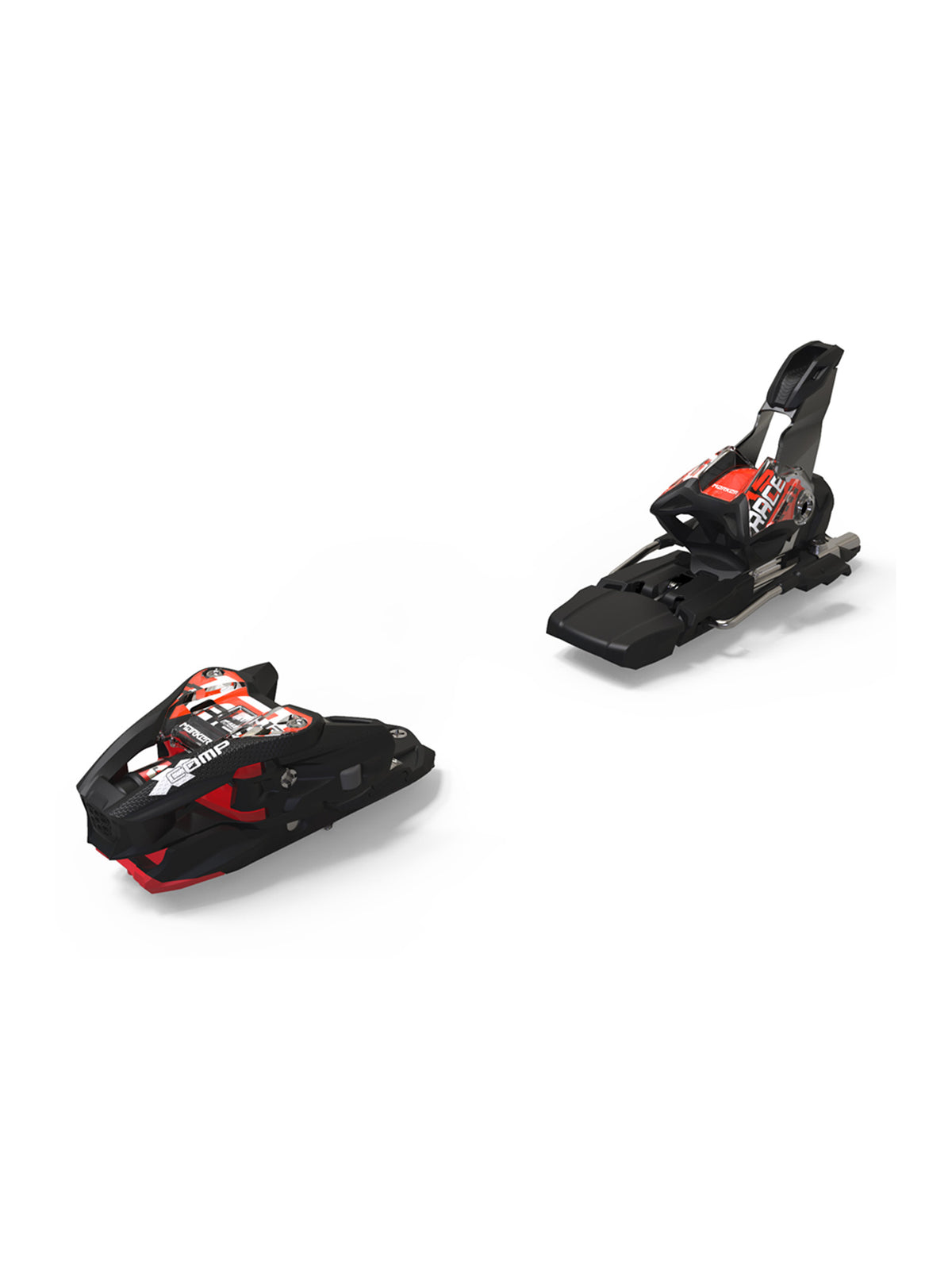
When considering an offer, first check the scope of delivery: Is it a ski without binding or a specifically described set? A pictured binding or an accessory name in a brand overview does not reliably answer this question. For further selection, the intended binding system, mounting requirements, and compatibility with your ski boot are relevant. In the ski bindings category, you can classify suitable product types; the technical suitability must be confirmed for the exact combination.
The actually existing boot sole is particularly important. Similar product names or a familiar logo do not replace a check of the intended standard and approval. The sole length is also not to be equated with the usual shoe size. Mounting, testing, and adjustment belong in expert hands. For an initial comparison, you can have the model, sole marking, and sole length of your boot ready. This makes the question of a suitable combination more concrete, without making an individual adjustment guide out of a general brand description.
Consciously Complementing Poles and Other Equipment
For ski poles, length, grip, strap, basket, and material are important comparison points. A pole intended for the piste can have different characteristics than a version for changing snow conditions. Decide according to the intended use and the actual model. A striking design or a version matching the ski color is a pleasant detail, but should only be decisive after the functional selection. Here too, the brand alone does not tell everything about the intended use.
If you are putting together several parts, check each accessory individually. Products from other manufacturers may appear in a set or as an addition; this does not mean that VAN DEER manufactures them itself. Pay attention to the exact manufacturer and item details. This clarity will also help later when you are looking for care instructions, spare parts, or technical information. A well-assembled set consists of demonstrably matching individual parts and not solely of a visually uniform brand world.
For transport, it is also worth looking at the actual dimensions. A ski bag should fit the chosen ski length and be able to accommodate the intended contents. Only plan additional space for explicitly suitable items so that sensitive parts do not unnecessarily bump into each other during transport.
VAN DEER Apparel for Around Skiing
Searching for VAN DEER also includes clothing. Here, it is worth distinguishing between technical garments for sports and relaxed pieces for travel, everyday life, or après-ski. A hoodie with a brand logo is not automatically a functional mid-layer. Check the material, cut, and intended use for each item. If you are looking for an uncomplicated casual top, you can also browse the selection of hoodies and sweaters for your preferred fit.
When it comes to clothing, consider whether you want to wear it alone, over a T-shirt, or under a jacket. This influences the appropriate width and length. A hat for everyday wear also does not have to meet the same requirements as a thin layer under a ski helmet. Assemble your outfit according to the actual situations. This way, the clothing complements your enthusiasm for skiing, without every piece having to fulfill the function of full technical ski equipment.
Well Prepared for the Final Selection
For your VAN DEER comparison, a few specific details help: preferred terrain, riding style, previous ski, desired change, and existing ski boot. Supplement this information with the appropriate length and confirmed scope of delivery. Then, keep the product information and care instructions for your equipment. After your ski day, skis and metal parts should dry before prolonged storage; further care and service depend on the respective material and condition. Finally, choose the combination whose characteristics match your most frequent ski days.
04This brand at FREUDENHAUS
05Questions about the brand