





J.Lindeberg Ski Fashion – Technical Details with Clear Design
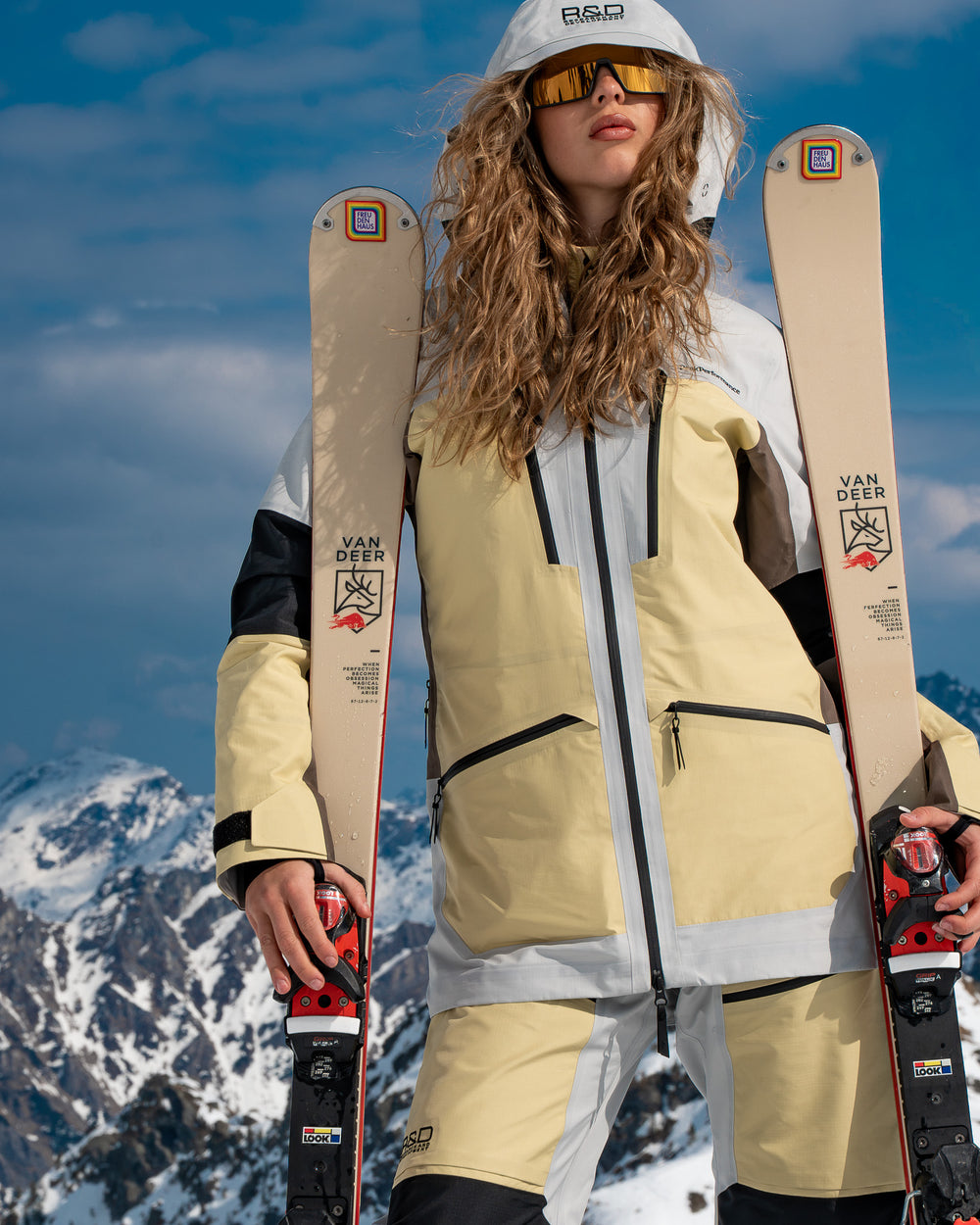
J.Lindeberg combines fashion and sport, bringing this approach to its ski wear. The selection focuses on ski jackets, trousers, and bibs for men and women. Compare the construction, freedom of movement, and handling of details so that your look is cohesive not only when standing still but also during your ski day.
02Discover
Categories.


03Clearly combined ski fashion
A clear line
for your ski look.
J.Lindeberg: Where Fashion Meets Skiing
J.Lindeberg was founded in Stockholm in 1996. The brand combines fashion with sport, applying this blend to various apparel categories. In the ski selection, this translates into a specific task: a jacket must have a clean form while also functioning well with movement, base layers, and equipment. Therefore, when making your decision, it's worth considering design and features together. A visible logo alone does not explain the construction behind a particular model.
At FREUDENHAUS, the J.Lindeberg selection focuses on ski jackets, ski pants, and complementary styles. Women's and men's models offer different starting points, while the actual fit is determined by measurements and cut. Begin with your desired combination: should a new jacket match existing pants, are you looking for a coordinated set, or are you interested in a higher-cut bib? Each of these directions places different emphasis on length, waistband, and room for base layers.
Understanding the Ski Jacket through Specific Features
The official Omnia jacket provides an example of how J.Lindeberg describes technical features. For one version, the manufacturer specifies LX Stretch 2L, sealed seams, a ventilation zipper, and a ski pass pocket. These features have different functions and should not be considered as a single general functional statement. The material construction relates to its composition, the seam processing to the finish, and the pocket arrangement to daily use. The exact features remain tied to the specific version.
For your selection, you can sort the product information according to these functions. What external weather construction is provided? Is there additional insulation? Which openings can you use on the go? A ventilation zipper is a means of direct opening and is not the same as the described breathability of the material. Both can be combined in a jacket but are used in different ways. This distinction helps to identify a concrete advantage for your ski day.
Women's Ski Jackets: Checking the Fit with Base Layers
For a women's ski jacket, tailoring, shoulder line, and hem length influence the visible structure. A more defined waist appears different with the same pants than a straighter cut. Choose the cut deliberately and factor in the underlying clothing. A voluminous sweater can fill out a jacket differently than a compact ski turtleneck. Therefore, the fitting should show the combination you actually intend to wear later, not just a thin everyday layer.
Stretch your arms forward and sit down with the jacket closed. Pay attention to how the hem lies over the pants and whether the back retains enough room. The sleeves should also function with gloves during movement. The women's ski jackets collection offers further silhouettes for comparison. This way, you can first find your suitable basic shape and then categorize the J.Lindeberg features more precisely.
Men's Ski Jackets: Considering Back, Shoulder, and Collar Together
For men's models, shoulder width and back length are helpful selection points. A loose fit when standing can still feel different when reaching forward if the sleeves or upper back are too short. Therefore, test movement as part of the fit. If you plan to wear multiple layers, they should fit under the jacket without the material gathering unintentionally at the upper arms or neck.
The collar should match the intended neckline of your base layer. A high ski turtleneck and neck warmer create more volume than a flat neckline. Close the jacket in this combination and turn your head. Also, pay attention to how pockets and zippers are accessible. With men's ski jackets, you can compare different lengths and constructions before color and design complement the final choice.
Ski Pants or Bib: Deliberately Choosing the Waistband Construction
Classic ski pants concentrate the closure at the waist and hips. A bib extends higher with its upper section and is held by suspenders. This not only changes the visible shape but also the handling. Consider how you put on the pants, what upper layers lie over them, and how you open them during a break. A higher construction may be suitable for you, but it should be chosen consciously and not just based on an eye-catching product image.
For a bib, the length over the torso is an additional point. The suspenders should allow for the intended position without the pants pulling uncomfortably elsewhere. Try the shape while sitting and in a bent posture. A suitable leg length alone does not confirm the overall fit. Likewise, suspenders do not replace a suitable width at the hips and seat. The combination of upper construction and pant shape must match your proportions.
If a bib has additional pockets in the upper area, check their position with the jacket closed. The contents should be stored where you can easily reach them and where they don't feel bothersome when bending. A practical pocket position is only apparent in the complete combination.
Leg Cut and Cuff Over the Ski Boot
Whether classic pants or a bib: the cuff should be considered with the ski boot. Pay attention to how much width the hem offers and how an existing opening is used. An internal snow gaiter and the outer pant cuff are different components. They should function in their intended form without you having to adjust the entire leg length via the waistband. You can find more models for comparison in the men's ski pants section.
Developing a Coordinated J.Lindeberg Look
A jacket and pants from the same color family can create a cohesive overall look. Different inserts or surfaces create visible details within it. With a contrast between the top and bottom, the silhouette is more strongly divided. Decide which effect you prefer and include your helmet, goggles, and gloves. Their appropriate function remains a separate question. A color-coordinated combination is only complete when the respective parts are also thoughtfully selected.
A single J.Lindeberg piece can also be combined with existing ski clothing. For example, choose a new jacket based on how its hem lies over your tried-and-true pants. A subdued bottom can accommodate a visible accent on the jacket. This way, you don't have to replace several items simultaneously. The brand overview serves as a starting point, while your existing equipment provides important clues about the required shape and suitable construction.
Incorporating Layers, Sizes, and Care into Your Decision
The first layer and a possible mid-layer are part of the size selection for outer clothing. Too much fabric in the same places can alter movement. Therefore, decide whether you need a compact base or additional textile substance, and plan the transitions at the collar and waistband. For close-fitting base layers, you will find complementary styles in the ski underwear collection, which are selected for their function independently of the external brand look.
Compare measurements with a garment of similar function. A close-fitting top is not a reliable size reference for a jacket with intentionally more room. Also, note the care label for the specific model. Material, filling, and features may require different treatment. If you take these points into account, a J.Lindeberg selection emerges with a clear sequence: suitable construction, harmonious movement, practical details, and a design that matches your preferred ski look.
04This brand at FREUDENHAUS
05Questions about the brand