








Women's Vests for Thoughtful Layers and Clean Silhouettes
Women's vests leave your arms free and add an extra layer to the torso of your outfit. Compare short and long styles, quilting, collars, and the space for your top underneath. The key is whether you want to wear the vest visibly over knitwear, as part of a casual look, or under a matching outer jacket.


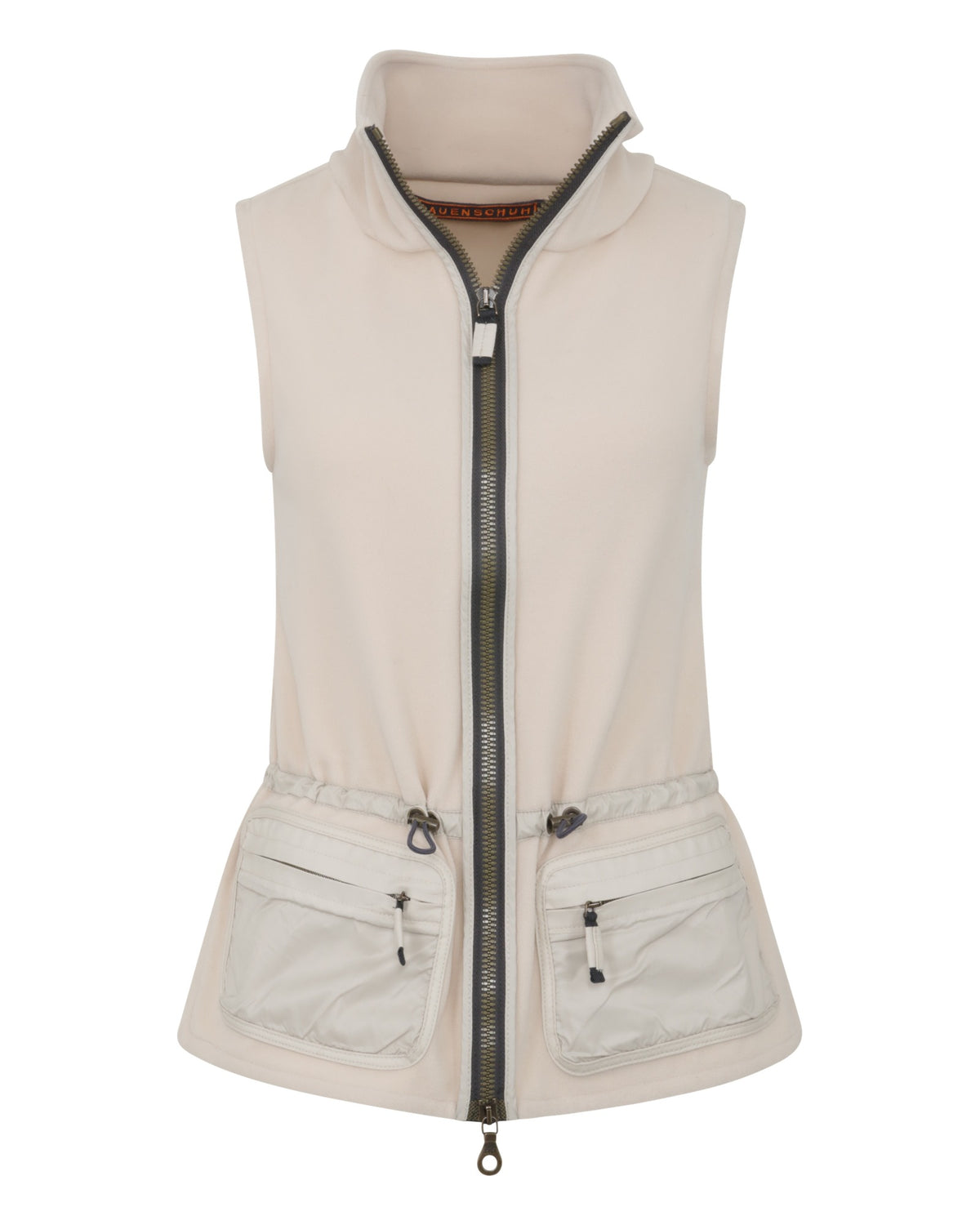

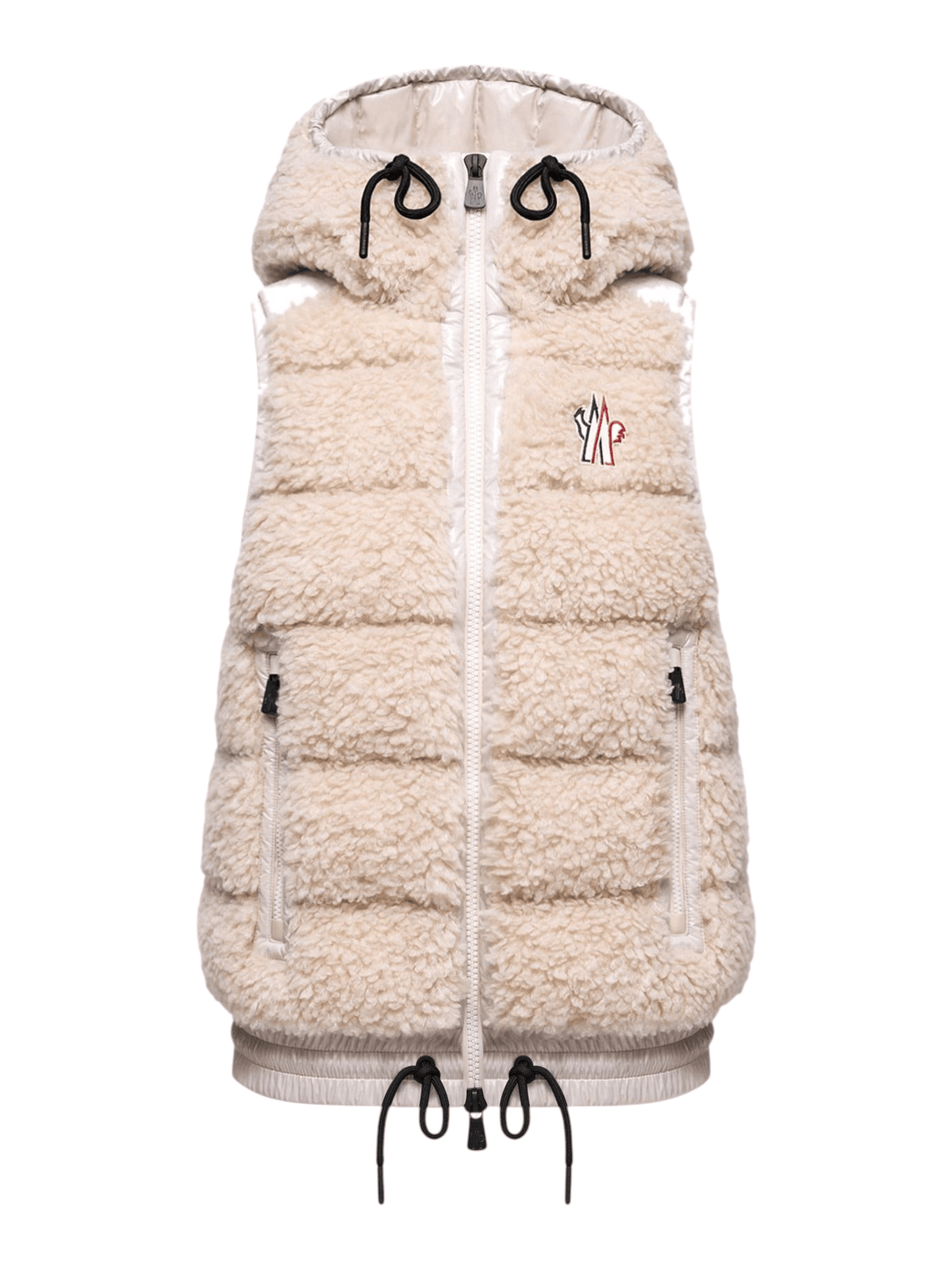
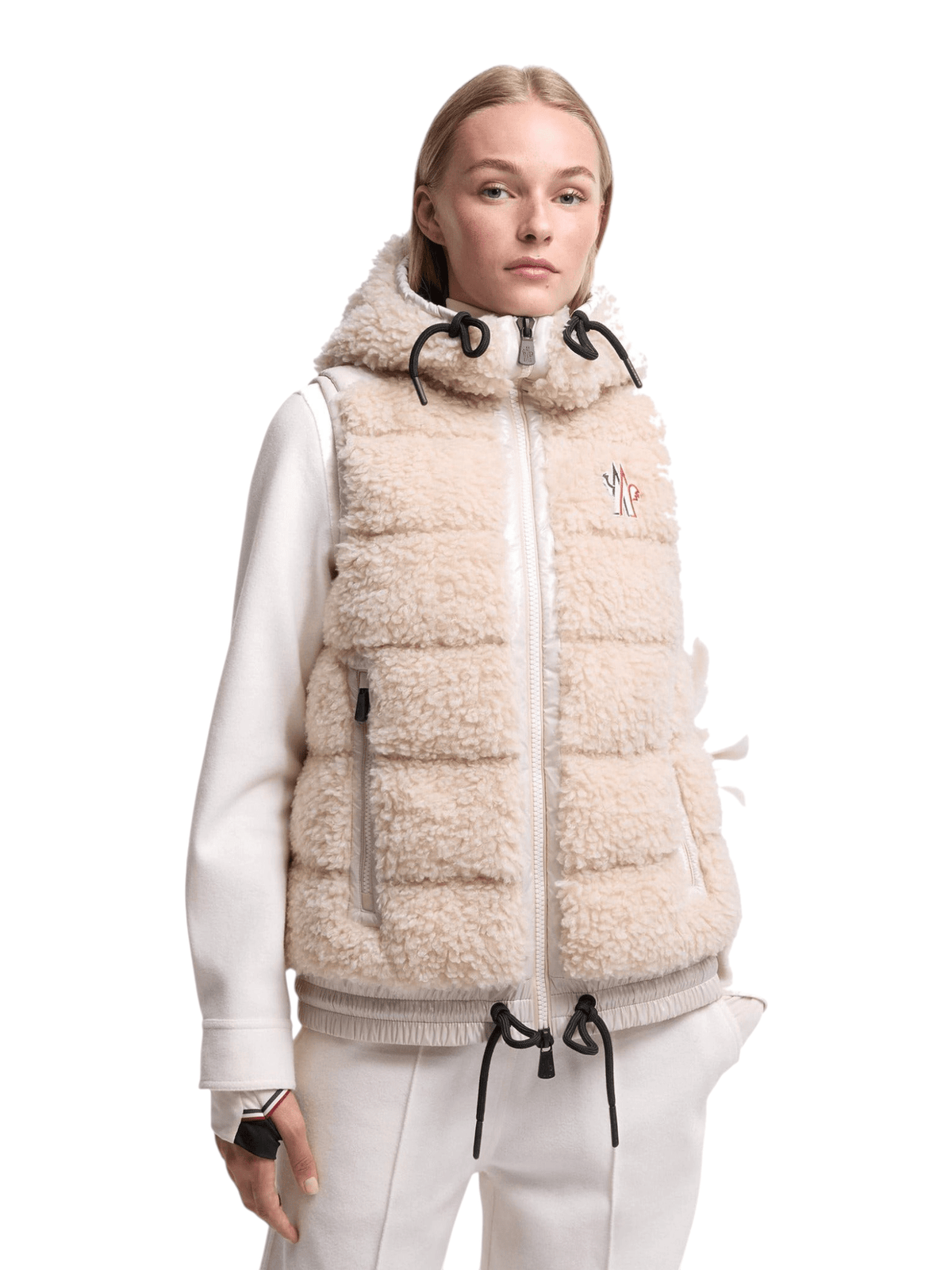
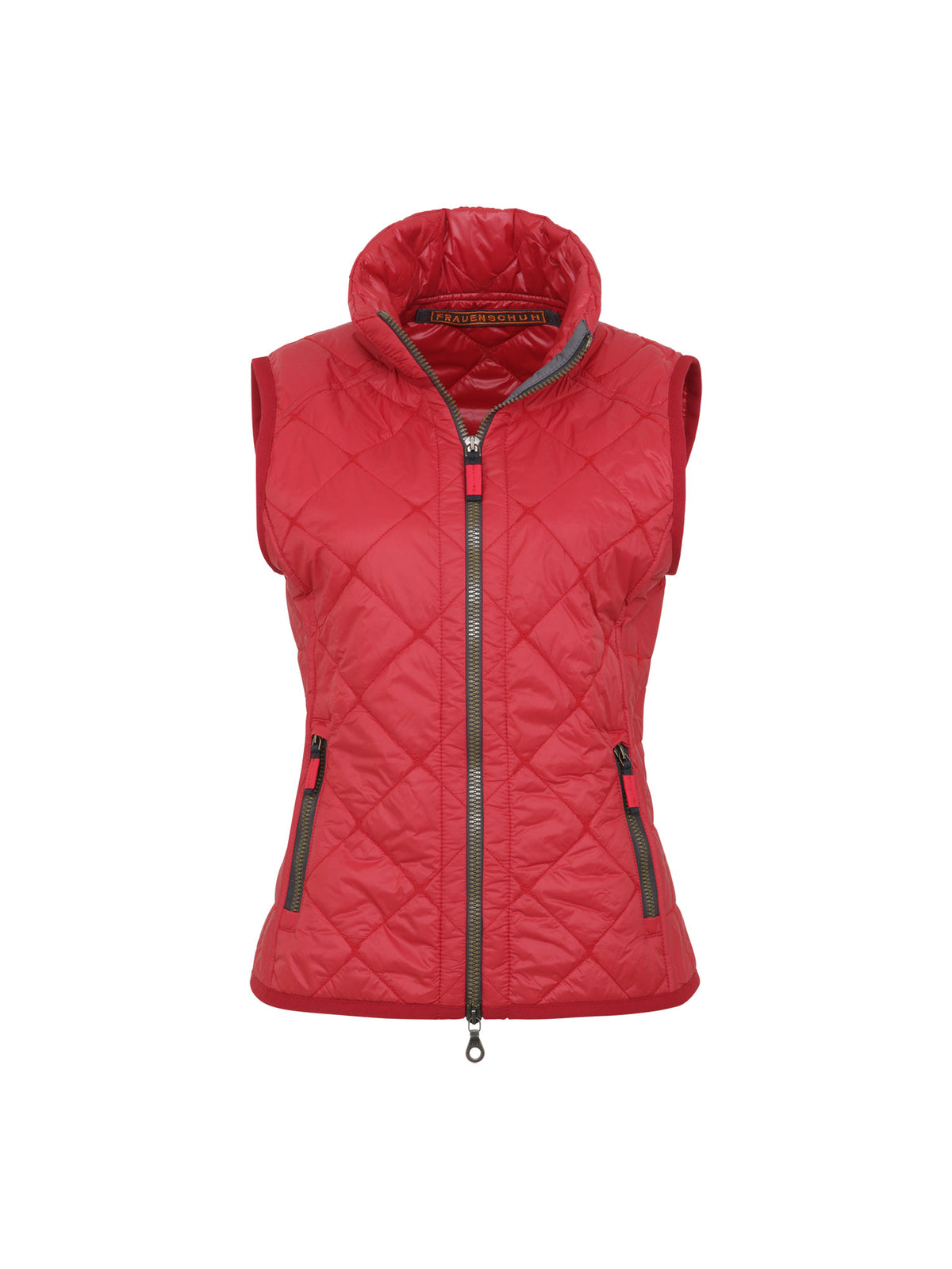


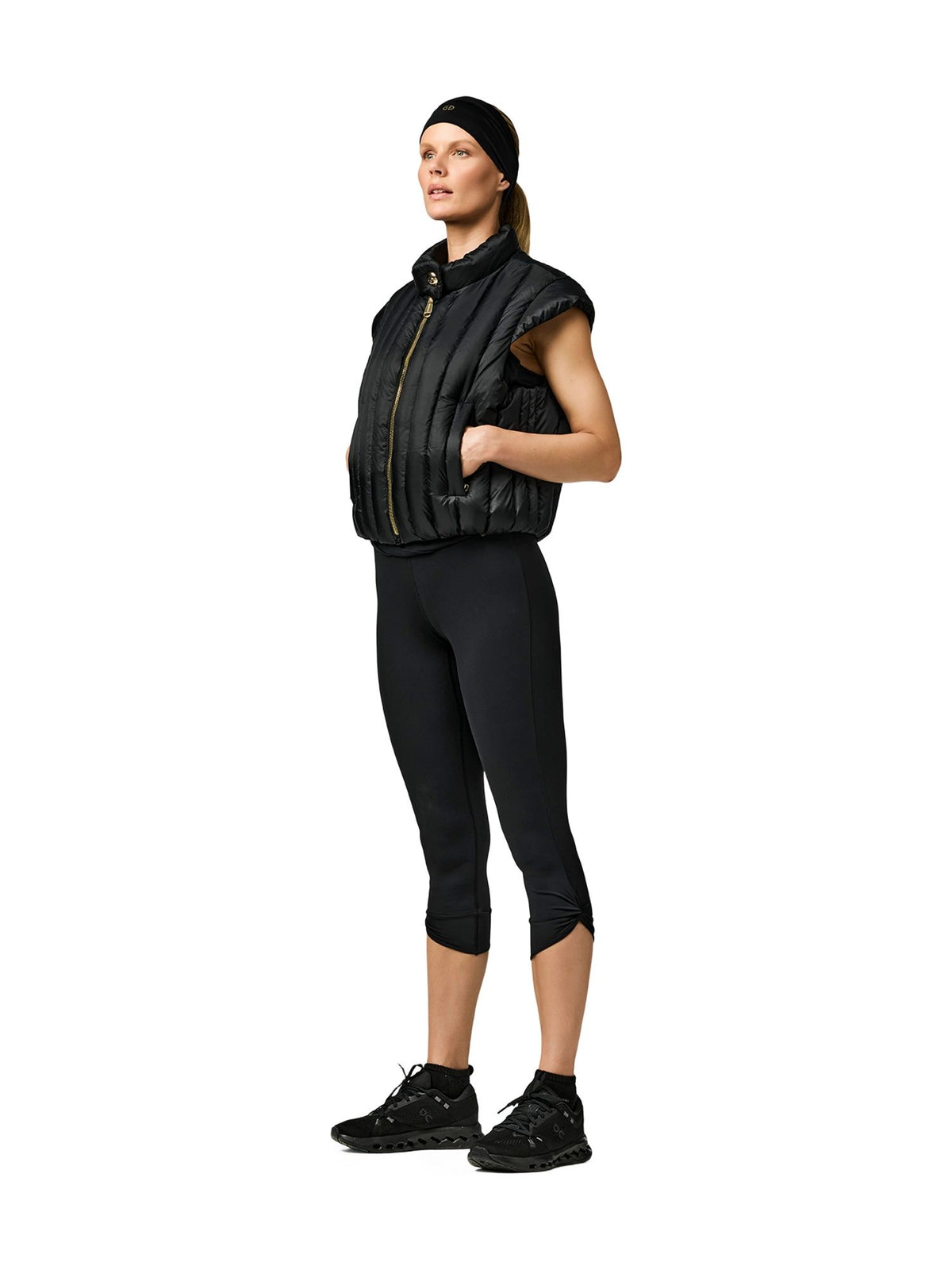


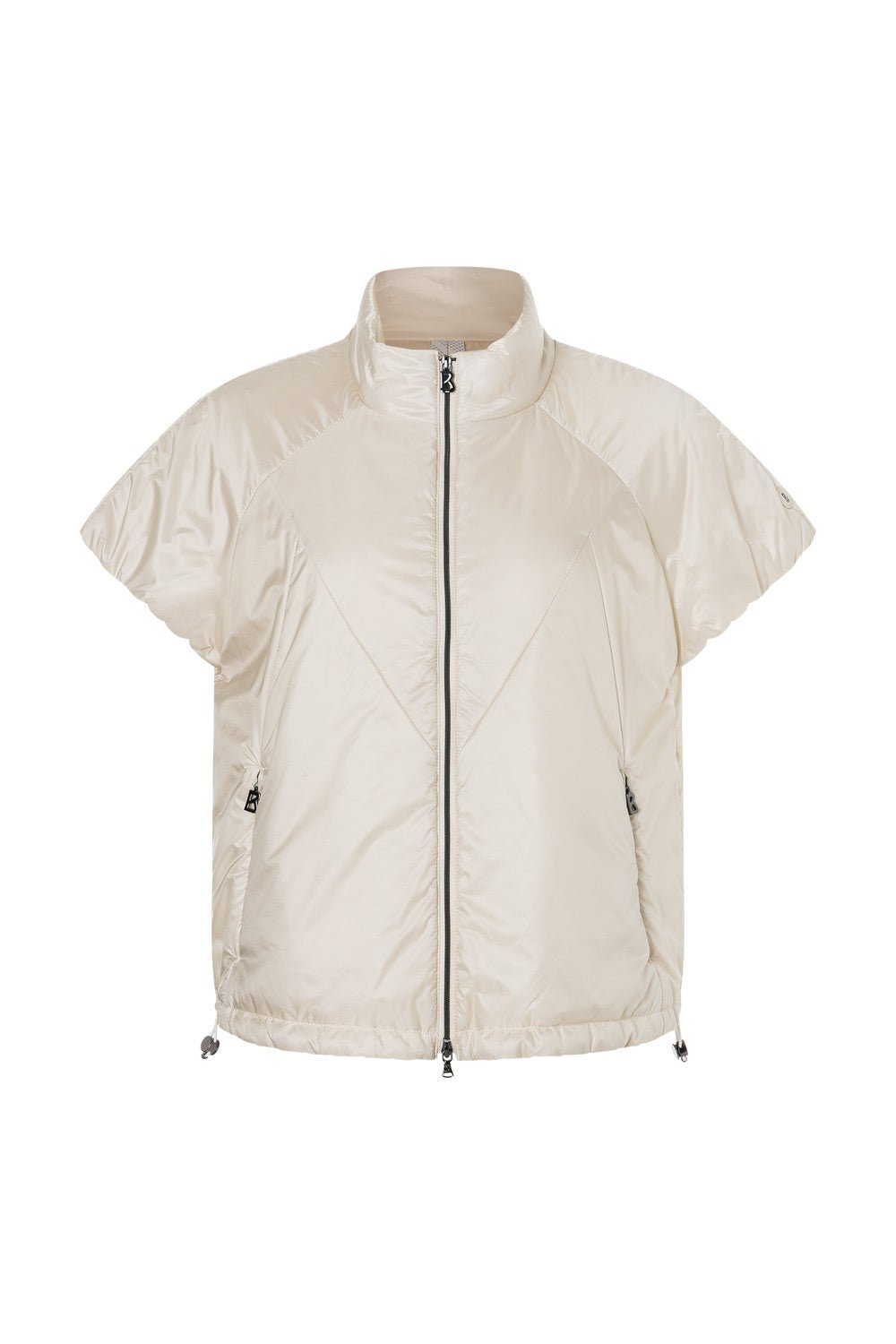
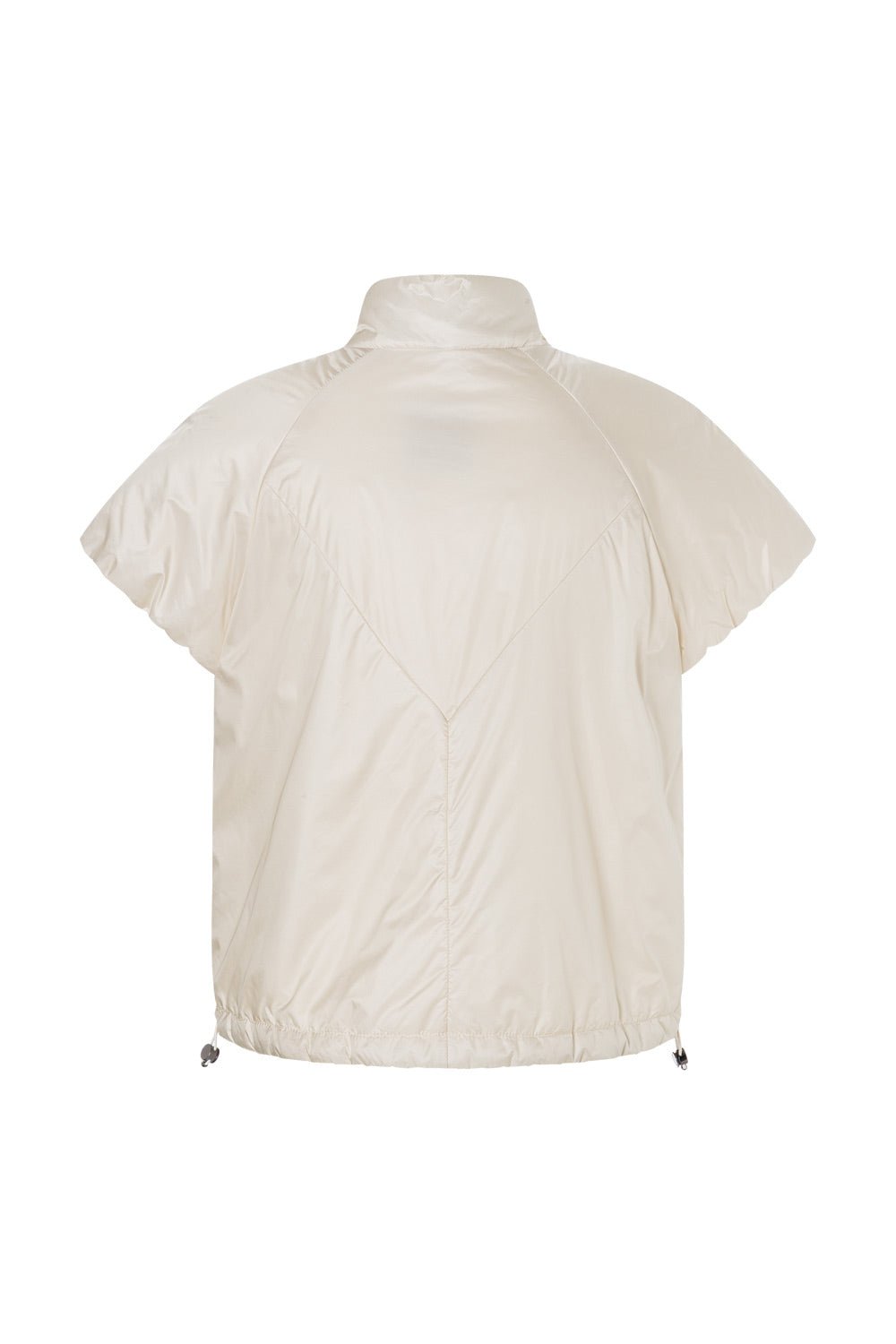
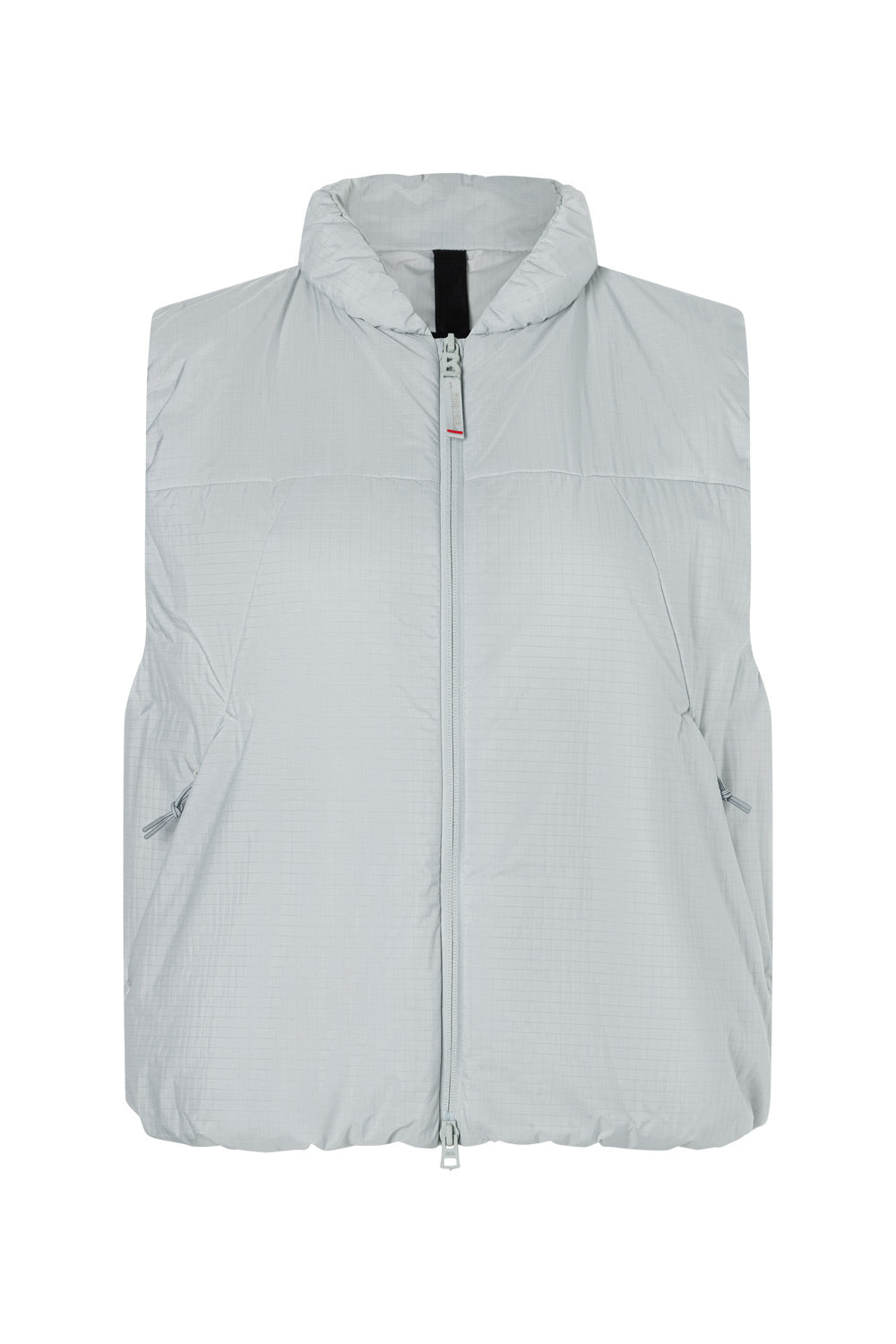
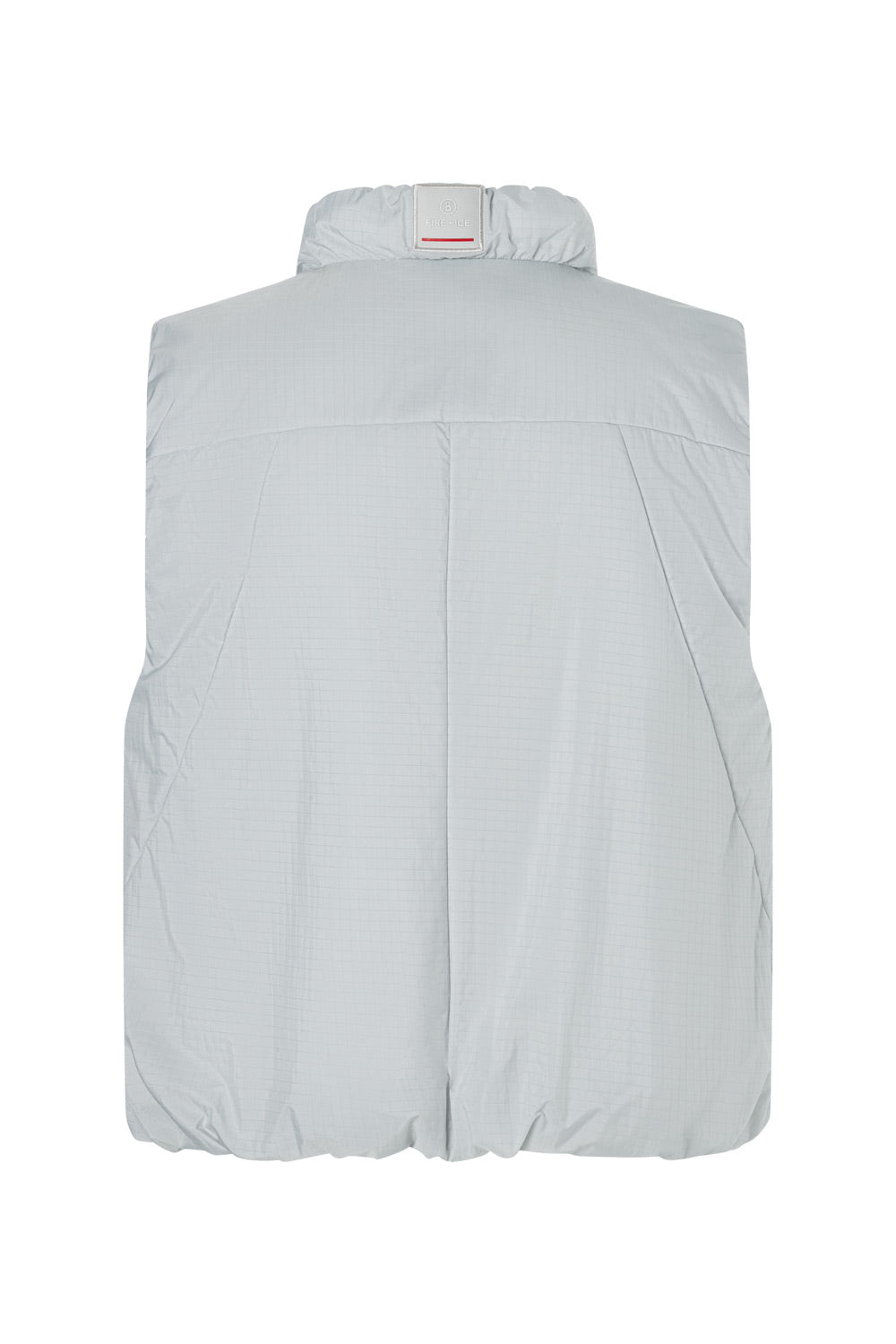


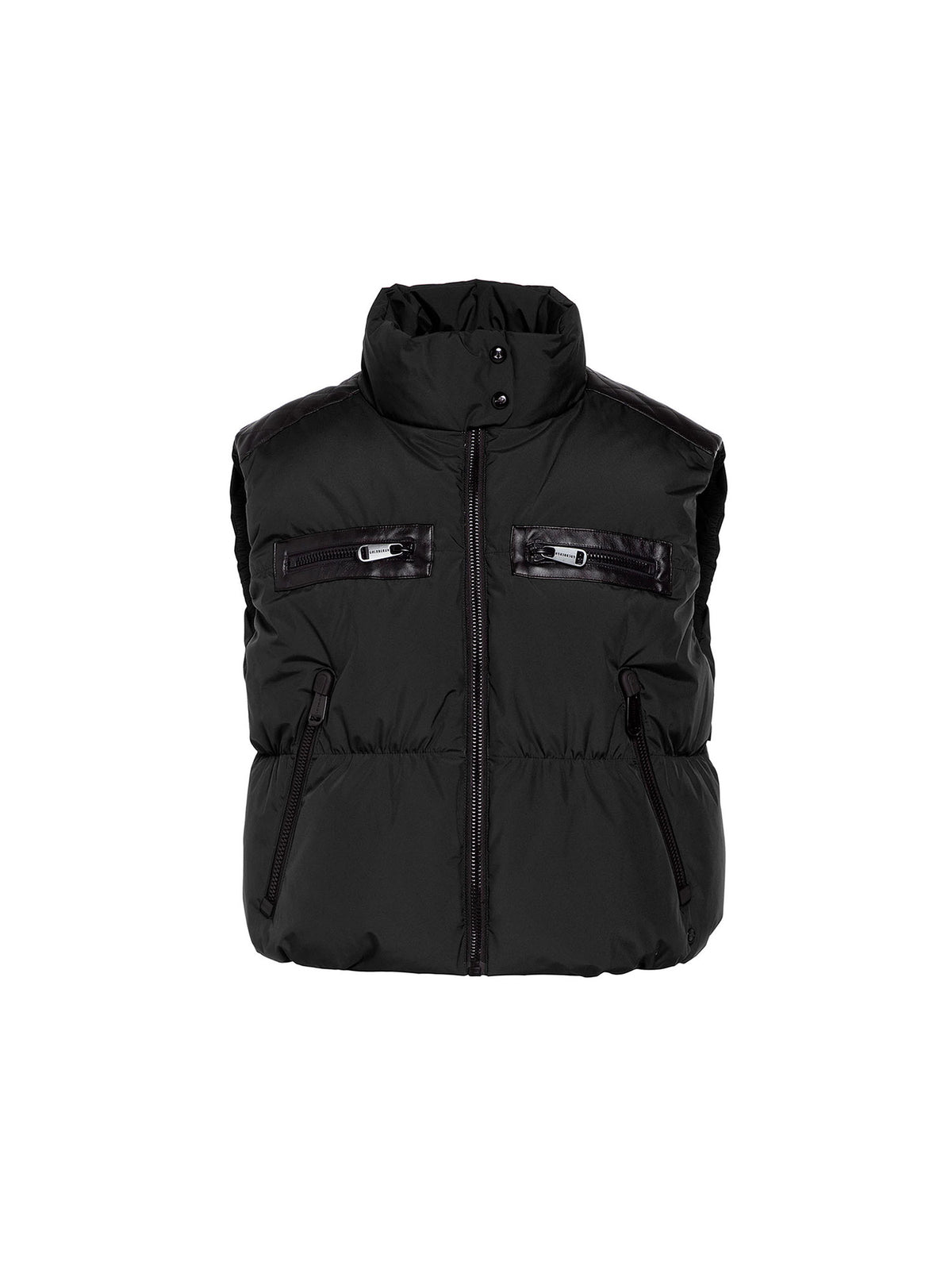
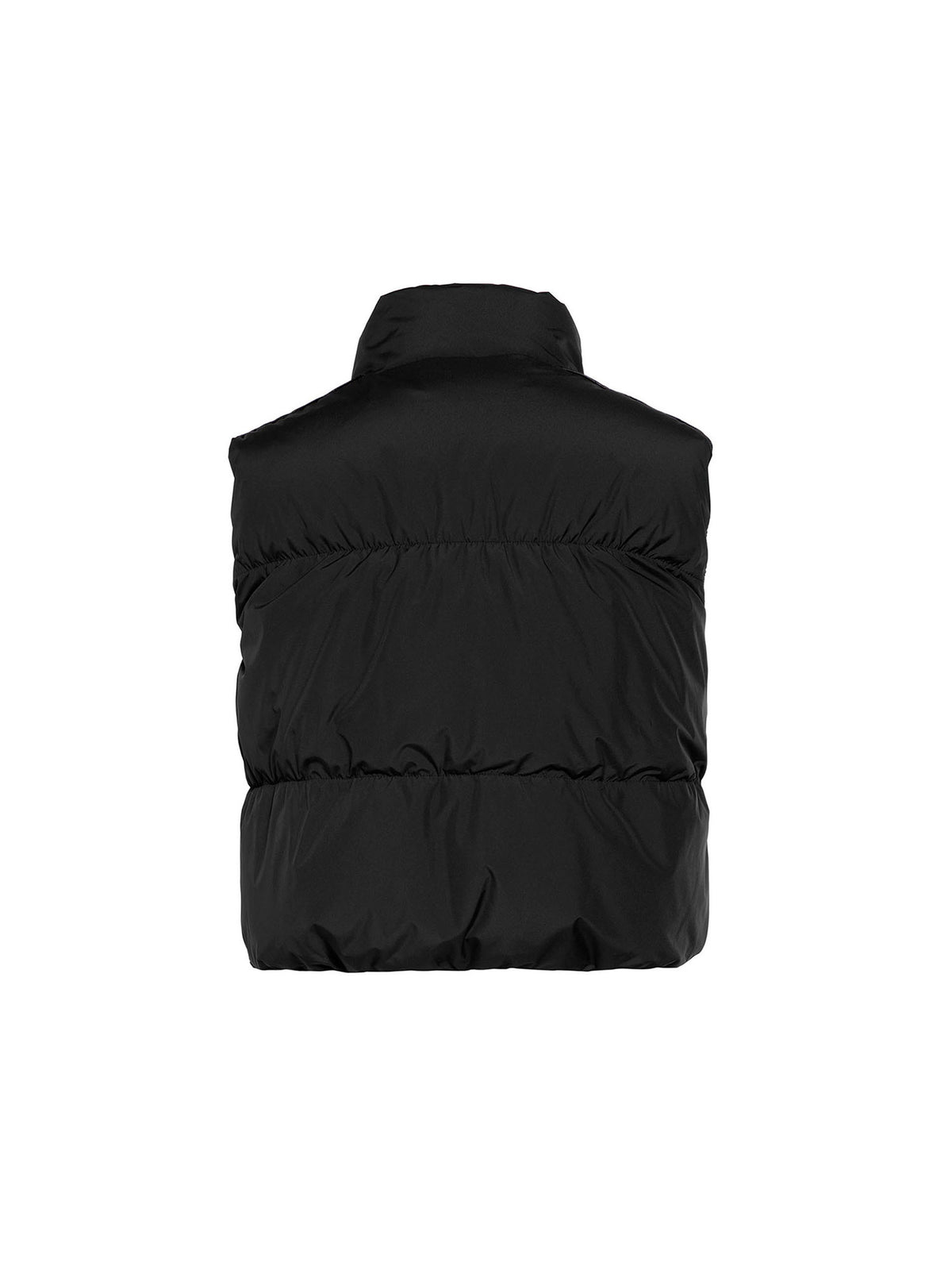

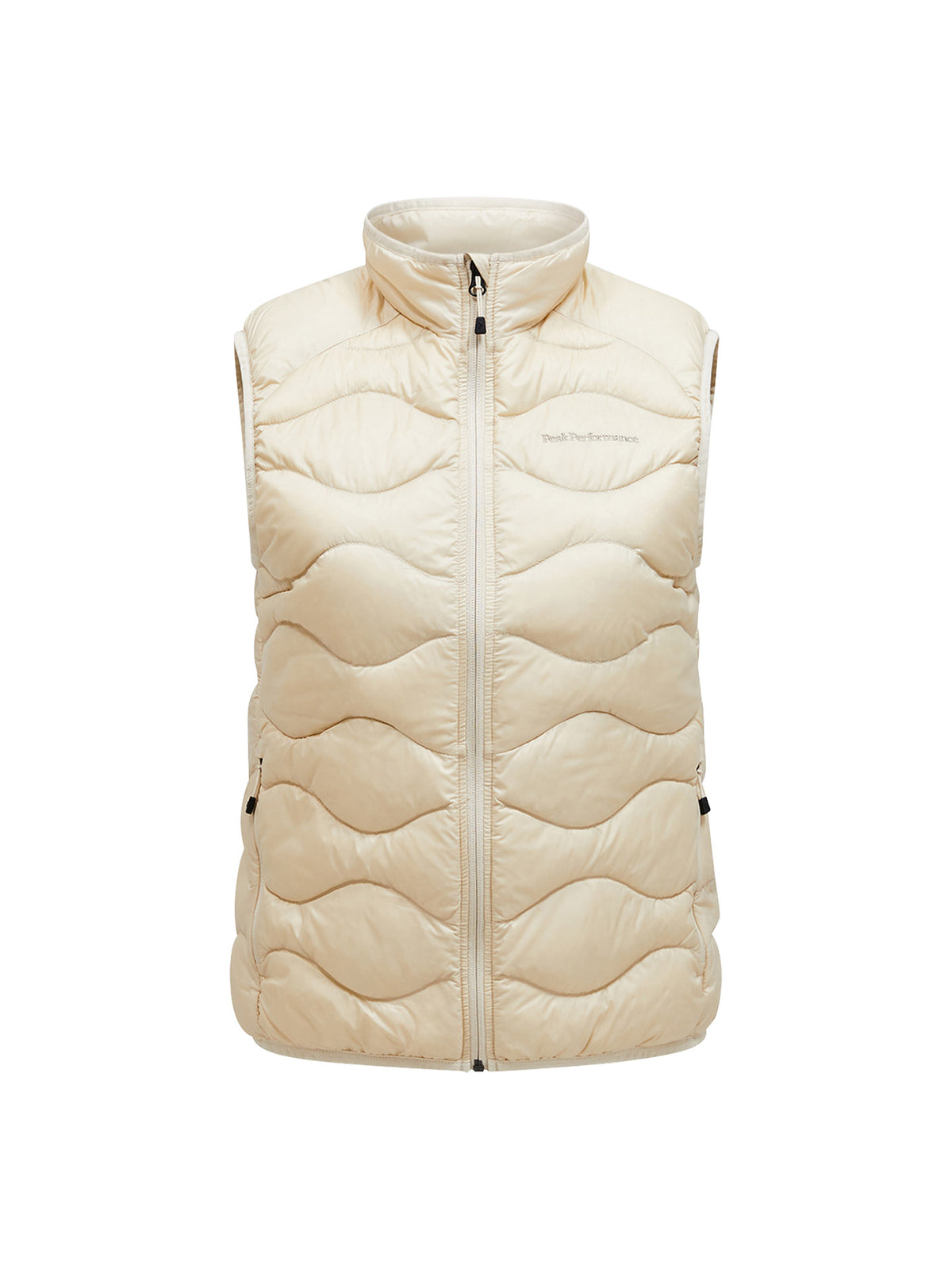
Choosing a women's vest for the right task
A vest changes the structure of an outfit because it covers the torso while leaving the arms free. This is precisely what distinguishes it from a jacket. It can be a visible outer layer, an addition over a sweater, or another layer under a sufficiently loose-fitting outer jacket. Which option is suitable depends on how you want to wear it and what clothing you already own.
First, consider where you need an additional sleeveless layer. Are you looking for extra coverage for your torso without adding bulk to your arms? Do you want to give a simple top a clear silhouette? Or do you want an outfit that can be easily changed throughout the day? These tasks lead to different cuts and material compositions. A decorative vest and an insulated functional vest should therefore not be chosen based on the same criteria.
Short, hip-length, and longer styles
The length determines how the vest connects with pants and tops. A short style emphasizes the waist area and reveals hems underneath. A hip-length vest can sit more smoothly over the waistband and accommodate various tops. Longer styles have a stronger impact on the overall look and change freedom of movement when sitting. Therefore, compare the front and back views together.
The appropriate length also depends on whether you wear the vest open or closed. When open, two vertical lines are created that frame the outfit underneath. When closed, volume and hem shape are more central. If you want to use both options, the fastening should close comfortably in your preferred combination. A vest that only fits over a very thin shirt cannot automatically be used over thick knitwear.
The armhole makes all the difference
With a sleeveless layer, the armholes deserve special attention. They must fit the top underneath and should not pinch uncomfortably when you raise your arms. A larger cut offers space for bulkier sleeves, but may look different with a thin shirt. A narrower finish lies more smoothly but may limit your choice of underlayers. Decide based on the combination you want to wear most often.
Try the vest with the front closed and move your arms forward and sideways. Pay attention to whether it pulls up at the shoulders or strains at the back. Free arm movement does not automatically mean that the entire cut fits. Chest width, back length, and hem must also work together. Pockets or conspicuous quilting can also influence where the style visually adds bulk.
Understanding quilting and material effect
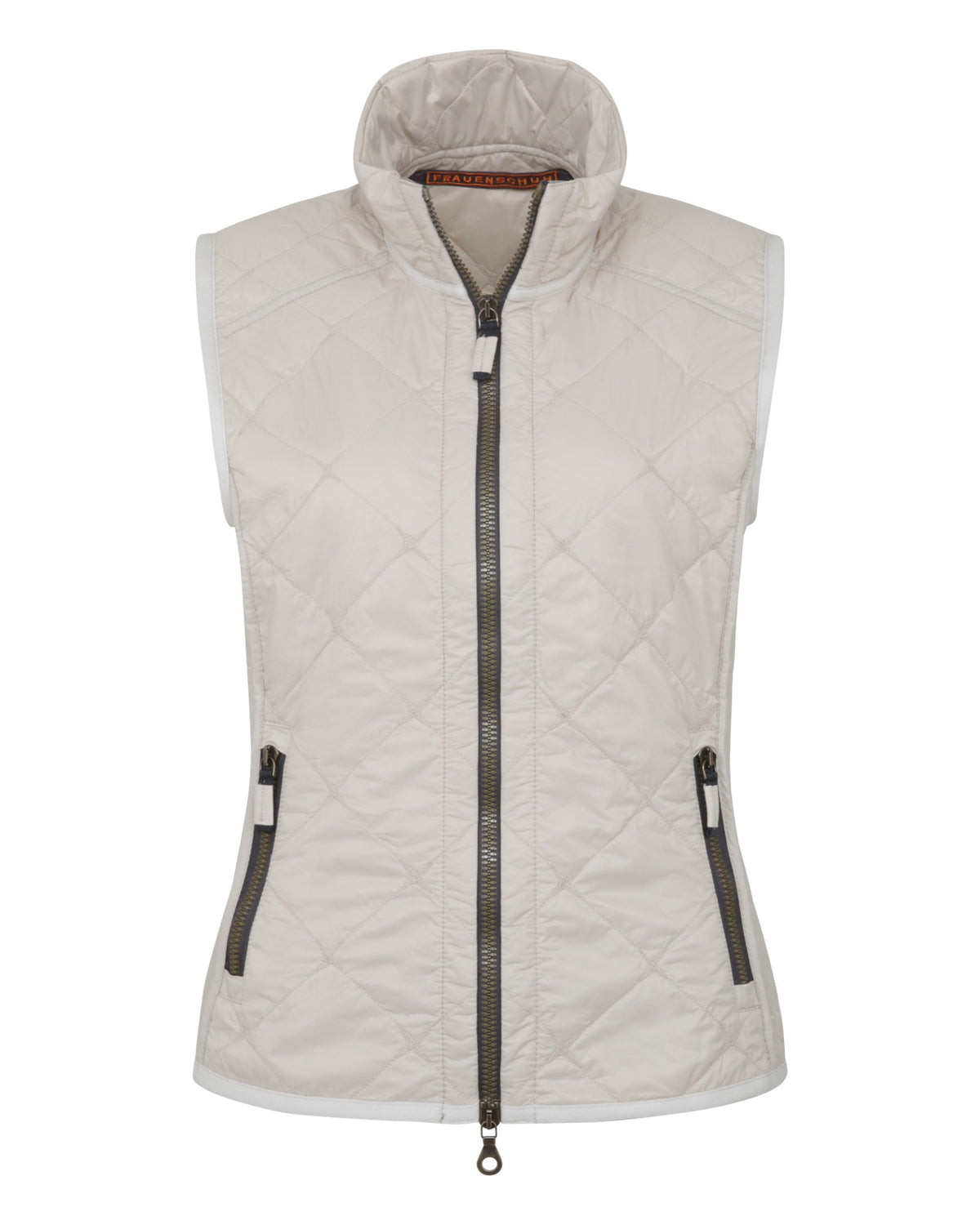
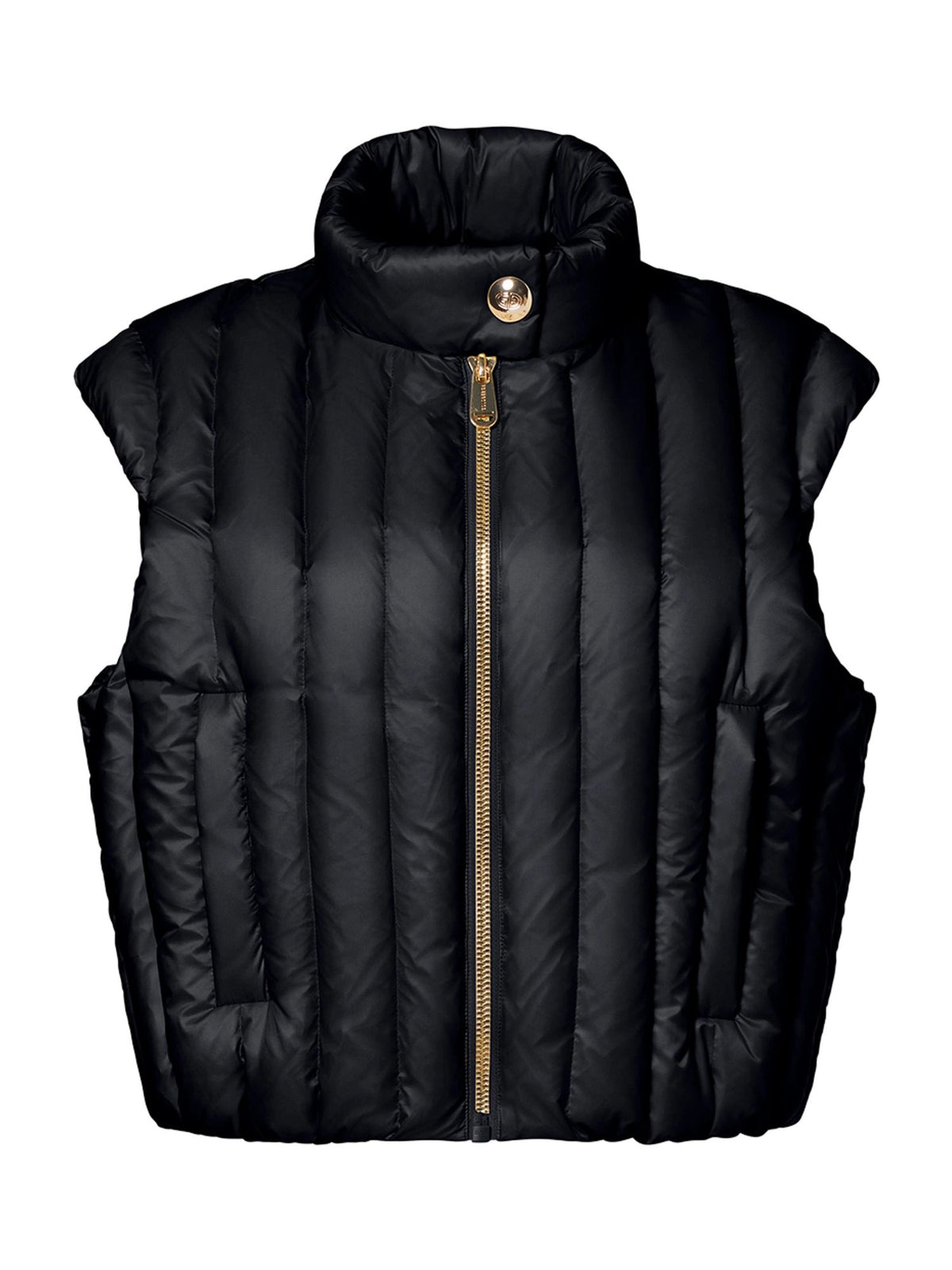
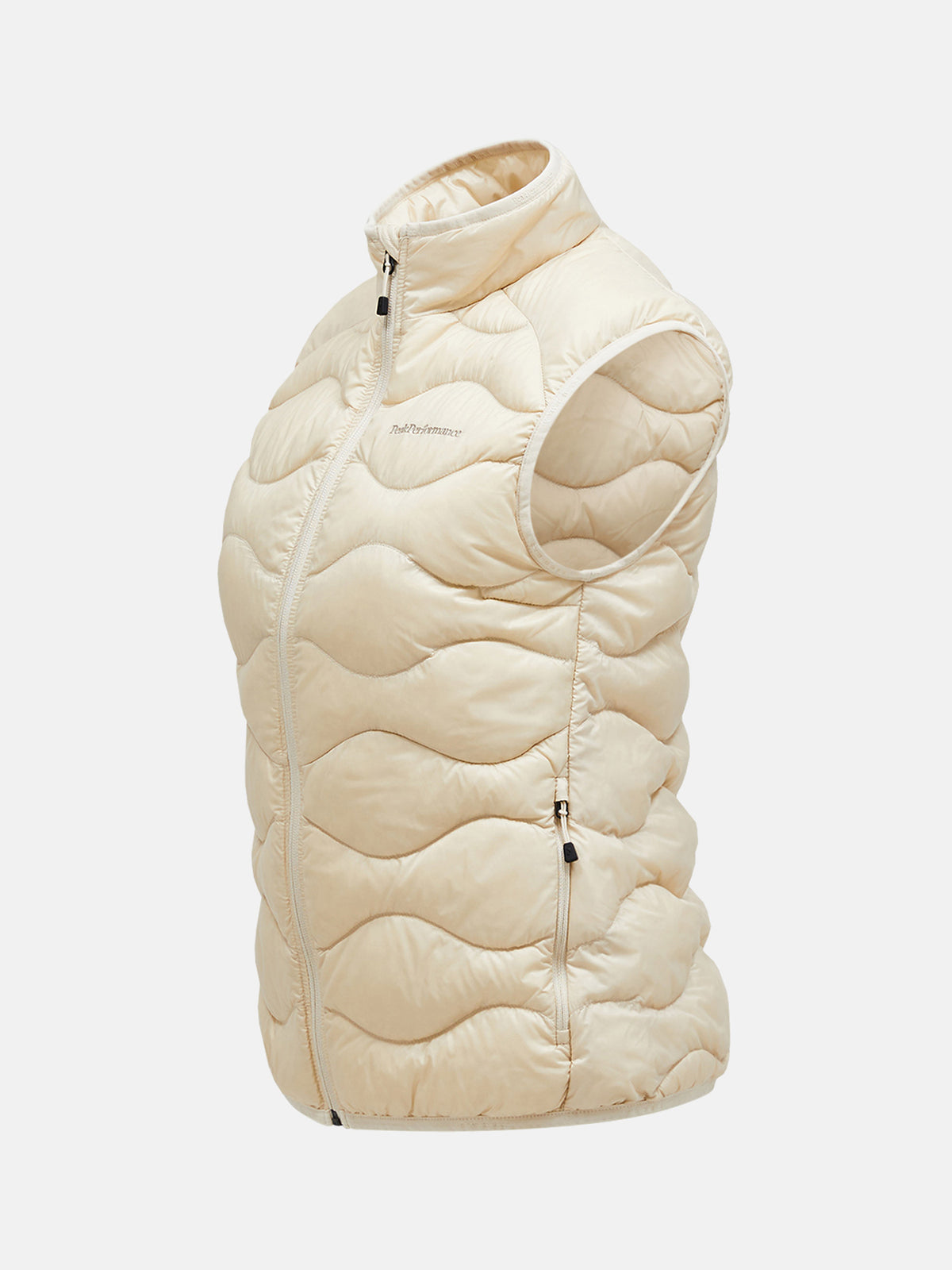
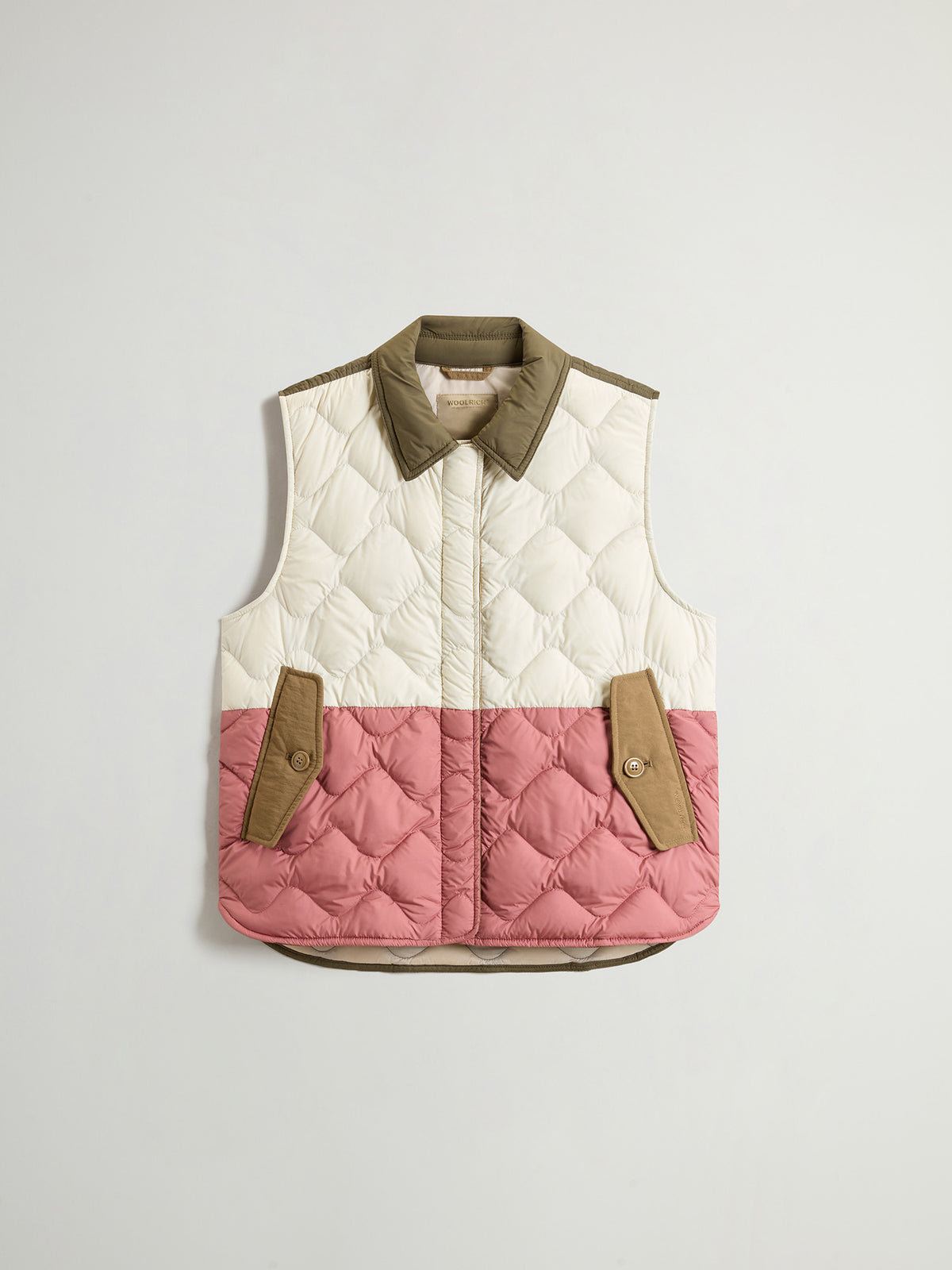
A quilted vest stands out due to its structured surface. Depending on the construction, different widths of chambers, a flatter line, or significant volume can be created. Consider this structure together with the sweater underneath. Thick knitwear and strongly pronounced quilting can consciously create a lot of texture; a smooth top allows the vest to stand out more on its own. Neither of these combinations is fundamentally more correct; they simply set different accents.
The type of filling cannot be inferred from the quilting alone. Likewise, not every voluminous model automatically refers to a down vest. For a functional comparison, the actual composition, construction, and intended use are relevant. First, choose the required structure and then the desired surface. This way, you avoid inferring a material property solely from an image or a general product description.
Vest and knitwear as a complete combination
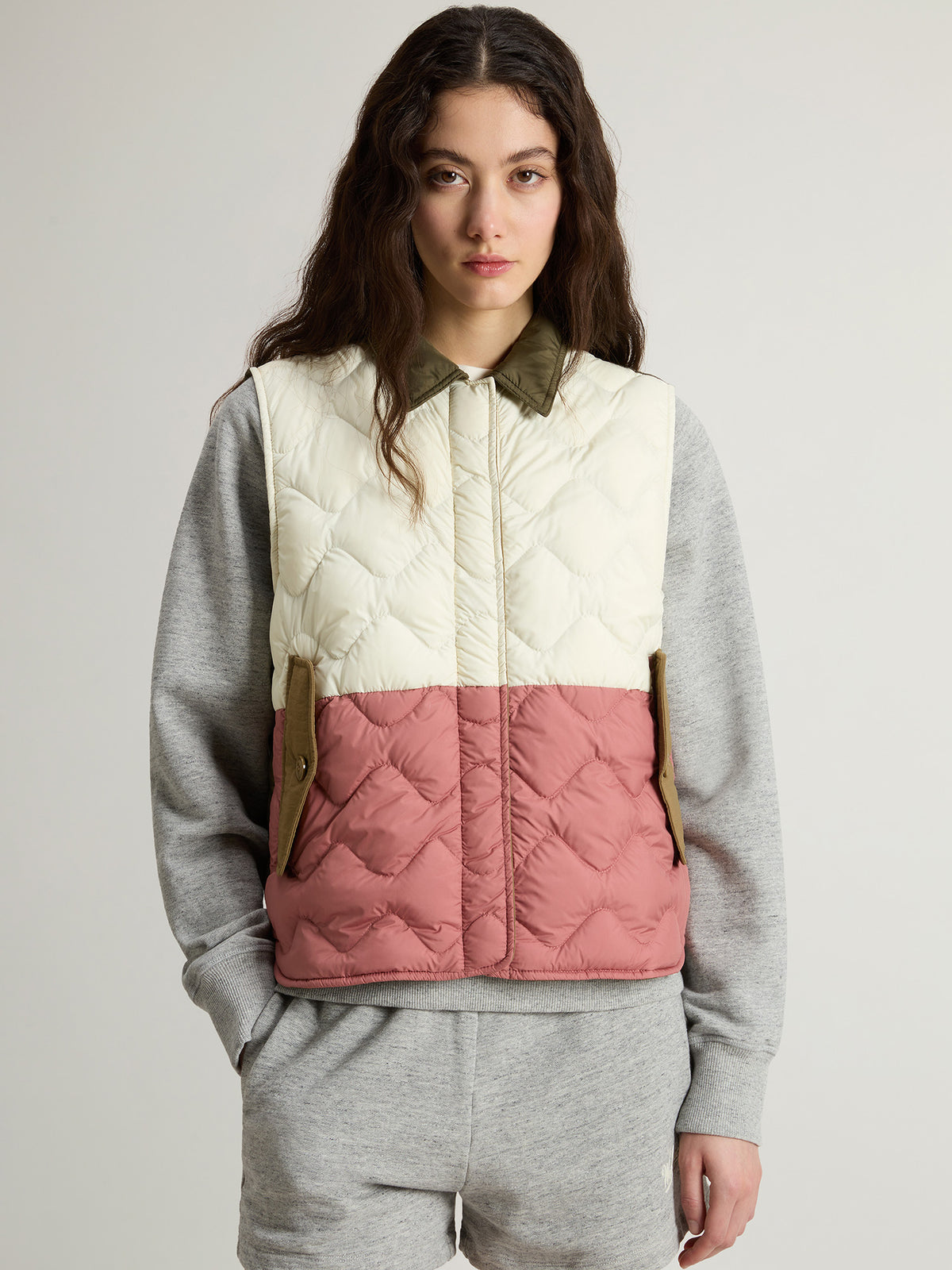
Over a sweater, the vest often takes on the role of the visible outer layer. Then, sleeves, collar, and cuffs become important parts of the look. A high knitted collar needs enough space at the neck, while a crew neck creates a different finish. Therefore, compare the neck opening both closed and open. You can find a suitable addition in women's knitwear based on structure and silhouette.
A long sweater under a short vest intentionally creates staggered hems. If you want a smoother line, similar lengths may be more suitable. Make sure that the bottom layer does not gather uncomfortably under the vest hem when walking. The pants also matter: wide knitted sleeves, a voluminous vest, and wide pants can deliberately appear generous, but require a clear decision for this proportion.
Leave enough space under a jacket
If the vest is to be worn under an outer jacket, the available space is crucial. Several thick layers can restrict freedom of movement and overload the collar area. Therefore, check the entire combination instead of just the vest. Close the jacket, reach forward, and sit down. Shoulders, torso, and neck should still be able to move comfortably. A slimmer vest cut may be more suitable for this construction than a bulky one.
Not every vest is designed as a technical mid-layer. A fashionable version with striking details serves a different purpose than a specifically designed functional model. If you are looking for a layer for sports activities, you will find more options in women's mid-layers. Evaluate the specific vest according to its described use and do not infer suitability for the slopes solely from a sporty appearance.
Consciously choose collar, hood, and pockets
A high collar changes both wearing comfort and the combination with a scarf and top. When closed, it should not press uncomfortably against the chin. A hood adds extra material to the neck and can bulk up under another hood. Therefore, if you often want to wear the vest under a jacket, it is worth taking a particularly close look at this area. Without a hood, the layering often looks different than with one.
Pockets are also more than just an optical detail. Consider whether you wear the vest mostly open, whether you often reach into them, and how filled pockets affect the drape. A fastener can be practical for on the go, while a simple opening is integrated differently into the design. Don't choose based on as many details as possible, but on what you actually want to use in your typical combination.
Choose care and storage appropriate to the construction
A vest can combine different materials in the outer fabric, inserts, and filling. Therefore, choose care according to the specific labeling and do not automatically treat these areas like a regular sweater. Trims and fasteners also deserve a separate look. For storage, it is important that the model is dry and its shape is not unnecessarily strained. A delicate outer material requires different protection than a simple fabric; a uniform treatment of all vests would be too crude for this.
Incorporate the vest into your casual look
A vest can pick up a tone from shoes or pants without being identical to them. Neutral colors make the structure appear stronger; a striking color makes the sleeveless top the focal point. In women's casual fashion, you can add matching pants and tops. First, decide on the desired silhouette before combining several new individual pieces.
If you actually need a closed outer layer for your arms, also compare women's jackets and coats. The vest is particularly interesting if its sleeveless design suits your task. Finally, check the length, armhole, neck area, and closure in your complete outfit. This way, you choose a model that clearly fulfills its role and meaningfully connects with existing clothing.
04At FREUDENHAUS
05Questions about the category