





Women's ski pants that complement movement and ski outfits
Women's ski pants must fit well when in motion and as part of a complete outfit. Compare the waistband height, hip area, and leg line along with your base layers and ski boots. Whether a slim or more generous silhouette, what matters most is the specific material construction, appropriate finishes, and enough freedom of movement for the combination you plan to wear on the slopes.


Choosing women's ski pants based on movement and construction
The right ski pants connect your movements with the rest of your ski outfit. They should fit at the waist, hips, and legs, and leave enough room for the intended layers. Therefore, start with the layering you plan to wear. Pants over light functional underwear will be judged differently than a combination with a heavier base layer. The additional clothing should be considered during the selection process, not just during a later try-on.
Also, consider which silhouette you prefer. More form-fitting ski pants emphasize the leg line, while a straight or wider cut falls differently. Neither of these shapes alone explains their function. Material, construction, and freedom of movement must match the intended skiing use. A tight model should not have to impress by constant pulling at the waist or crotch; a loose one should not slip in the wrong places.
Consciously compare waistband height and waist solution
The waistband connects the pants to your upper body and to the jacket above. A higher cut covers the back differently than a lower shape. Crucially, where the waistband sits when you are seated and bending. It should not only feel comfortable when standing upright. Check whether it shifts during movement, cuts uncomfortably, or gaps in one spot while the rest of the pants are already tight.
Adjustment options can regulate the intended circumference but do not arbitrarily change the entire cut. If pants do not fit at the seat or thigh, tightening them more at the waistband is not a complete solution. In this case, compare other fits. A clear basic shape facilitates putting on and taking off and can be combined with a matching jacket without you constantly wanting to correct its position.
Models with suspenders add another layer. Consider how you wear them with your upper layers and how they feel when sitting. The specific design determines if and how they can be adjusted. Choose them as a functional part of the pants, not just as a visual feature. Their role must match your daily routine and preferred layering.
Check hips, seat, and crotch in motion
Ski pants are stressed differently when skiing and sitting than in an upright pose. When trying them on, go into a slight squat and sit down. Pay attention to whether the fabric over the seat is stretched tightly or if the waistband is pulled along. If the crotch pulls uncomfortably, the cut and rise may be unsuitable, even if the waist size initially seems correct.
Compare both sides and observe the line of the seams. Wrinkles are not automatically a problem, but they can show where material is unintentionally bunched or pulled. What matters is how the pants feel in your natural movement. A smooth front view alone is not a sufficient criterion. Pockets and inserts can also affect the drape and should be assessed in their closed or intended state.
Use similar conditions for comparison. If you try on one pair of pants with thin underwear and the next over a significantly thicker layer, the impressions are only comparable to a limited extent. Therefore, choose the planned base layer as a common basis. This way, you can better recognize whether the difference comes from the cut of the pants or from additional material underneath.
Slim, straight, or wide: the desired leg line
A slim fit requires freedom of movement where the knees and hips work. This can result from the cut and suitable material construction. A wider cut creates a different silhouette, but not automatically more usable space everywhere. The shape at the thigh, the knee area, and the progression to the hem must fit together. Therefore, compare the entire leg line instead of just the width at the bottom opening.
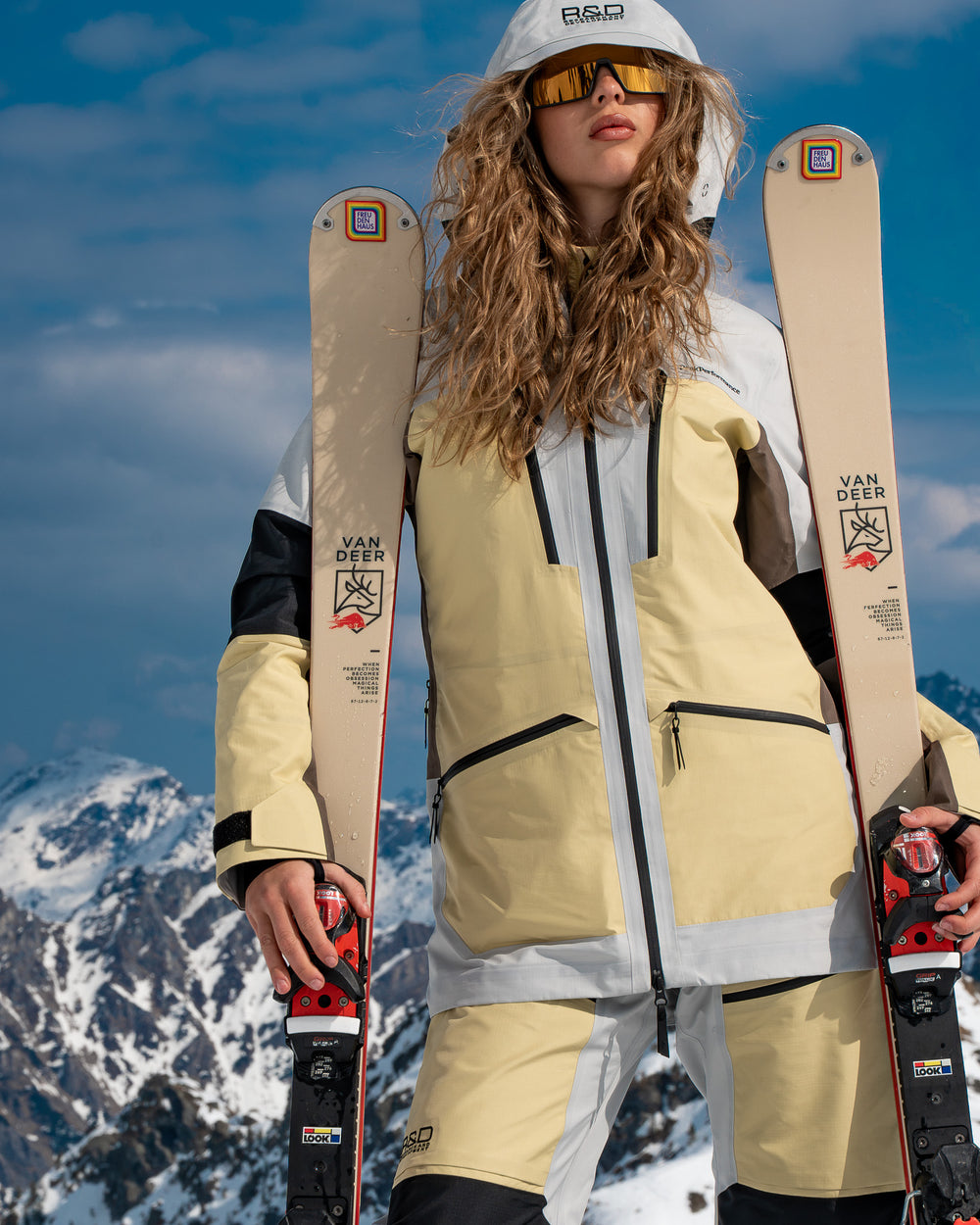
If you're looking for a distinct fashion silhouette, consider it with your jacket. A voluminous top looks different over narrower pants than over a generously cut leg. A short jacket shows more of the waistband and hip area; a longer one can cover this section. The women's ski jackets category will help you choose the right complement in terms of length and layering.
The desired look should be achieved within suitable fits. Do not choose a smaller size merely to force a narrower line. Conversely, an additional size does not replace the cut of a deliberately wider ski pant. If you want to change the shape, first compare other models and only then adjacent sizes within the appropriate direction.
Separate construction and thermal needs
Ski pants can have different material constructions and insulating properties. A smooth exterior or a close-fitting cut alone does not explain how much additional layering a model provides. Read the construction in conjunction with the intended use. Pants with their own insulation are matched differently with the clothing underneath than a model whose primary purpose is the outer layer.
Your personal thermal sensation is an important starting point for this. Consider how you have experienced your previous setup: Was it too much when moving, too little during breaks, or especially impractical in certain places? These observations help in the selection process. More thickness is not automatically the solution for every situation. It also changes the space the pants need for movement and additional clothing.
With women's functional underwear, you can appropriately complement the first layer. Pay attention to the waistband and leg length so that multiple strong finishes do not overlap. A good interplay arises when you select the two layers together and know their respective purposes. This way, the pants remain part of a coherent setup instead of an isolated individual decision.
Correctly interpreting softshell designation and weather properties
The term "softshell" can describe a certain type of material and feel, but it is not a blanket guarantee for identical properties across all models. Such pants must be evaluated based on their specific features. Similarly, water-repellent, waterproof, and wind-resistant are different specifications. Do not transfer them from one product to another merely because of a similar appearance.
For selection, it matters whether the model is intended for your planned conditions. Compare the construction, seams, and described functions without making a general ranking from a single term. If you need a specific weather function, it should be clearly described for the exact chosen model. A prominent brand name or a sporty cut does not replace this reference.
Additional openings and inserts are also model-dependent. Consider which ones you actually want to use and whether they are easily accessible in your combination. A larger number of details is not an advantage in itself if they are irrelevant for your use. The right pants can be selected based on specific requirements, not by the longest possible list of general functional terms.
Evaluate leg length and cuff with ski boots
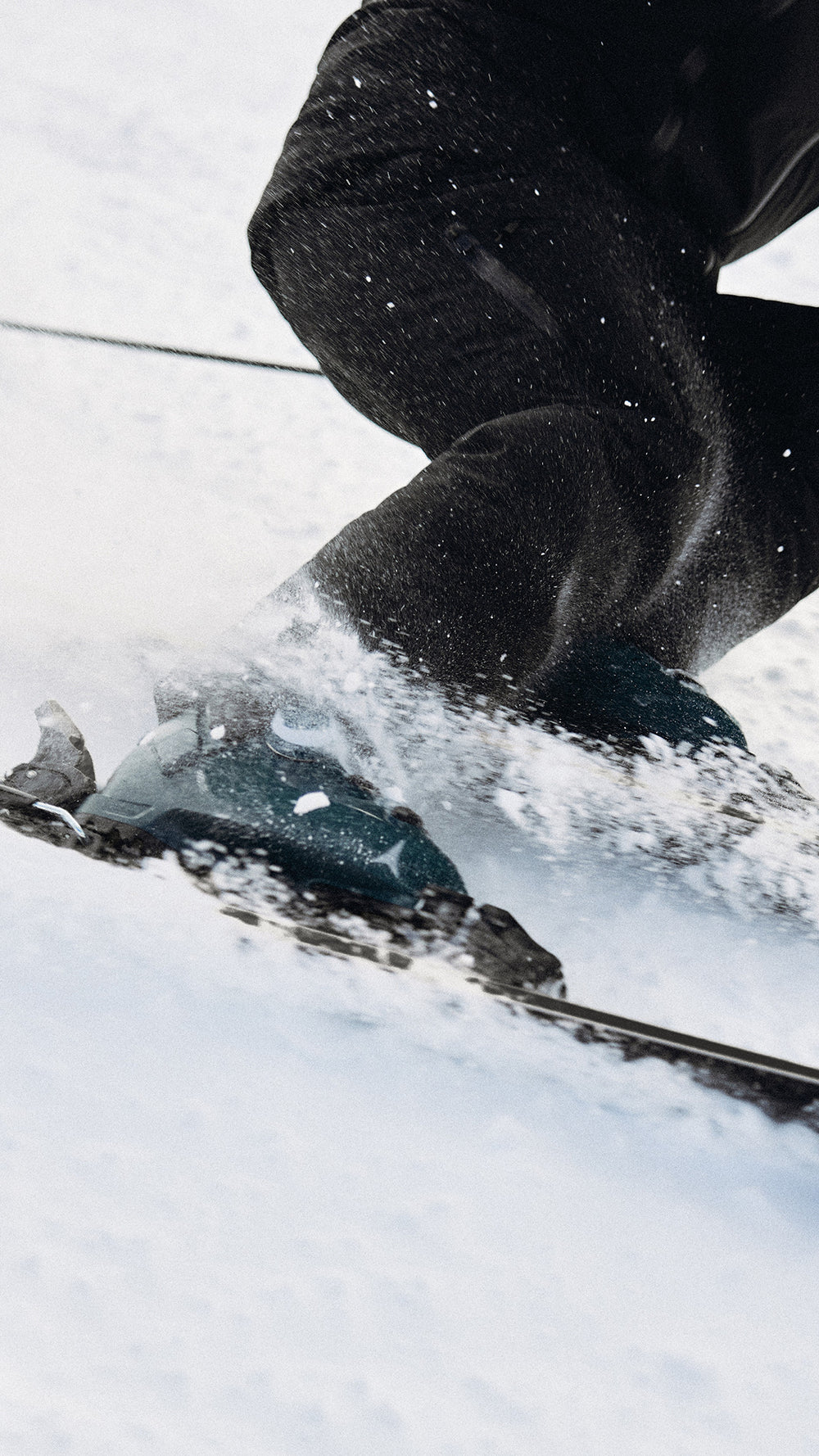
The lower part of the pants is worn over the ski boot and falls differently there than over a sneaker. Therefore, assess the length with the intended equipment. A hem that appears to fit without a ski boot may sit differently in this combination. Check the front, the area at the heel, and the behavior when bending. The pants should not be artificially lengthened by an ill-fitting waistband position.
Zippers, reinforcements, and internal closures serve different purposes depending on the model. Pay attention to how you guide the pants over the boot and how the cuff can then be handled. It is part of the outer connection and should not be pushed into the shaft as an additional layer of fabric. With women's ski boots, you can delve deeper into the appropriate boot construction separately.
If you can choose between different lengths, compare the corresponding measurements of the specific model. Terms like short or long must refer to a verifiable design. A general recommendation based solely on body height remains too coarse, as leg length, waistband position, and cut interact. Your complete try-on provides a better basis for this.
Pockets, closures, and color in the overall look
Pockets should suit your use and not unintentionally alter the fit. Check where they are located on the hip or thigh and how the pants feel during normal movement. A striking zipper can be a design detail, while a subtle pocket solution emphasizes the leg line more. Choose these elements consciously once the basic shape and required function are right.
For color selection, you can start with an existing jacket. A calm tone on the pants makes the top stand out more; striking pants can set the focus of the outfit. For a one-piece look, a ski overall offers a different solution, as the upper and lower body are connected in one cut. A separate combination, on the other hand, gives you more freedom in size and model choice.
Adding new pants to existing equipment
If you are only replacing your pants, first note what works well with your current combination. Perhaps the cuff over the ski boot fits, but you are looking for a different solution at the waistband. Or the hip shape is comfortable, but the leg length needs to change. These separate observations help you specifically look for a different cut. You don't have to change all features at once if only a specific area needs improvement.
Decide with a complete try-on
Before making your decision, check the waistband, seat, knees, and hem in the same combination. Wear your intended underwear and consider your jacket and ski boots. If two favorites remain, precisely identify their differences: different waistband height, more room at the thigh, or a better-fitting leg cuff. Such observations make the choice more tangible than a general impression of tight or comfortable.
Finally, consider the care label, especially for different material sections or trims. A uniform treatment for all ski pants would be too general. The right women's ski pants combine a suitable construction with your preferred shape and comfortable movement. Once this foundation is right, you can choose color and details as a conscious addition to your personal ski look.
04At FREUDENHAUS
05Questions about the category