







Women's Hardshell Jackets: Material Construction, Fit, and Layers
A women's hardshell jacket complements your outfit as an outer protective layer. Crucial factors are the material construction, space for your undergarments, and details that suit your movements. Compare the hood, pockets, and cuffs in conjunction with your existing layers and find a jacket for your specific use.


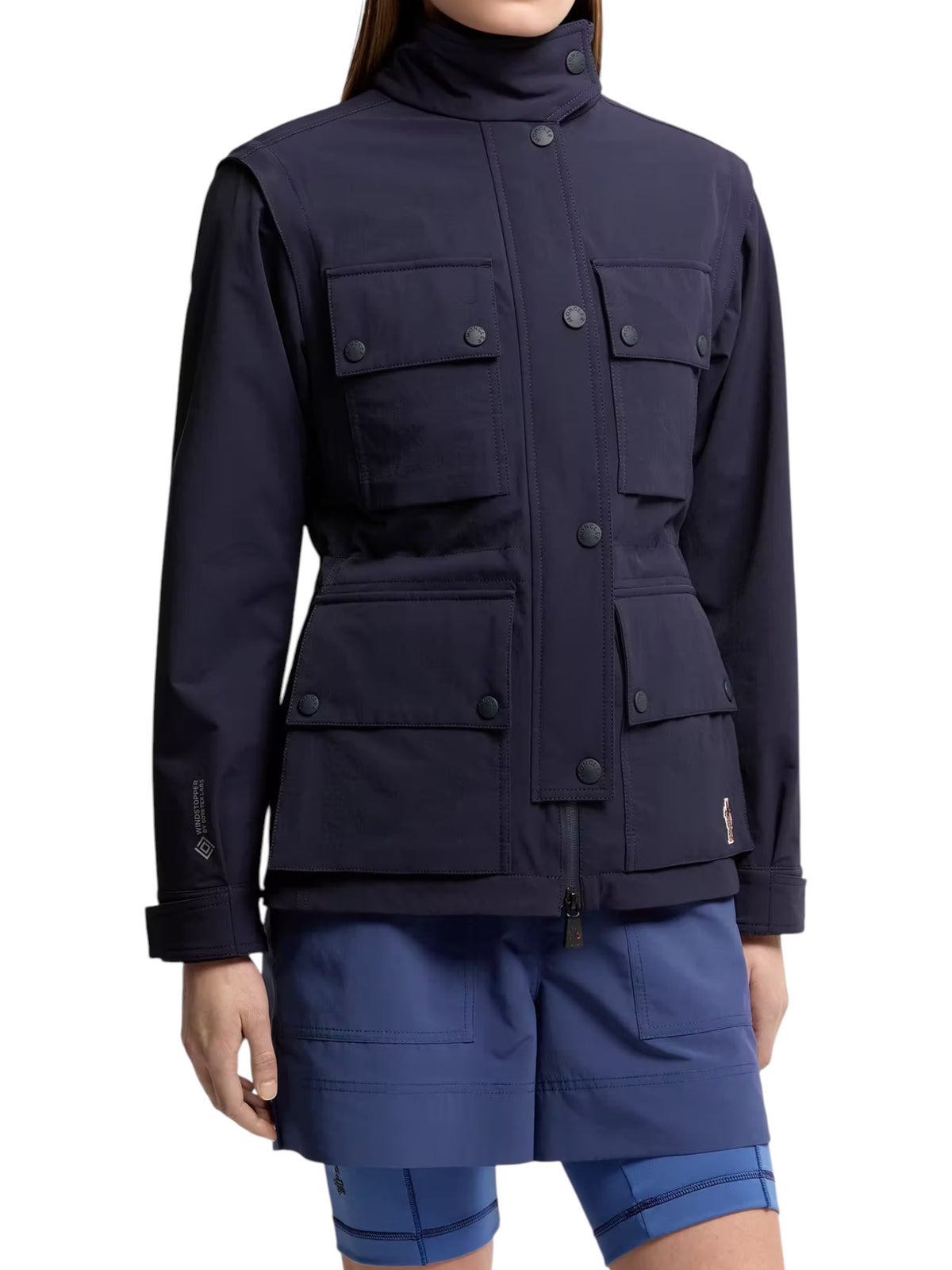
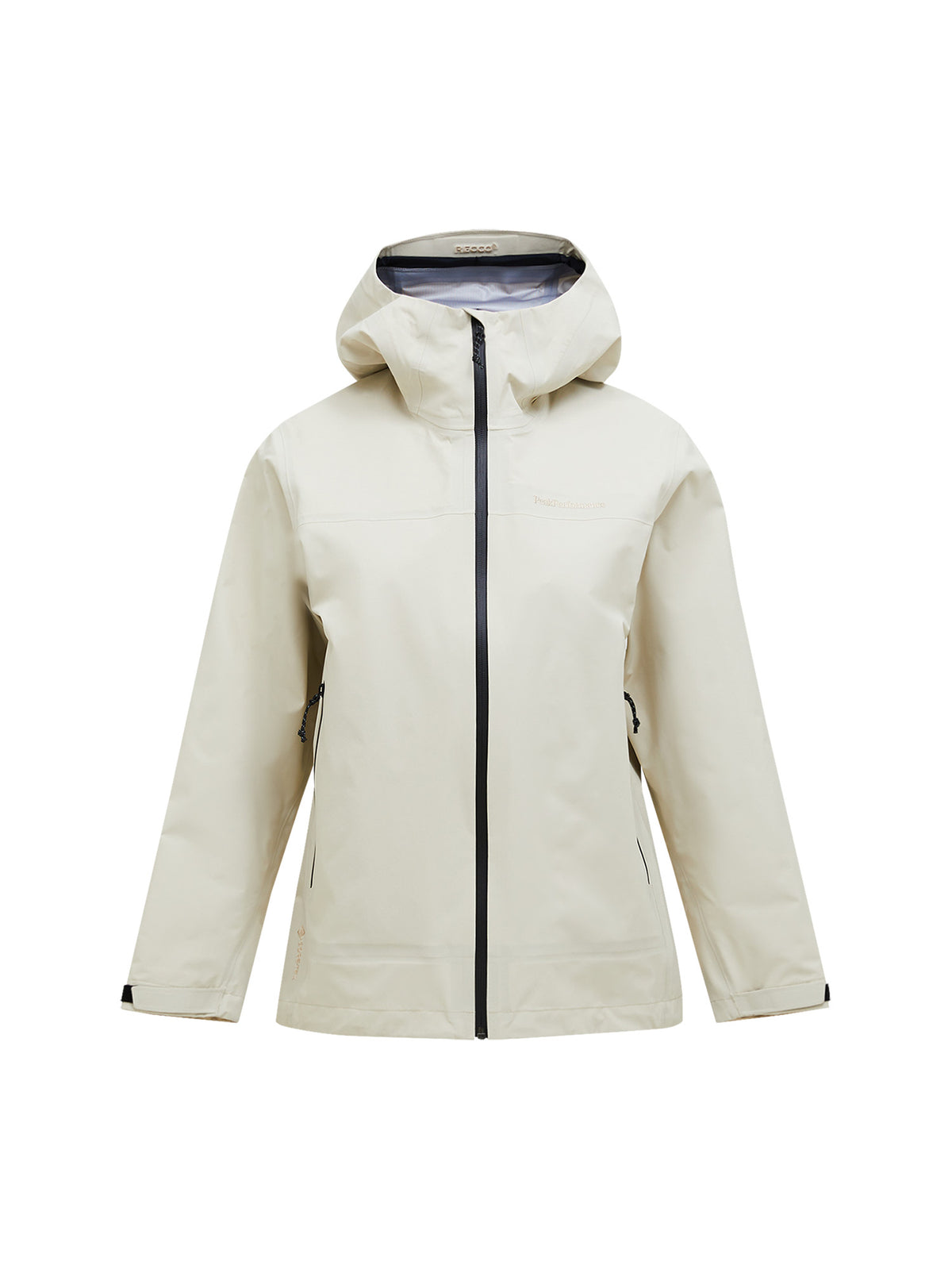
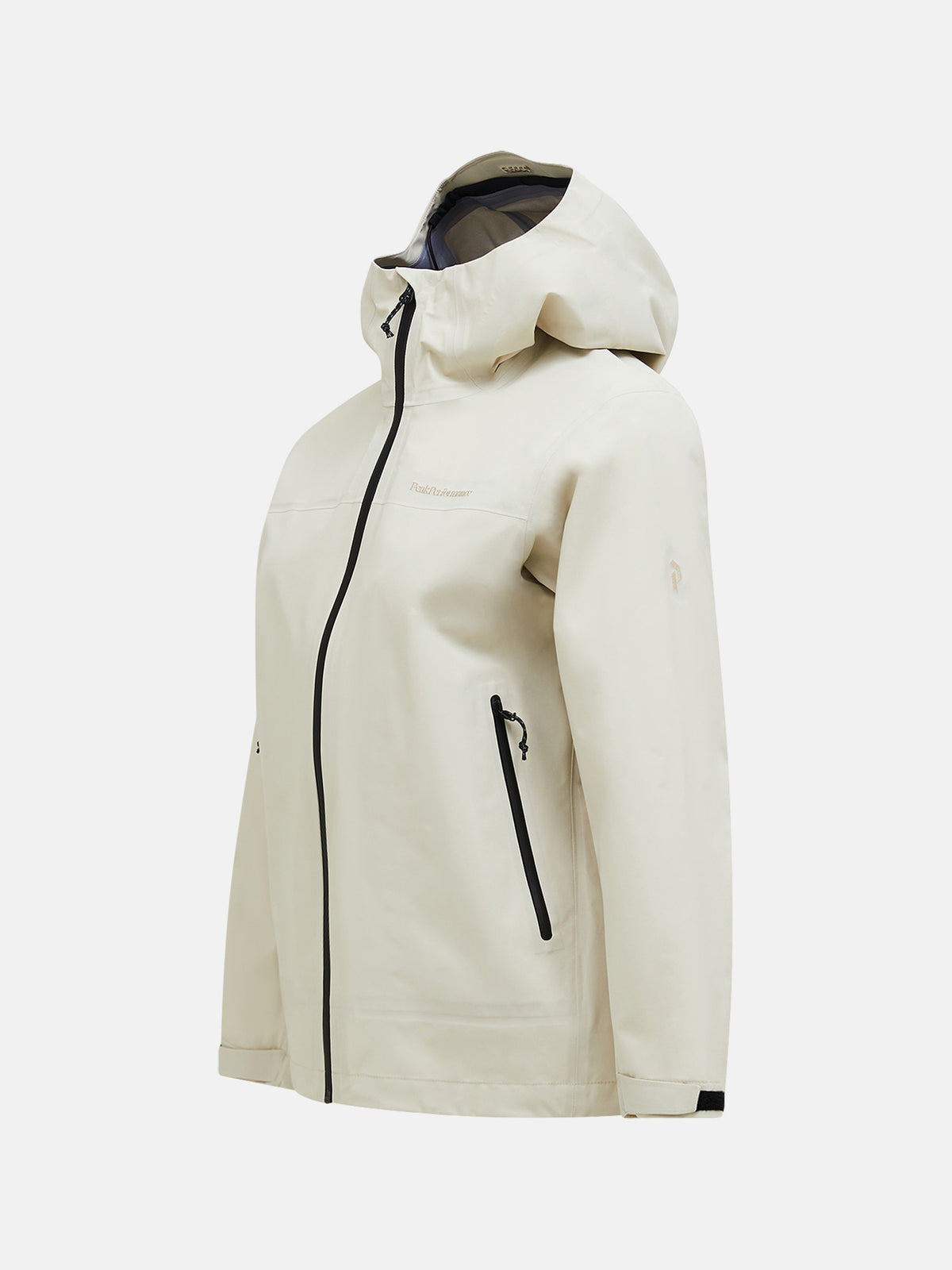

Women's Hardshell: Weather Protection as an Independent Layer
A women's hardshell jacket forms the outer layer of a multi-part outfit. Its purpose is to protect against the elements; how warmly you are dressed is determined by the clothing underneath. This separation is helpful when your day alternates between activity and breaks. You can add or remove a mid-layer without having to change the entire jacket. The prerequisite is a cut that accommodates your planned combinations.
Therefore, start with your intended use: Will the jacket primarily be worn for skiing, will it accompany you outdoors in changeable weather, or are you looking for an outer layer for multiple activities? A slim, easily packable jacket and a model designed for piste use have different priorities. Compare the hood, pockets, back length, and cuffs based on your actual movements. The word hardshell alone does not describe a complete set of features.
Categorizing Hardshell, Softshell, and Lined Ski Jackets
The designations help with pre-selection, but do not replace a look at the construction. A softshell often emphasizes flexibility and a softer feel; weather protection and insulation vary depending on the design. A hardshell, on the other hand, is used as an outer weather layer. With a lined jacket, additional insulation is already integrated. Consider whether you prefer to manage warmth with your own mid-layer or if you want a jacket that also performs this function.
For long lift rides and plenty of rest time, the question of insulation can be more important than a particularly small pack size. For frequently changing loads, a flexibly constructed layering system is interesting. Both concepts can be used effectively on a ski day; your perception of warmth and the specific clothing combination are decisive. The women's ski jackets offer an additional starting point if you are specifically looking for outer clothing for your piste outfit.
What Two or Three Layers Actually Mean
In technical jackets, the number of layers refers to the material construction. It does not count the garments you wear. GORE-TEX, for example, describes a three-layer construction as a combination of outer fabric, membrane, and inner textile. In a two-layer construction, the outer fabric and membrane are bonded. This information explains how the material is constructed. However, it is not an automatic ranking for warmth, mobility, or suitability for your personal intended use.
Therefore, ask the same questions for two jackets: How does the inside feel with your top? How much freedom of movement does the cut offer? How much space does the jacket take up when you stow it? And do the described areas of use match your plans? A higher number of layers does not justify assumptions about every other detail. Pocket arrangement, hood shape, and the overall design of the garment remain independent selection criteria.
Distinguishing Waterproofing, Water Repellency, and Ventilation
Water beading off the surface indicates a different property than protection by a membrane. The water-repellent finish of the outer fabric is often referred to as DWR. GORE-TEX explains that a decrease in water repellency does not automatically mean that the underlying membrane is leaking. This distinction also helps when buying: A reference to a water-repellent surface is not a complete description of a jacket's weather resistance.
Pay attention to the context of performance specifications. A material value does not answer every question about seams, closures, or practical fit. Likewise, breathable does not mean that you will stay dry during every exertion. Plan for ways to adjust your outfit on the go. If a jacket has additional ventilation openings, they should be accessible and usable in the intended wearing situation. This is a concrete function that says more in a product comparison than a general promise of performance.
Assessing Fit with the Right Undergarments
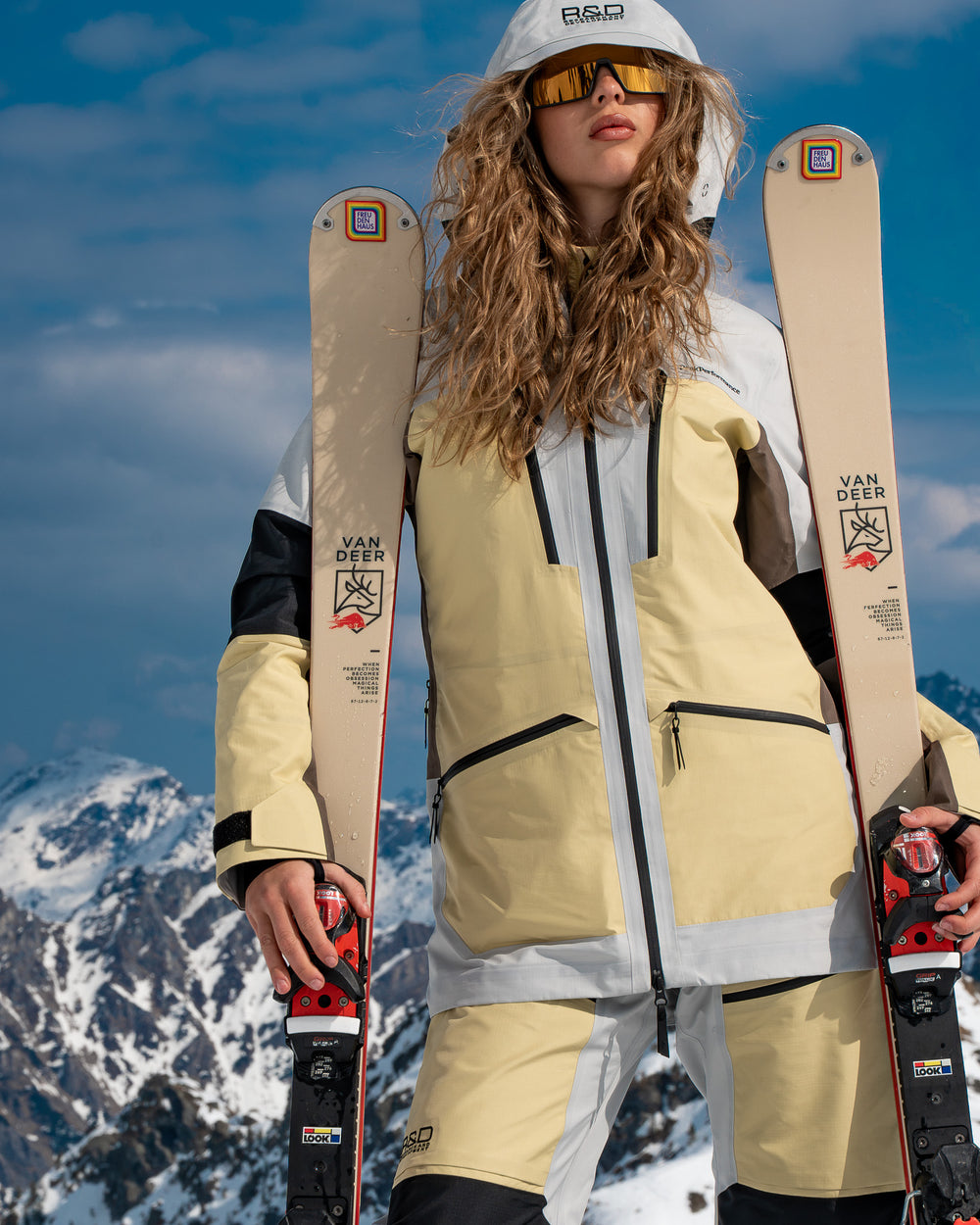
A hardshell must fit over the clothes you actually want to wear underneath. For fitting, choose your bulkiest realistic combination and close the zipper completely. The outer fabric should not be stretched across the chest, shoulders, and hips even when standing still. At the same time, excess fabric should not be so bulky that sleeves, backpack straps, or pockets are uncomfortably bunched up. The right size results from this interplay and the model's size chart.
Then test several movements: bring arms forward, lift them sideways, and stretch them over your head. Observe whether the hem moves significantly and whether the shoulder area restricts movement. In a slightly bent posture, the jacket should still cover the back sufficiently. With a tailored cut, the transition between waist and hips deserves special attention. A larger size will provide more width there, but can also inappropriately lengthen sleeves and shoulders.
For the close-fitting base layer, head to women's functional underwear. You control warmth and additional volume with a suitable women's mid-layer. Decide on these layers together, instead of assessing the hardshell in isolation in front of the mirror. A combination that fits comfortably with a thin shirt can feel completely different with a higher collar or a more voluminous mid-layer.
Checking Hood and Collar as a Connected Area
The hood should fit the headwear you intend to use with the jacket. For use over a ski helmet, explicit compatibility is an initial indication; the actual combination must still fit. Close the collar and turn your head left and right. The hood should follow the movement without unnecessarily restricting your field of vision or uncomfortably pulling the collar against your chin and cheeks.
Even without the hood up, this area is relevant. A large hood can create bulk in the neck, especially if a hooded mid-layer is already underneath. Therefore, consider which of your layers actually needs a hood. Adjustment options are helpful if they create the desired shape and can be operated with your gloved hands. Their mere number is less informative than a fit that remains comfortable with your movements.
Choosing Pockets and Zippers to Match Your Use
Pockets are only practical if you can reach them with your usual equipment. A hip belt can partially cover low-slung jacket pockets; chest pockets can coincide with straps. Therefore, wear your intended backpack during the fit test. Also consider what you really need to keep handy. A ski pass, a small cloth, and a phone place different demands on size and position. Avoid overfilling pockets, which can alter the fit of the jacket.
Operation deserves as much attention as arrangement. Can the zippers be gripped without having to hold the jacket firmly with the other hand? Does the main closure feel comfortable at the chin? If there is a two-way zipper, is it easy for you to operate? Such questions relate to everyday use with the jacket. They help you evaluate a detail by its usefulness, rather than automatically seeing every additional feature as an advantage.
Hem, Cuffs, and the Transition to Trousers
At the bottom edge of the jacket, cut, movement, and waistband meet. A longer back can be comfortable in a bent posture; at the front, the jacket should not bunch up unnecessarily when sitting. Check the hem both loose and in an adjusted position. The adjustment should create the desired shape without pulling the jacket upwards. This is particularly important if you combine it with several trousers of different thicknesses.
On the arms, it's about the connection with your gloves. A bulky glove shaft requires a different overlap than a short cuff. The sleeves should remain long enough for outstretched arms without sliding far over the palms. On a ski model, additional details may be present at the hem. Whether a snow skirt is part of your outfit, for example, depends on the specific model and the intended piste use.
Especially with multiple adjustable closures, a calm fitting is worthwhile. First, change only one setting and observe what it changes in the fit. If the hem is significantly shortened, for example, underlying layers may suddenly show. A very tight cuff, in turn, can prevent you from positioning the glove shaft as intended. The best setting is not the tightest, but the one that matches the overlap of your garments. Then move again in your usual posture. This way, you can see whether the jacket maintains its position or whether you would frequently have to readjust it on the go.
Consciously Weighing Color and Versatility
If you want to wear the hardshell over several seasons with different garments, a simple color coordination is worthwhile. First, choose the trousers you will combine it with most often, then check your second typical combination. A neutral basic tone can be used differently than a strong contrasting color. Both can be coherent; it is important that you consider the effect together with your helmet, gloves, and possibly backpack.
The shape also determines versatility. A distinctly technical jacket can be a conscious style in everyday life, while a more understated model optically transitions more easily between different situations. However, do not infer additional weather or sport characteristics from this. If the focus is on walks, travel, and the city, the selection of women's jackets and coats is helpful. This way, you can make a targeted decision between a functional concept and an everyday garment.
Planning for Care and Completing the Selection
A technical jacket requires the care that corresponds to its material construction. The instructions in the garment and from the manufacturer are decisive. Washing procedures, drying, and a possible reactivation of the water-repellent finish cannot be arbitrarily transferred from another model. GORE-TEX explicitly differentiates various product constructions in its care instructions. Therefore, check before purchasing whether the required care fits your capabilities at home.
For the final selection, a few clear priorities are sufficient: intended use, space for your layers, mobility, hood combination, and accessible pockets. Only then compare additional details or a particularly striking color. A hardshell is perfectly chosen when its construction works with your rest of your outfit and you actually use its functions. This creates an outer layer that logically integrates into your clothing, instead of just appearing interesting on the data sheet.
04At FREUDENHAUS
05Questions about the category