





Women's Overshirts as a suitable extra layer
Women's overshirts complete your outfit as an additional top layer. Compare the shoulder line, length, and material structure depending on whether you want to wear the style open over a shirt, closed, or under a coat. The right fit combines comfortable movement with a clean silhouette and leaves enough room for the layers you actually combine.
Categorizing a women's overshirt between a shirt and a jacket
An overshirt is worn as an additional top layer, combining elements of a shirt with a more outer role in an outfit. This doesn't mean that every model has the same material thickness or weather function. The specific construction is decisive. Some styles are primarily worn open over a shirt, while others can be closed to define the look. Therefore, start by considering what role you envision for your overshirt.
Do you want an uncomplicated layer for transitioning between indoors and outdoors, or a visible texture over a plain top? Should the model fit under a coat or form the outermost layer itself? These questions help narrow down the selection. A wide shirt cut is not automatically a warm jacket, and a sturdy overshirt may not find enough space under every existing outer jacket.
The shoulder line determines the construction
For an overshirt, the shoulder is particularly important because often another layer lies underneath. A deliberately dropped shoulder creates a different drape than a precisely fitting cut. Pay attention to whether the width is part of the model's style or due to an unsuitable size. More space should be available where you actually need it for your top and your movement.
Bring your arms forward and close the overshirt. If the back feels very tight, the shape may be unsuitable, even if it initially looks loose when open. Also, check how the sleeves interact with those of your underlying layer. A wide T-shirt sleeve or thick knit can bulk up under a narrow upper arm. Trying it on with the intended layering shows this difference much more clearly than comparing items individually.
Choosing length to match trousers and bottoms
A short overshirt creates a finish close to the waistband and makes the trousers more visible. A longer style frames the outfit and changes the area on the upper body. If you wear the model predominantly open, the lengths of the underlying layers are also important. A visible T-shirt hem can appear deliberately staggered, but it should not accidentally protrude from the combination.
The category women's casual trousers offers suitable starting points for different proportions. With wide trousers, a shorter overshirt can create a clear structure. A longer, open style, on the other hand, creates vertical lines and a different overall impression. Consider both with the intended shoes, as they help determine the finish of the trouser leg and thus the effect of the top layer.
Wear open and compare closed
An overshirt can act as a frame for the top worn underneath when open. In this variation, the inside, button placket, and the visible area of the shirt are important. When closed, its own form is more apparent. Chest pockets, collar, and hem then define the look. If you want to use both variations, the model should also fit comfortably when closed and not only create the desired silhouette when open.
Try out what role the button placket or another closure plays. A prominent closure can be deliberately visible, while a more discreet solution allows patterns and materials to stand out more. Also, pay attention to how the hem behaves when sitting. A longer overshirt can lie differently when closed than when standing. This handling is part of the selection if you want to wear it frequently when traveling or in everyday life.
Intentionally combine material textures
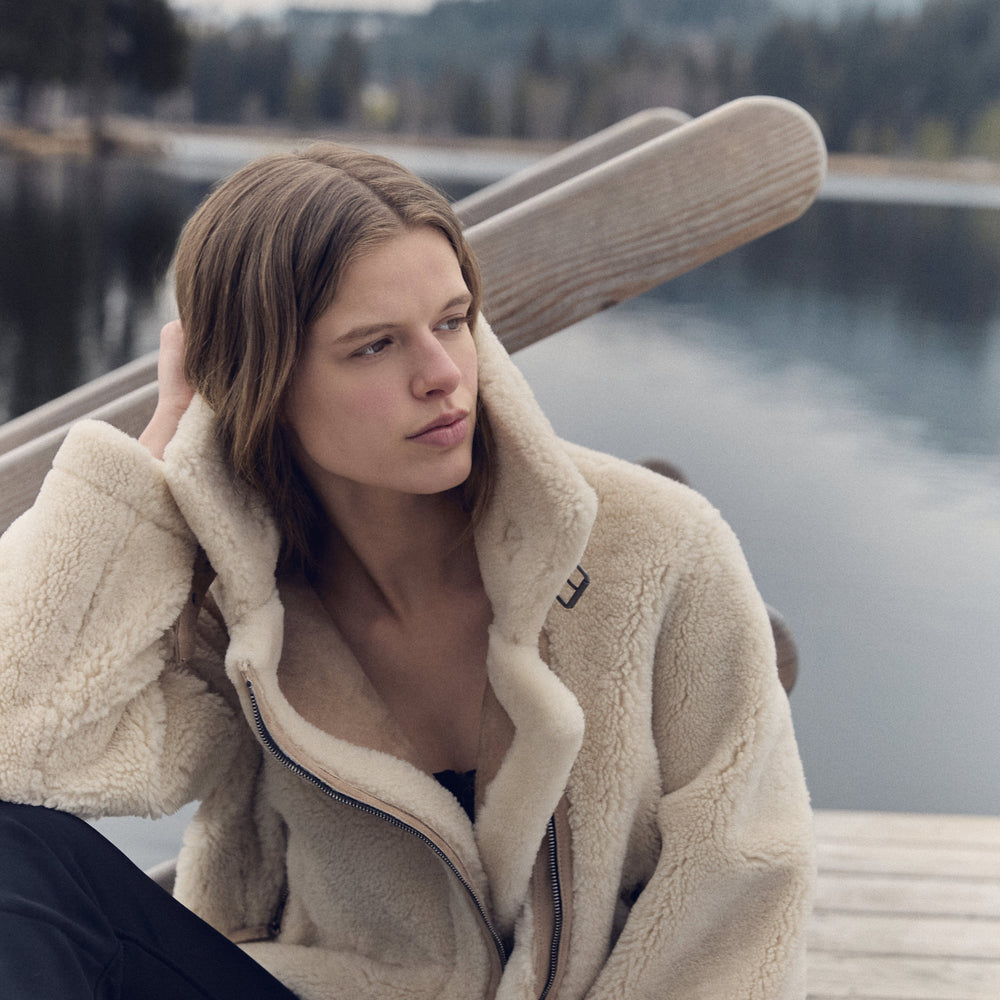
Overshirts can stand out due to smooth, grainy, fluffy, or distinctly woven surfaces. The visible fabric appearance is a style feature, but it doesn't automatically explain the fiber composition or a functional property. Read the material specifications of the specific product and distinguish them from the visual effect. A model that looks robust doesn't necessarily have to be designed for the same conditions as a jacket with explicitly described weather construction.
For combination, texture offers many possibilities. A distinctly woven overshirt can work well over a plain shirt, while a smooth style can also frame a printed top. If both pieces have a striking surface, a deliberately limited color palette helps. You don't have to force a contrast; even related textures can create a harmonious look if their volumes match.
Choosing a suitable top to wear underneath
A T-shirt is an uncomplicated base if you want a clean line around the neck. A higher-necked or thicker sweater, on the other hand, changes the collar and sleeve construction. Choose the bottom layer based on how much space is available in the overshirt and what view you want to present. When worn open, a large part of the underlying top remains visible and contributes to the look.
With women's T-shirts, you can compare suitable necklines and lengths. A short shirt sleeve should not unintentionally roll up under the overshirt, and a thick waistband should not press against the outer cuff. Check these transitions in motion. The right combination also considers joint movement when sitting and walking, and consists not just of two individually beautiful tops, but of shapes that lie comfortably on top of each other.
Assessing collars, cuffs, and pockets
The collar sits close to the face and can interact with hair, a scarf, or another jacket. A sturdy collar remains visible differently than a softly draped style. Check it opened and closed. If you want to wear the overshirt under an outer jacket, the neck area should be able to be layered comprehensibly without multiple unintentionally overlapping finishes.
Pockets also change the front. Patch chest pockets create a clear structure and can make the model appear emphatically casual. Side pockets serve a different practical role. Consider which pockets you want to use and how the shape changes when filled. Cuffs should close comfortably according to their intended use. A pushed-up sleeve may be a possible styling variant, but it should not replace a permanently ill-fitting sleeve.
Overshirt and coat in a combination
If the overshirt is worn under a jacket or coat, the outer layer needs space at the shoulders and arms. A very voluminous model can fit differently there than a lighter construction. In women's jackets and coats, you can compare suitable outer shapes. Focus on the entire combination rather than whether both pieces share the same size label.
For a look without an additional outer jacket, however, the intended use of the overshirt is crucial. The category name alone promises neither wind nor rain protection. Choose this wearing style to suit the product and your conditions. A shirt-jacket look can be a pleasant addition without having to fulfill the same function as a technical outdoor or ski jacket.
Anchoring color and pattern in your wardrobe
With a patterned overshirt, you can pick up an existing tone from your trousers or shoes. A neutral bottom gives the pattern space, while a colored shirt adds another accent. First, consider the open combination, then the closed one. The pattern can be present differently in both variations. A plain model, on the other hand, allows the collar, pockets, and fabric texture to stand out more.
In women's casual fashion, you'll find other pieces for this layering. Finally, decide if the overshirt fills a specific gap: an additional layer, a different silhouette, or a new connection between existing outfits. If the cut, layers, and design harmonize, it becomes an independent part of your look and not just a shirt bought in a larger size.
04At FREUDENHAUS
05Questions about the category