






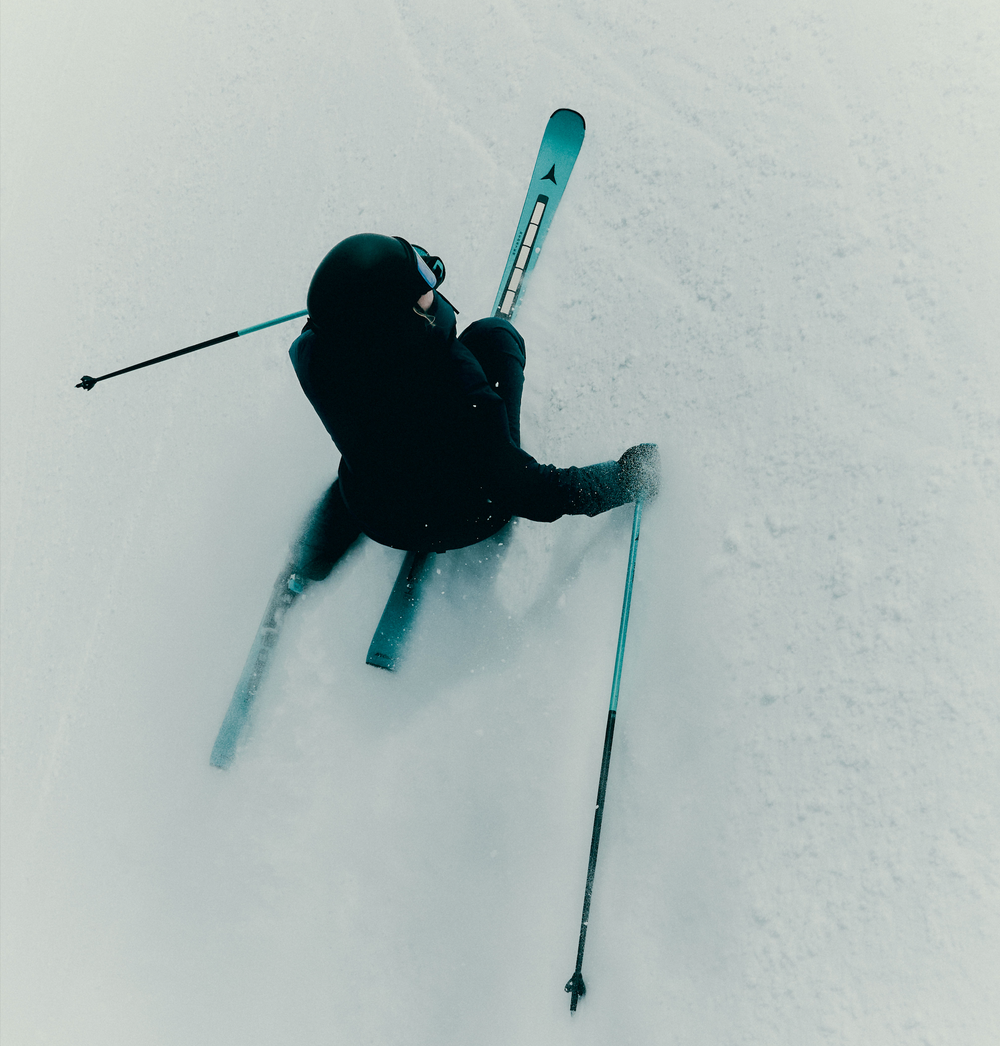

LEKI: Ski poles and gloves as a matching combination
At LEKI, it's worth taking a look at ski poles and gloves together. Grip system, hand size, warmth requirements, and pole length must all match. From the Racing Kids with a classic strap to the Vallarta 3D Women, the brand offers various solutions. Here you'll find guidance on which features truly influence your choice and which systems you should distinguish between.
02Discover
Categories.


03Hand-to-ski contact
Where hands and equipment meet.
At LEKI, the selection starts with your hand
A ski pole is only as comfortable to use as the grip and glove fit together. LEKI makes this contact, with various grip and connection systems, an important part of its brand world. For you, this means: don't choose a glove solely based on color and warmth rating, and don't choose a pole solely based on length. The connection between the two should be considered from the very beginning.
Start with your existing equipment. Do you already use a pole with a strap, an alpine Trigger system, or are you looking for a first pair for your child? The order of decision will change depending on your answer. If you're replacing a glove, the desired connection to the existing grip is important. If you're buying a complete new set, you can coordinate the hand feel, operation, and warmth requirements all at once.
Trigger and PAS are different concepts
The alpine Trigger system connects a dedicated strap or a suitable glove to the pole grip. For Trigger 3D, LEKI describes a specially designed click-in and click-out mechanism on the grip. This allows you to intentionally detach your hand from the pole and reattach it. The specific operation depends on the model; familiarize yourself with it before using the system during a ski day.
PAS, on the other hand, works with a strap on the grip and without an integrated glove system. A PAS pole does not become a Trigger pole just because you wear a Trigger glove. Likewise, a similar-looking hook or eyelet should not be understood as a universal connection. Check the full system designation of the pole, strap, and glove if you want to combine parts.
LEKI states compatibility within its alpine Trigger system. This does not imply a general clearance for all LEKI sports, third-party brands, or arbitrary grip constructions. Use the model-specific information and the operating instructions as a basis. A connection system can enable a certain handling; it is not a guarantee that a risk will be avoided in every situation.
Vallarta 3D Women: Combining warmth and grip contact
The Vallarta 3D Women is a concrete example of a LEKI ski glove with Trigger connection. For this model, the manufacturer mentions PrimaLoft Gold as insulation and SOFT-TEX as a membrane, among other features. LEKI classifies it as extra warm. These specifications describe the Vallarta in its respective version and should not be transferred to every glove with the brand name.
Regarding fit, LEKI describes a comfort-oriented cut. However, it's still important for your hand to check finger length, palm, and thumb. A glove should not uncomfortably stretch over the knuckles when gripping the pole. At the same time, you need enough feel to control the grip and operating elements. Therefore, a lot of insulation does not replace a proper fit.
If you frequently have cold hands, start by comparing warmth and sufficient space. But don't just choose a significantly larger size: excessive length at the fingers can make operation difficult. Under Ski Gloves, you can compare different designs and insulation levels. Use your personal perception of cold as a criterion and not as a reason to ignore all other features.
Finger glove or mitten?
A finger glove offers a separate area for each finger. This can be practical for small operations, such as grasping a clasp. A mitten groups several fingers together, changing the grip feel. Which shape suits you better can be judged more concretely on the pole than by just looking at the product photo.
For both forms, pay attention to the thumb and the area where the palm rests around the grip. A glove may feel fitting when stretched flat, but only become too tight when gripped. Therefore, check the movement you actually need. If you are between two sizes, compare the measurements of the specific model and not just the size of a thin everyday glove.
For an additional liner glove, there must be enough space. An outer glove that is already a tight fit will not automatically become more comfortable with another layer. Consider in advance whether you want to wear this combination regularly. If so, the try-on should be done with both parts. The desired warmth performance and dexterity on the grip must also match with the additional layer.
Racing Kids: a separate children's pole
The LEKI Racing Kids shows why a sporty model name should not be equated with an adult system. The manufacturer describes it as a children's pole for the slopes with an aluminum shaft, child-friendly PAS grip, and adjustable strap. Its construction has a fixed length. This makes it a concrete example of a children's pole without an integrated Trigger glove connection.
When selecting, the child's current height and hand are important. A small grip is more than an optical detail: it should be able to be gripped well with the child's glove. The length should also be suitable for immediate use. Choosing a significantly longer pole as a growth reserve can unnecessarily complicate handling and does not automatically help with learning.
Whether a child needs poles for their current stage of learning is a separate question. In case of doubt, clarify this with the ski instructor, rather than just deciding by age. If poles are used, threading, holding, and laying them down should be practiced together. In the selection for Children, you can coordinate the rest of the equipment without treating children's products as scaled-down adult models.
Check pole length and grip size separately
Pole length can be determined based on body height and manufacturer recommendations. It should then match your stance while skiing. A grip that is too high can cause you to lift your shoulder when planting; a length that is too short can also feel unnatural. Therefore, use existing experience and direct comparison instead of adopting a number out of context.
Grip size is independent of this. two poles of the same length can feel different to your hand. With gloves on, check whether you can comfortably hold the grip and perform the intended operation. For Trigger versions, clicking in and out is part of the test; for a strap, it's its adjustment and guidance. Always observe the instructions for the respective model.
The Ski Poles category helps you compare suitable lengths and designs. When making a comparison, note whether they are fixed or adjustable models. Length adjustment is an additional feature that you only need if you actually want to use the different settings. For predominantly piste skiing, a fixed, appropriate length can be a clear solution.
Categorize material, weight, and area of application
In the world of poles, LEKI differentiates between aluminum, carbon, and combined constructions, among others. The material is an important description, but not a complete statement about handling and suitability. Grip, strap, shaft geometry, and basket are also part of it. Therefore, compare complete models with similar intended use, rather than just choosing based on a material term that sounds as exclusive as possible.
For weight specifications, you also need to check whether the number refers to a single pole, a pair, or a specific length. Only then can a difference be meaningfully assessed. If you are comfortable with your current pole, a similar grip contact may be more important than a small theoretical weight advantage. The features should suit your ski day, not just a comparison table.
Coordinate cuff and jacket sleeve together
The glove cuff must work with your jacket. Consider whether you prefer to wear the cuff over or under the sleeve, and check the available width for this. Move your arms forward and grip a pole: the transition should remain comfortably closed, without the sleeve and glove pulling strongly against each other. A proper connection saves unnecessary readjustment on the go.
If you are also choosing a new jacket, the Women's Ski Jackets and Men's Ski Jackets sections can complement the comparison. When trying on, pay attention to the exact gloves you plan to use later. A sleeve cuff that fits with a thin model may behave differently with a heavily insulated glove.
Completing your LEKI combination specifically
For adults, a sensible order goes from warmth requirements to hand fit, desired grip system, and pole length. For children, the learning stage and child-friendly usability are added. Finally, note down the complete model names of your combination. This way, you can later specifically add a glove or strap and do not have to reconstruct the system assignment from memory again.
After skiing, allow gloves to dry according to care instructions and regularly check grips, straps, and connection points. Different instructions may apply to leather areas, membranes, and other components. Do not use arbitrary care products or improvised spare parts. With a clear view of the model and system, your LEKI equipment remains understandable and can be maintained according to your requirements.
04This brand at FREUDENHAUS
05Questions about the brand