









SMITH SNOW: the perfect combination for your ski day
SMITH SNOW focuses on ski helmets and goggles. There are concrete differences in shape and operation between a compact Rally, a spherical Proxy, and a 4D MAG S. Plus, there's the matching helmet. Here's how to combine model families, lenses, and sizes into a well-thought-out combination for the mountain.
02Discover
Categories.




03A look at snow sports
The combination
for your ski day.
SMITH SNOW for Ski Helmets and Goggles
A ski day begins with two separate decisions regarding headgear: which helmet fits properly, and which goggles rest comfortably on the face? SMITH connects both product categories through coordinated designs. Nevertheless, personal fitting remains important. A model name can explain the family, but not predict how a frame will sit on your nose or a helmet on your temples.
The SMITH SNOW selection focuses on this snow sports task. For sunglasses and a broader view of the brand, you can find the dedicated SMITH brand overview. Here, however, the focus is on specific ski goggle shapes, helmet variants, and their use in winter. Start with the component you want to add or replace, and include existing equipment in the comparison.
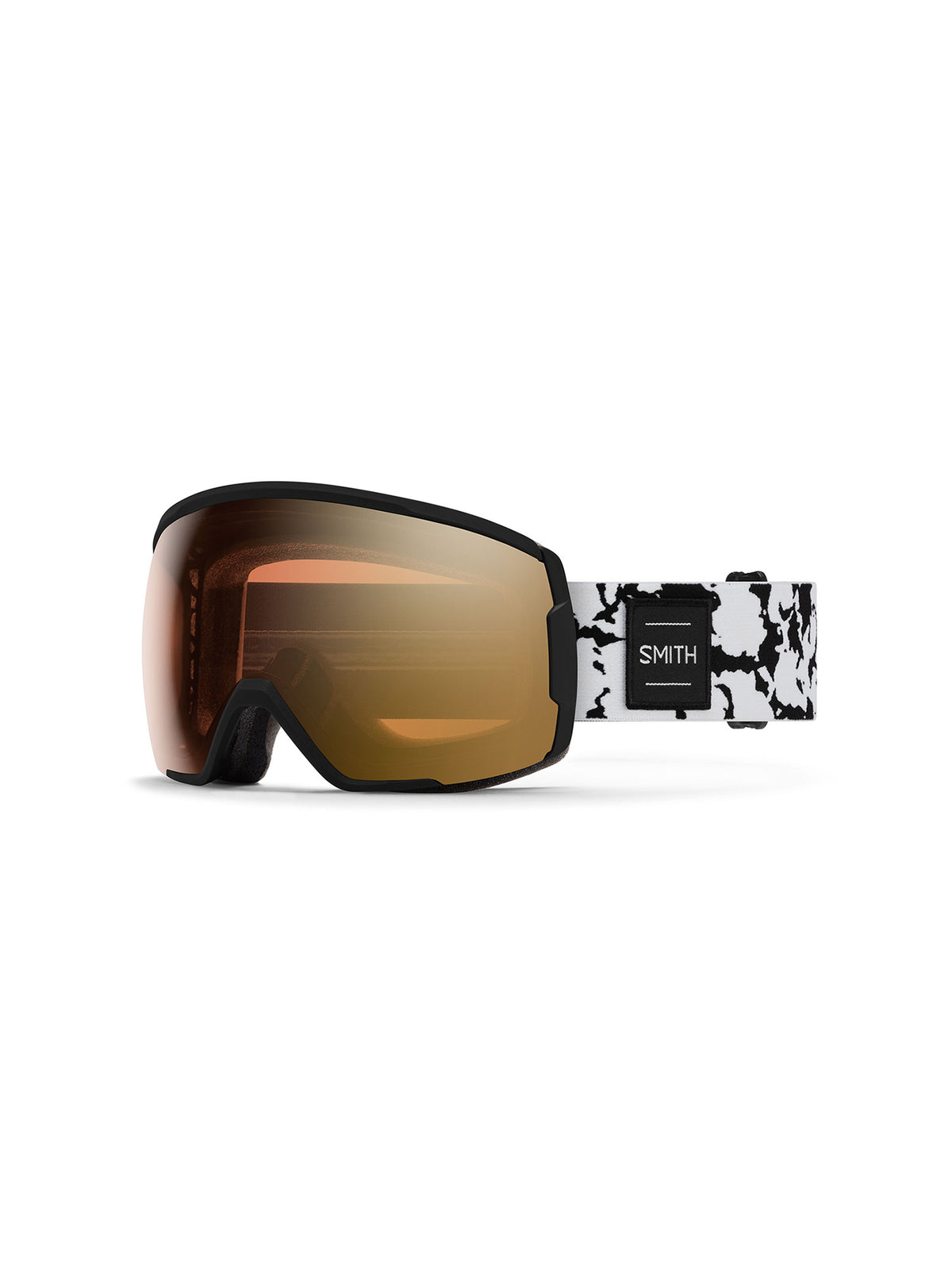
Compare Ski Goggles by Fit and Lens Construction
A large visible lens surface does not automatically mean a large fit. Frame contour, distance to the face, and foam padding all contribute to whether goggles sit comfortably on someone. SMITH differentiates between smaller and medium fits, among others. These specifications are a sensible starting point but should be assessed together with the specific helmet shape.
4D MAG S: Smaller Fit with its Own Lens System
SMITH targets the 4D MAG S at smaller faces. It combines the magnetically assisted MAG interchangeable system with the lens design known as BirdsEye Vision. The manufacturer thus emphasizes the field of view, including the lower and side peripheral vision. For your selection, the fit on the face and the accessibility of the changing mechanism are also important.
The "S" is an essential part of the model designation. A 4D MAG and a 4D MAG S are not automatically identical size variants for the same replacement lens purchase. Check the stated compatibility. If you regularly switch between different light conditions, the handling of the system is interesting. Whether you actually use it frequently depends on your ski weeks and the chosen lens combination.
Proxy: Spherical Lens and Medium Fit
SMITH describes the Proxy with a spherical lens and medium fit. Spherical means a curvature in both horizontal and vertical directions. This distinguishes its construction from a cylindrical model. What matters to you is how you see through the goggles and how the frame and face fit together. A geometric designation alone does not result in a personal ranking.
For the Proxy, depending on the variant, the manufacturer also mentions Low Bridge Fit. Such a version is aimed at different proportions in the nose and cheek area. Therefore, check the complete product name. The designation "Medium" doesn't tell the whole story about the fit. Two goggles of the same basic size can feel significantly different on you.
Rally: Compact Frame with Cylindrical Lens
The Rally is an example of a smaller SMITH fit with a cylindrical lens. The manufacturer describes a narrow frame and a flatter profile on the face. This offers a different entry point than the 4D MAG S, although both can be interesting for a smaller fit. Compare contour, padding contact, and operation in particular.
If large goggles interfere with the cheeks or are pushed down by the helmet, it's worth looking at more compact designs. This doesn't mean that every small goggle automatically fits. Check the nose area and side seal. A comfortable frame shape should be wearable with a normal strap adjustment, without you having to tighten it excessively.
Clearly Distinguish Between Squad and Squad MAG
Squad, at SMITH, stands for a ski goggle family with a cylindrical lens shape and a partially rimless appearance. The addition "MAG" denotes a separate version with a corresponding lens change system. A regular Squad does not gain this feature solely by being in the same family. Read the full name if quick changes are an important criterion for you.
Within the Squad family, the generation is also relevant. On the official current Squad page, SMITH explicitly limits compatibility to replacement lenses for the 26/27 season. Therefore, "Squad" alone is not always enough information for a subsequent purchase. Note down the model and generation and match the replacement lens with the specifically mentioned fit.
Lenses for Sun, Clouds, and Changing Light
ChromaPop is a lens technology used by SMITH to emphasize color and contrast differences. In addition, the choice of light transmission remains important. A lens for strong sunlight performs a different task than a lighter version for low light conditions. Therefore, compare the full lens designation and the described use, rather than just looking at the outer color.
Consider how your typical days unfold. If you primarily ski in good weather, your selection process will differ from a ski week with daily changing conditions. An additional lens can be useful if it covers a different light spectrum. Two variants with very similar tints, however, may offer less practical difference than their different mirror colors suggest.
Photochromatic lenses change their tint under the intended light conditions. This is a different characteristic than ChromaPop and must be explicitly stated for the specific variant. The scope of delivery may also differ as a result. Assess the existing lens, any potential additions, and the interchangeable system as a coherent selection that should cover your actual needs.
SMITH Ski Helmets: Classifying Mission, Vantage, and Vida
For ski helmets, model families differ in shell construction, adjustment, ventilation, and other features. Mission, Vantage, Vida, and Level are therefore initially different starting points for fitting. The right decision begins with a suitable size and shape. Only then can additional functions be meaningfully compared. A familiar model name alone is no substitute for the specifications of the particular version.
Mission: Adjustments for a Changing Ski Day
For the official Mission Mips example, SMITH describes an in-mold construction, an adjustment dial, and adjustable ventilation. The manufacturer also lists Mips and zonal KOROYD areas, but points out individual versions without Mips. Therefore, check the item description and features together. Do not automatically assume a protection technology applies to every color or generation of a family.
For everyday use on the mountain, testing the operation is particularly worthwhile. Can you find the ventilation regulator without removing the helmet, and can the chin strap be adjusted intelligibly? Ear pads and goggle strap should not shift each other. The number of features is less helpful than equipment whose use remains understandable to you.
Vantage and Vida: Comparing Adjustment and Ventilation
SMITH describes the Vantage Women's Mips with, among other things, a hybrid shell, BOA 360 Fit System, and separately adjustable ventilation. For the Vida Mips, the manufacturer mentions an in-mold construction and VaporFit Snow for adjustment. These examples show different technical approaches. What is crucial is which helmet fits evenly on you and can be comfortably connected with your goggles.
A classification as a women's helmet can provide guidance in the search but does not replace checking head circumference and head shape. Compare the size chart of the specific model; even identically named sizes can cover different ranges. For a broader comparison, other ski helmets are available. Prioritize fit over color and optical coordination.
AirEvac and the Connection Between Helmet and Goggles
SMITH refers to the coordinated ventilation of helmet and goggles as AirEvac. The construction is designed to dissipate air and moisture in the interaction of the components. It remains important for you that the chosen combination actually fits appropriately. Do not cover intended openings with an unfavorably arranged layer and observe the instructions for wearing the respective equipment.
Ventilation technology is not a guarantee that goggles will remain fog-free under all circumstances. Moisture, temperature changes, and specific use also play a role. Therefore, check not only technical names but also the free transition between the upper edge of the goggles and the helmet. A joint fitting shows whether the contours interlock without disturbing pressure.
Check Your Set During Fitting
First, put on the helmet according to the instructions and adjust it. Then add the ski goggles with a normal strap adjustment. Look forward, sideways, and down. The helmet should not push the goggles onto your nose, and the frame should not lie uncomfortably on your cheeks. Also, check if you can use the collar and hood of your ski jacket as intended.
For lens changes, refer to the manufacturer's instructions. A MAG system is operated differently than a frame with a different attachment. Practice the intended procedure calmly so that you can correctly identify the parts. For replacement lenses, model, size, and generation belong together; a matching color is only the next step.
Selecting SMITH SNOW According to Your Priorities
If a compact fit is important to you, first compare Rally and 4D MAG S based on their actual fit. For a medium fit, Proxy and Squad can be starting points. The decision between spherical, cylindrical, and special lens geometry should include your impression when looking through them. In the ski goggles section, you'll find complementary shapes for comparison.
Then select the helmet, the desired lens, and, if applicable, precisely fitting accessories. This creates a SMITH SNOW set whose individual functions are clear. Keep the model specifications and align assembly, care, and use with the respective instructions. A suitable system consists of harmonious components that you can actually handle well in winter.
04This brand at FREUDENHAUS
05Questions about the brand