





BOGNER FIRE & ICE: Consciously combining ski fashion and sporty looks
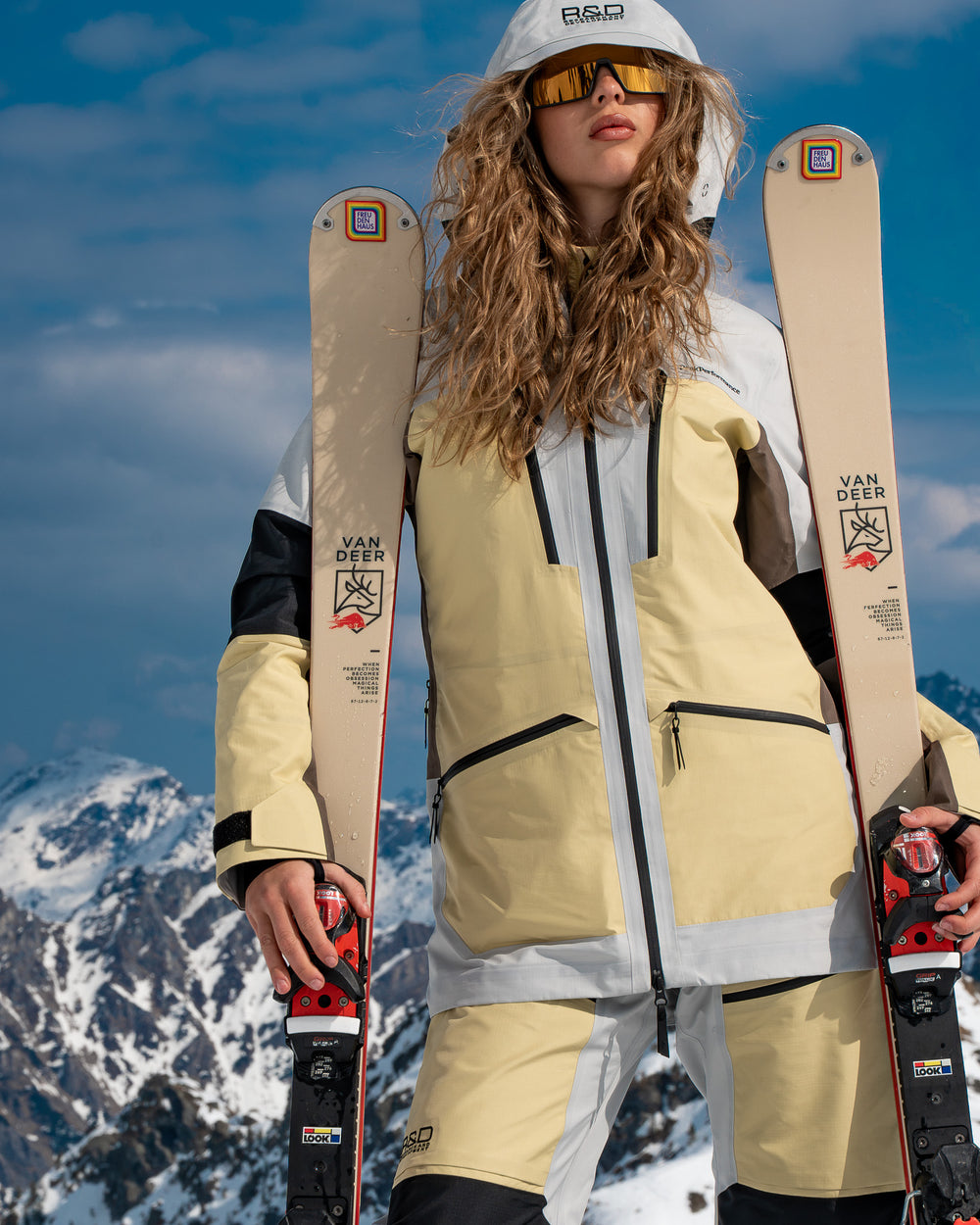
FIRE & ICE combines technical sportswear with an expressive, alpine design. Whether it's a ski jacket, ski pants, a layer, or a casual piece: choose according to your use and how the individual garments complement each other. At FREUDENHAUS Obertauern, you'll find a dedicated brand overview for BOGNER FIRE & ICE and can compare the fit, material, and features of the models on offer.
02Discover
Categories.



03Sportmode mit eigener Richtung
Sporty design.
Individually combined.
FIRE & ICE as a distinct brand world by BOGNER
BOGNER FIRE & ICE, often written as FIRE+ICE, has its own direction within the BOGNER brand world. The manufacturer describes FIRE+ICE as technically and sportily oriented apparel with contemporary design. The name dates back to Willy Bogner's film "Fire and Ice." For your wardrobe, the key aspect is how athletic function and a striking look can be combined. The right choice begins with your intended use: a full day of skiing, a trip to the mountains, or a relaxed everyday life.
The overarching BOGNER selection and FIRE & ICE are therefore two independent entry points. What they have in common is their alpine connection; however, cuts, design, and specific product functions may differ. If you are looking for a particular look, you shouldn't decide based solely on the shared name. Compare the actual items and their features. This FIRE & ICE overview will help you build a suitable outfit within the line and distinguish athletic pieces from purely casual wear.
Choosing a FIRE & ICE ski jacket after your ski day
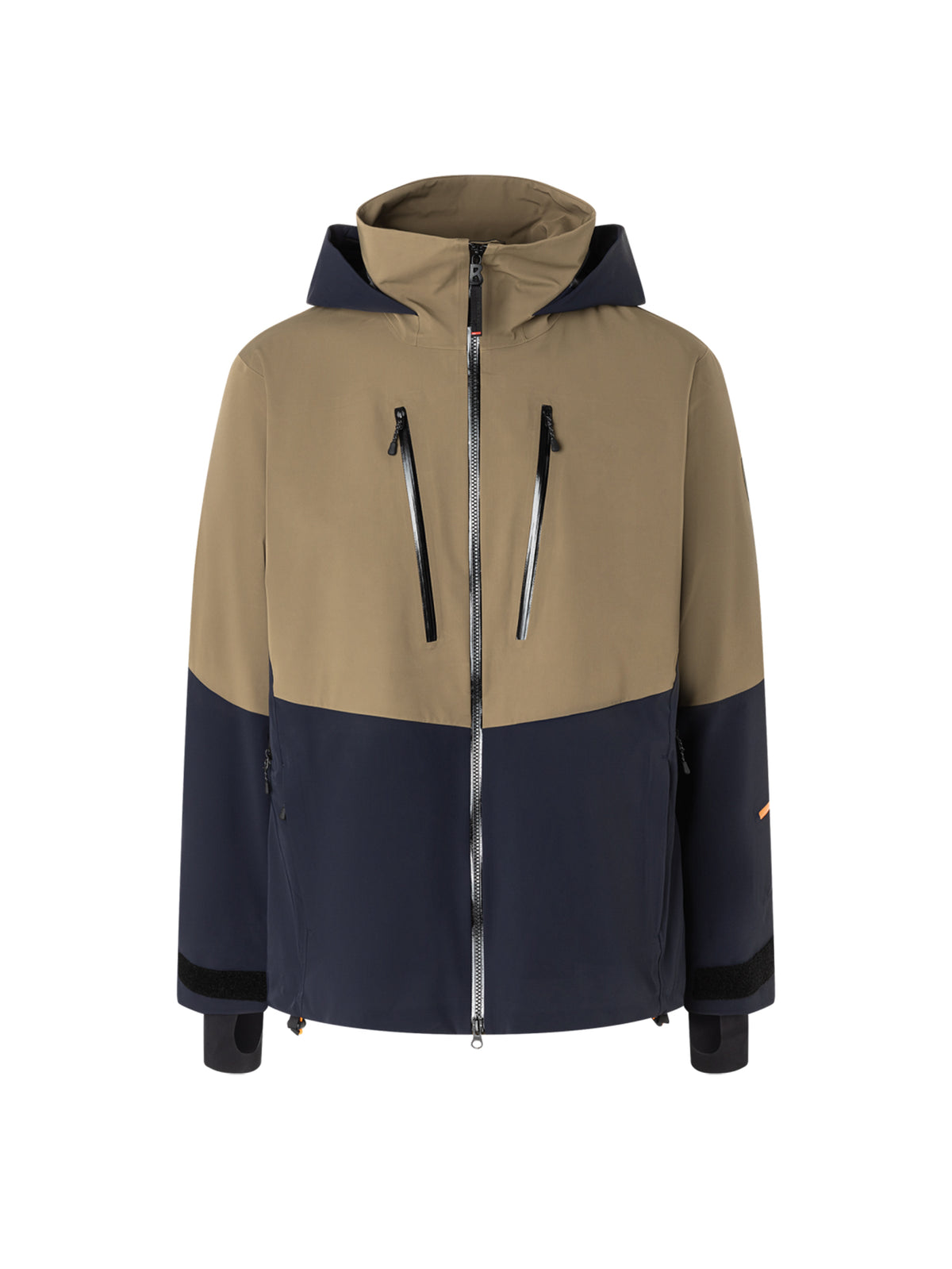
When selecting a ski jacket, it's worth narrowing down the external conditions and your warmth requirements first. If you frequently ski on cold days and spend a lot of time on the lift, a different insulation might be more suitable than for intense activity in milder conditions. It's not about how warmly a jacket is described. It should work together with your base layer and mid-layer. Therefore, check whether the particular model is insulated and what features are specified for the intended use.
Then come the details: what pockets do you need, how does the jacket ventilate, and how do the cuffs fit? A pocket is only practical if you can easily reach it even with gloves on. For the hood, it matters if and how it fits with your helmet. Such features are model-dependent. The technical specifications of a single FIRE & ICE item cannot be transferred to the entire line. Read the description of the specific jacket and weigh the features according to your actual daily life in the snow.
Furthermore, a ski jacket is rarely worn alone. For fitting, include the intended lower layers and move in a similar posture to skiing. The back should remain sufficiently covered when bending forward, and the sleeves should not pull uncomfortably when reaching forward. At the same time, there should not be too much unnecessary fabric gathering under the jacket. Through the selection of women's ski jackets, you can compare different silhouettes and features before deciding on your preferred FIRE & ICE look.
Ski pants: Considering freedom of movement and boot closure together
For FIRE & ICE ski pants, the waistband, seat, knees, and leg cuffs are particularly relevant. Try them on standing and moving. Sit down, squat slightly, and check if the waistband stays in place. A narrower silhouette doesn't have to restrict if the cut and material suit you. Conversely, a wider pair of pants isn't automatically more comfortable if the proportions are unfavorable. The right size results from body measurements, cut, and space for the clothing underneath.
At the lower leg, the interaction with the ski boot is important. The cuff should match the intended use and offer enough space without being bothersome. If snow gaiters, reinforcement, or additional openings are specified, check their specific design. A snug-fitting athletic pant is not a full-fledged ski pant just because of that. Material, weather protection, and construction must match the use. Especially with similarly looking models, the product description is more helpful than the silhouette in a single photo.
Also, decide whether the jacket and pants should act as a cohesive unit or as a deliberate contrast. A strong jacket color can be combined with neutral pants; a tone-on-tone outfit draws more attention to the cut and surface. For functional selection, both parts should also convince independently. In the men's ski pants category, you can further narrow down the desired use and appropriate shape. An optically matching set does not replace checking individual sizes.
Layering with FIRE & ICE without unnecessary duplication
A functional outfit consists of layers with different tasks. The first layer is directly on the body, the mid-layer adds warmth as needed, and the outer layer provides the intended weather protection. In practice, a piece of clothing can combine several tasks. Therefore, it makes sense to consider the entire combination. If your ski jacket is already heavily insulated, you might need a different mid-layer underneath than you would with an unlined jacket. Your personal perception of warmth remains the starting point.
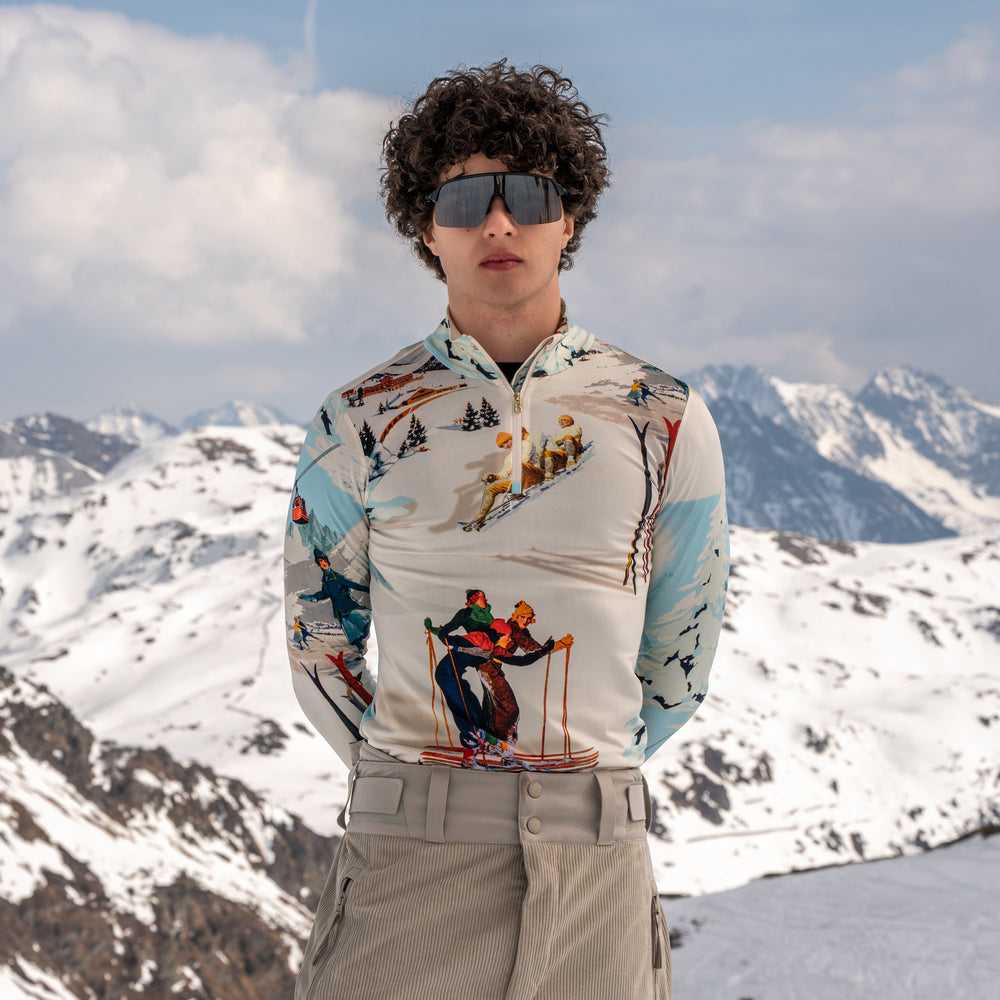
For athletic tops, it's worth looking at the neckline, zipper, and material. A high collar can be comfortable, but it should harmonize with the overlying closures. Several thick collars on top of each other can be irritating at the neck. A zipper can change handling; whether and how much ventilation is possible depends on the construction. Consider which layer you want to adjust during the day. The right combination should remain comfortable even when you wear all parts fully closed.
The terms First Layer, Baselayer, and Midlayer are not always used entirely consistently in retail. The crucial point is whether an item is intended for direct skin contact or as an additional layer over it. Therefore, rely on the description of the specific FIRE & ICE model. A selection of ski underwear provides the entry point for the first layer. A casual shirt or sweatshirt can fulfill a different purpose, even if its color perfectly matches your ski outfit.
Comparing functional materials concretely
Terms like stretch, water-repellent, or waterproof describe different properties. Stretch primarily refers to elasticity; this does not imply a specific weather resistance. Water-repellent and waterproof are also not synonymous. When technical values are mentioned, they belong to the respective design and must be considered along with construction and care. Never transfer a material specification to another garment solely because of a similar name. This applies especially if you want to repurchase a proven model from an earlier season.
For insulated garments, the specifically stated filling matters. A voluminous look confirms neither a specific type of filling nor a fixed thermal performance. Likewise, a smooth surface is not proof of suitability for skiing. Ask yourself what property is crucial for your use, and look for precisely that information in the product specifications. For a daily winter jacket, handling and combinability might be weighted differently than for a long day on the slopes. Both tasks deserve a distinct, understandable selection.
Individually checking fits for men and women
Women's and men's models can differ in proportions, length, and cut. Your measurements and the respective size chart are the most important guides. Especially for athletically cut jackets, it's worth including the planned layers. If you are between two sizes, the larger one is not automatically the right solution. First, check where more space is needed. Sometimes a different cut fits better than simply choosing the same item in a larger size.
For pants, waist circumference and leg length can be separate considerations. A suitable waist does not guarantee a favorable closure at the boot. For tops, torso length and shoulder movement play a similar role. Therefore, assess your outfit in context, without assuming the same sizes for all parts. A jacket may have a different clothing size than the pants combined with it. The decisive factor is that you feel comfortable and the clothing remains reliably in place during the intended movements.
Athletic style between the slopes and everyday life
FIRE & ICE can also be worn outside of a complete ski outfit. The brand world includes technical pieces, for example, sweatshirts and shirts. The change in purpose is crucial: a comfortable cotton piece for travel fulfills different tasks than a functional top during athletic activity. Choose casual wear based on fit, feel on the skin, and your usual combinations. This creates a distinct sporty look without attributing properties to every piece of clothing that are not specified for the particular model.
For everyday wear, a single striking piece may be enough. Combine a striking jacket with simpler basics or let a subdued layer show through under a contrasting outer layer. Pay attention to proportions: a shorter top works with a different pant shape than a longer, looser cut. In the selection of women's casual wear, you will find complementary styles. Whether you want an overall sporty look or just an alpine accent remains your decision.
Sensibly complementing existing pieces
If you already wear FIRE & ICE, a quick look at your existing wardrobe helps. Which jacket is a given, which pants fit well, and for which conditions are you still missing a suitable layer? A targeted purchase can bring more benefits than a completely new outfit with the same purpose. Compare the exact model name and material composition if you want to replace a familiar item. A new color or a similar designation does not necessarily mean that the cut and features have remained unchanged.
Even with color combinations, a conscious comparison is worthwhile. Product photos can appear different depending on the light and screen. If an exact matching color is important to you, pay attention to the specific color designations and the affiliation of the items. For an intentional contrast, perfect matching is not even necessary. Function and fit should be right in both cases first. This way, you can continue to use existing favorite pieces and tailor your selection to the actual gaps in your winter wardrobe.
Care, details, and your final decision
Care for your FIRE & ICE clothing according to the label of the individual item. Different outer materials, fillings, and finishes may have different requirements. A wash suitable for a sweatshirt cannot automatically be transferred to a technical ski jacket. Also, check instructions regarding closures, detachable parts, and drying. Before longer storage, the clothing should be clean and completely dry. This way, you keep the practical handling of your pieces in mind, instead of only paying attention to technical details when purchasing.
For selection at FREUDENHAUS Obertauern, it's best to proceed from use to fit to features and only then to color. Compare the FIRE & ICE models offered with your existing garments and the conditions under which you want to wear them. The brand overview bundles the selection for this purpose; reliable information on sizes, materials, and scope of delivery is available with each product. This way, you can put together an outfit that suits both your sporty style and your actual everyday life.
04This brand at FREUDENHAUS
05Questions about the brand